Former foster youth urge Alaska House committee to pass bill preserving sibling ties after adoption
Loading...
Summary
Dozens of current and former foster youth told the House Judiciary Committee they support House Bill 157, which would protect legal and relational sibling connections after adoption, arguing separation increases trauma, harms identity and can carry lifelong consequences.
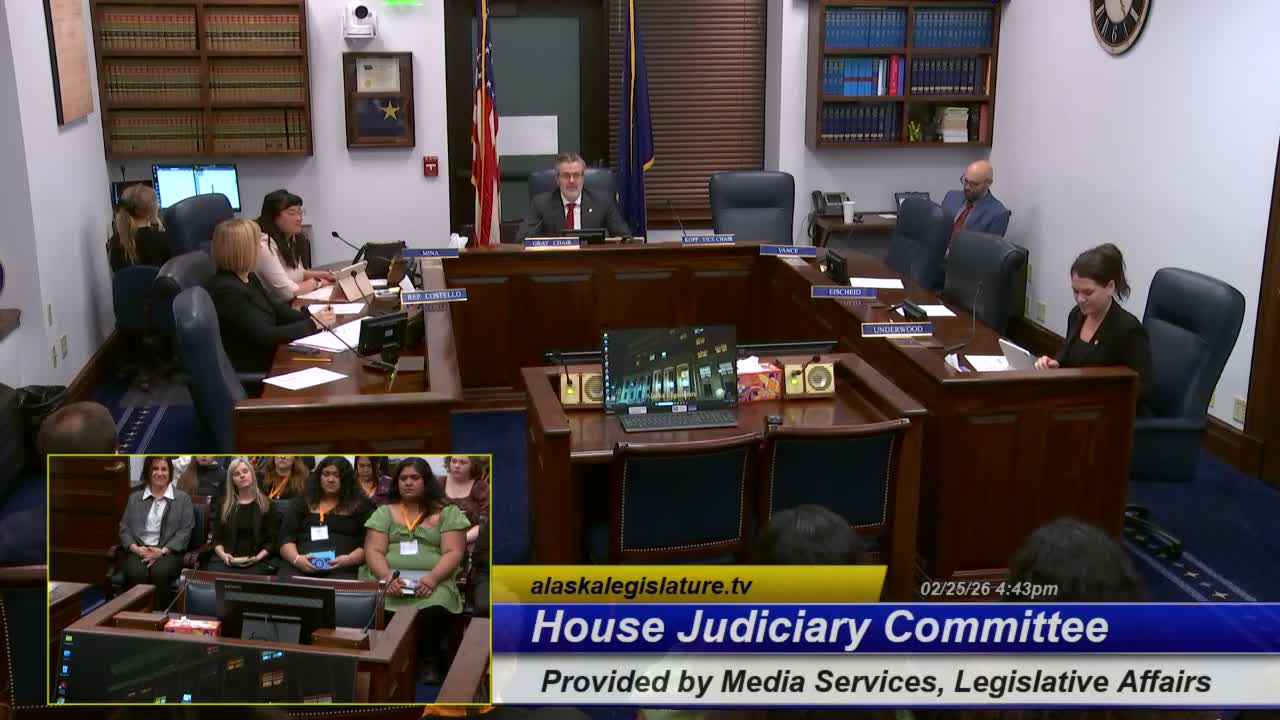
Dozens of current and former foster youth told the Alaska House Judiciary Committee on Feb. 25 that adopting a child can sever legal ties with siblings and deepen trauma, urging lawmakers to pass House Bill 157 to preserve sibling relationships after adoption.
Amanda Mativia, executive director of Facing Foster Care in Alaska (FFCA), told the committee FFCA asked Representative Gray to sponsor HB157 and described the organization’s goal of keeping siblings connected “relationally and legally.” She said state law requires efforts to keep siblings together, but in practice adoption often makes siblings “legal strangers.”
Anna Redmond of Anchorage, who said she has lived experience in foster care, told the committee that inconsistent sibling contact “may have contributed” to the death of her 15‑year‑old brother. “When siblings are separated, we lose not only contact, but protection, advocacy, and presence,” Redmond said, urging lawmakers to “protect sibling bonds.”
Other witnesses described long separations, fractured family identity and the practical roles older siblings played as caregivers. Angel Gonzalez said the legal reality that adoption can end sibling status left his brother “angry” and turned family members into strangers. Madison Brewer, Tali Stone and others described parentified roles and the loss that follows separation.
Several speakers said keeping siblings legally recognized after adoption would allow continuing contact, advocacy and cultural continuity. Kayla Stone described being the eldest caregiver and said existing rules could have made her “a stranger to four of the most important people of my life.”
Committee members thanked witnesses, noted that the testimony will become part of the permanent record and said the stories will inform their work. No vote or formal action on HB157 occurred at the hearing.
The committee took the testimony as an informational hearing and moved on to an evening presentation by domestic‑violence service providers.