
House panel advances package tightening public‑sector union certification and recertification rules
Get AI-powered insights, summaries, and transcripts
Subscribe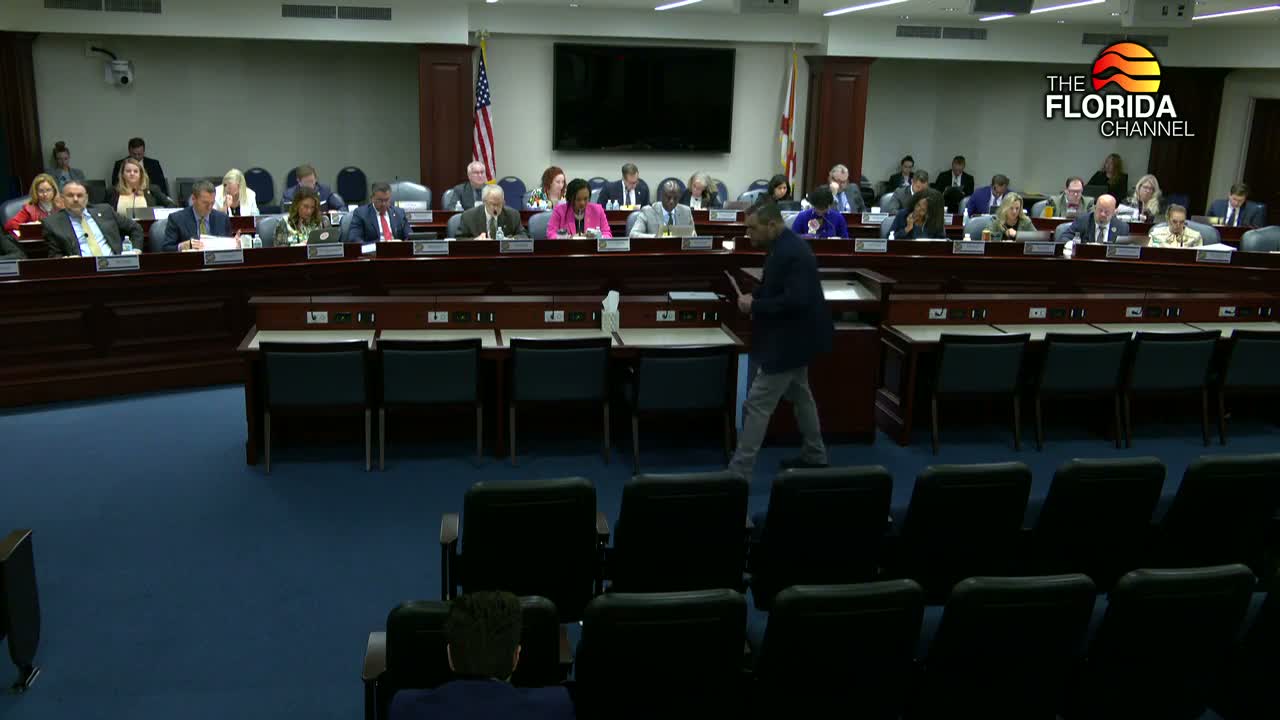
Summary
A House State Affairs committee approved CS/4 for HB 995 after hours of debate and public testimony; the bill raises disclosure and recertification thresholds for public‑sector unions, narrows paid‑leave rules for union activities, and expedites impasse resolution for legislatively funded salary increases. Proponents said the changes increase member accountability; opponents called it an anti‑union overhaul that risks constitutional problems.
Representative Persons Mullica presented CS/4 for HB 995, describing a suite of changes to the Public Employees Relations Commission process and union registration that, in the sponsor's words, aim to increase transparency and make exclusive representation reflect a larger share of employee support. "If a union is going to be the exclusive bargaining agent for all employees, should not a majority of those employees support the union?" Persons Mullica asked the committee (Representative Persons Mullica).
Under the bill, unions must disclose dues distributions and provide broader documentation with registration renewals; challenges to renewals would require material inaccuracies rather than technical errors. The measure would require unions to win a majority of all employees in certain elections rather than a mere majority of votes cast and would permit a petition (30% showing of interest) to trigger an election for certification, recertification or decertification. The bill also restricts certain compensated leave for union activities while preserving exceptions for "official union business," and establishes an expedited impasse process for salary increases the legislature funds.
Supporters, including some public‑sector speakers, framed the bill as pro‑employee accountability. Representative Persons Mullica told the committee the 2023 reforms revealed low levels of active support in some bargaining units: "We saw recertification elections where a bargaining unit that represented hundreds of employees was recertified by only a handful of votes," he said (Representative Persons Mullica).
Opponents — including dozens of public employees and union members who provided public testimony — said the bill would make it harder for workers to organize and could produce uneven treatment across public employees because the bill continues carveouts for public‑safety units. Teacher and education witnesses urged the committee to reject the bill; Middle‑school teacher Laurie Bradner said, "This bill, while I appreciate the debate, does not help me. It does not help my students" (Laurie Bradner). Several members warned of constitutional risks and unequal treatment; Representative Gantt said the measure "creates two classes of employees" and flagged potential equal‑protection and free‑association issues (Representative Gantt).
Committee debate ran through legal, practical and constitutional questions, including whether nonparticipation in an election should be treated as a vote against continued union certification. Representative Persons Mullica said the policy intent is to ensure a bargaining agent that represents a majority of employees actually has majority support; "if they can't maintain 60%, then they go to an election," he said (Representative Persons Mullica).
The committee reported the bill favorably by recorded vote (17 yays, 8 nays). The committee record shows extended floor debate and many public witnesses opposing the measure. Next steps: HB 995 moves to the House calendar for consideration by the full chamber.