Alaska DOC asks for $182.9M more in general funds as lawmakers press for staffing breakdowns
Loading...
Summary
The Department of Corrections told a House Finance subcommittee the governor's FY2027 request increases general-fund support by $182.9 million since 2016, driven by collective‑bargaining costs, fund‑source shifts and policy changes; members requested a breakdown of a $20 million supplemental for institutions and probed staffing and diversion impacts.
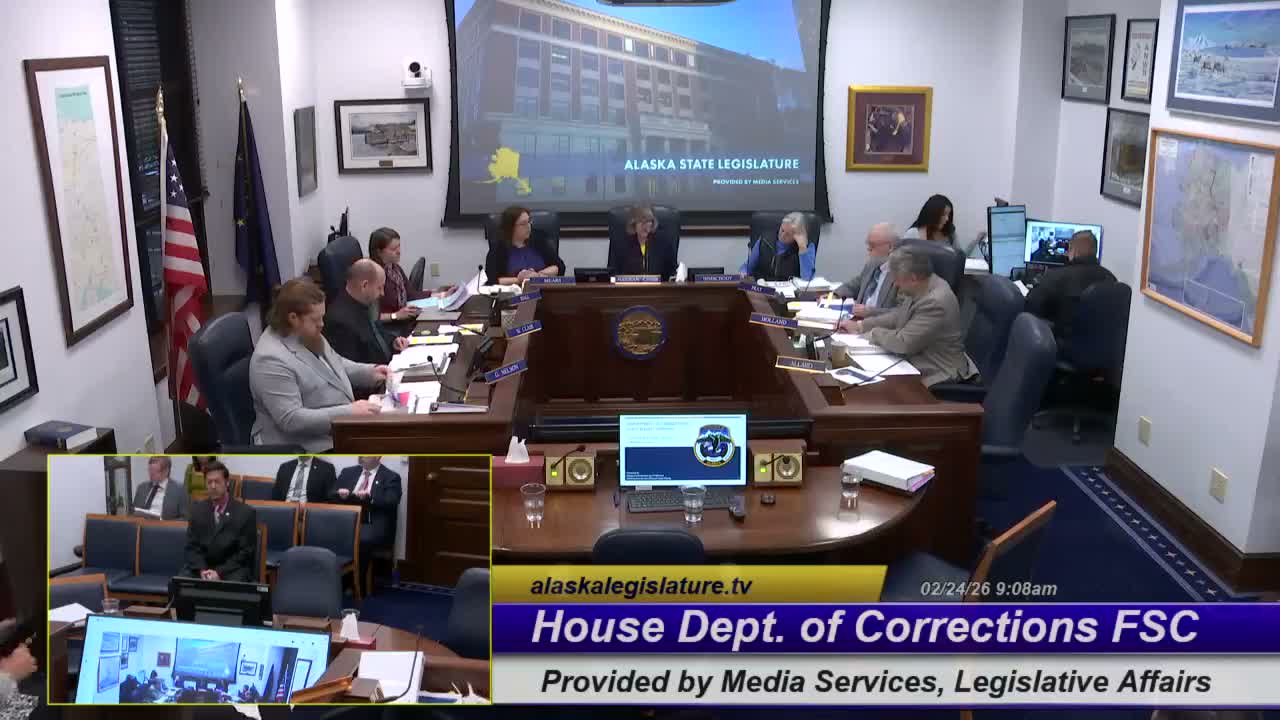
Juneau — The Department of Corrections told a House Finance subcommittee on Feb. 23 that the governor's FY2027 budget request reflects a $182,900,000 increase in general funds from 2016 levels, and officials warned much of that growth stems from negotiated personnel costs, changes in funding sources and legislative policy changes.
"What we identified on this slide is the change in the general fund within the Department of Corrections from 2016 to 2027 governor's request is an increase of general funds of a $182,900,000," Deputy Commissioner April Wilkerson said during the department's presentation. She said more than 30% of that growth is tied to collective‑bargaining agreements, salary adjustments and health‑insurance changes; roughly 26% is attributable to fund‑source shifts; and over 40% is driven by policy changes, including actions that affected facility populations.
Why it matters: Committee members said the numbers underscore long‑term pressure on the state's budget and asked for specific, actionable places to look for savings. Several lawmakers pressed DOC for a written breakdown of a $20,000,000 supplemental appropriation they said is tied to FY2026 and carried into FY2027.
"The 20,000,000 is institutions, and then 3.1 is health and rehabilitation within the personal service line," Wilkerson told the panel, saying the $20 million will be distributed across the state's 13 operating institutions and inmate transport to cover personal‑service costs.
Lawmakers asked how much of the increase is attributable to specific statutes and prior legislative changes. Wilkerson cited the 2016 implementation of Senate Bill 91, later modifications such as Senate Bills 54 and 55 and House Bills 49 and 14, and a 2019 reversal of portions of SB91 as examples of policy changes that changed DOC populations and costs. "Those are the 3 highest priority ones that we identified for this slide," she said and offered to provide a complete list on request.
Recruitment, vacancies and costs: Commissioner Jen Winkelman said the department has struggled to fill vacancies, and that staffing and medical costs are key drivers of spending. "We just recently ... had an inmate leave us that was with us for a year that cost us over $1,000,000 in medical," Winkelman said, noting the unpredictability of high medical needs in incoming individuals complicates budgeting and staffing decisions.
Members pressed whether DOC can control some costs through hiring, scheduling or operational changes. Wilkerson described a department staffing profile that feeds budgeted positions into salary calculations tied to negotiated agreements; she said division directors are tasked with realigning positions as vacancies appear, but the overall numbers reflect contractual and policy constraints.
Certification and recruitment questions came up: the committee asked whether the department could recruit from overseas or fast‑track hires. Wilkerson said the Alaska Police Standards Council sets qualifications for corrections and probation officers and requires U.S. citizenship or national status for those posts, limiting use of foreign‑worker visas. She also said the department can hire staff and provide on‑the‑job training before positions count toward minimum staffing levels.
Diversion programs and impacts: Travis Welch, director of health and rehabilitation services, described Fairbanks' Scribe Now model and mobile crisis teams that have diverted people from Title 47 remands. He said diversion has reduced some remands and misdemeanor admissions but that DOC has not yet quantified a fiscal impact to staffing profiles because minimum staffing needs remain unchanged.
Pretrial population and system effects: Winkelman said the pretrial population is "just under 50%" of DOC custody and recently around 46%. Several members noted that population composition changes — and upstream policy decisions — affect operating needs and costs at the department level.
What happens next: Wilkerson agreed to provide members a written breakdown of the supplemental amounts and other detail. The subcommittee will resume the DOC presentation on Feb. 26 to review the governor's amended budget.
The meeting adjourned at 10:02 a.m.