Get Full Government Meeting Transcripts, Videos, & Alerts Forever!
Get email alerts on the Special Education topic
No spam. Unsubscribe anytime.
Belton ISD trustees hear special-education update as district cites multimillion-dollar funding gap
Summary
District administrators told trustees Nov. 18 that special-education enrollment has risen sharply — driven in part by recent state policy changes affecting dyslexia identification — and that expenditures for services now exceed state allotments by several million dollars, prompting a legislative funding priority.
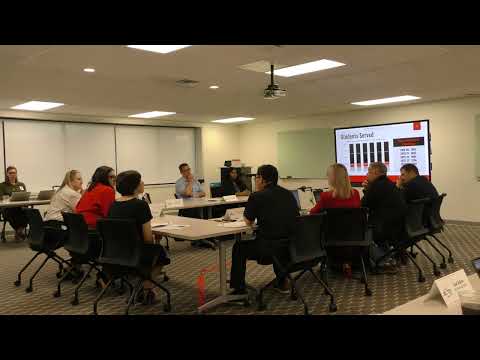
Belton ISD trustees reviewed an update on special education at a Nov. 18 workshop, where district administrators described steady growth in students served, program changes tied to state policy, and a widening gap between expenditures and state funding.
Gabby Nino, introduced at the meeting as the presenter, said the district has seen special-education enrollment grow from about 13.91% of students in 2019 to roughly 19.81% in 2024, and that the district has added more than 1,000 special-education students in the past five years. "We've seen a growth of over 1,000 students in the last five years," Nino said, noting that growth averaged about 200 students per year.
The administrators told trustees two eligibility categories showed the largest increases: autism and specific learning disabilities (SLD). Kitty Forstem, director of special programs, said external factors and policy changes after COVID contributed to higher identification. "Our highest, growing eligibility category is...autism," Forstem said.
Staff explained a recent shift in how dyslexia cases are handled in the state education system, which has moved many students who previously received Section 504 accommodations into the special-education umbrella. Forstem described a recent dyslexia handbook update and implementation timeline and said, "By May, all students receiving dyslexia would fall underneath that special education umbrella," meaning the district will seek parental consent for evaluations and determine whether students meet IDEA eligibility criteria.
Trustees and staff clarified the difference between medical diagnoses and school eligibility. Administrators emphasized that a medical diagnosis alone does not automatically meet IDEA criteria; school-based eligibility depends on educational impact and the need for specially designed instruction.
To address rising need, staff described program changes designed to expand the district's continuum of services. Presenters said the district reframed placement categories (mainstream inclusion → modified → alternate learning environment), created a "modified resource" option so more students can receive grade-level curriculum with adjustments, and expanded modified classes into science and social studies. Sarah Windham, Executive Director of Special Programs, highlighted work on multi-tiered systems of support (MTSS) and aligned professional learning to strengthen general and special-education instruction.
The district also said it is using the STAR Renaissance screening tool more consistently to produce timely growth projections for individual students and to target interventions; staff committed to returning to the board with midyear data in January. "This year, we've really focused on professional learning as a collective... For the first time, we're able to pull it out just for our special education students," Windham said.
On funding, presenters showed a multi-year visualization comparing state allotments with district expenditures for special education and said expenditures have exceeded allotments every year. Staff explained that, after adjusting for inflation, the shortfall has widened: "The actual gap between the expenditures versus our allotment is closer to $6,000,000," one presenter said. Trustees discussed the budget strain, noting prior reductions and subsequent partial restorations to staffing budgets.
Board members pressed on consequences if services were reduced; staff and trustees agreed the district has a legal obligation under federal IDEA to provide required services. Administrators said reductions that would leave required services unmet could create legal exposure and harm students. The board marked special-education funding as a legislative priority following listening sessions with parents, teachers and community groups.
The workshop concluded with staff offering follow-up data and a midyear report in January; no formal votes or motions were taken at the session. The board adjourned at 6:00 p.m.