
Judiciary committee advances bill to remove time limit for trafficking and exploitation of minors
Get AI-powered insights, summaries, and transcripts
Subscribe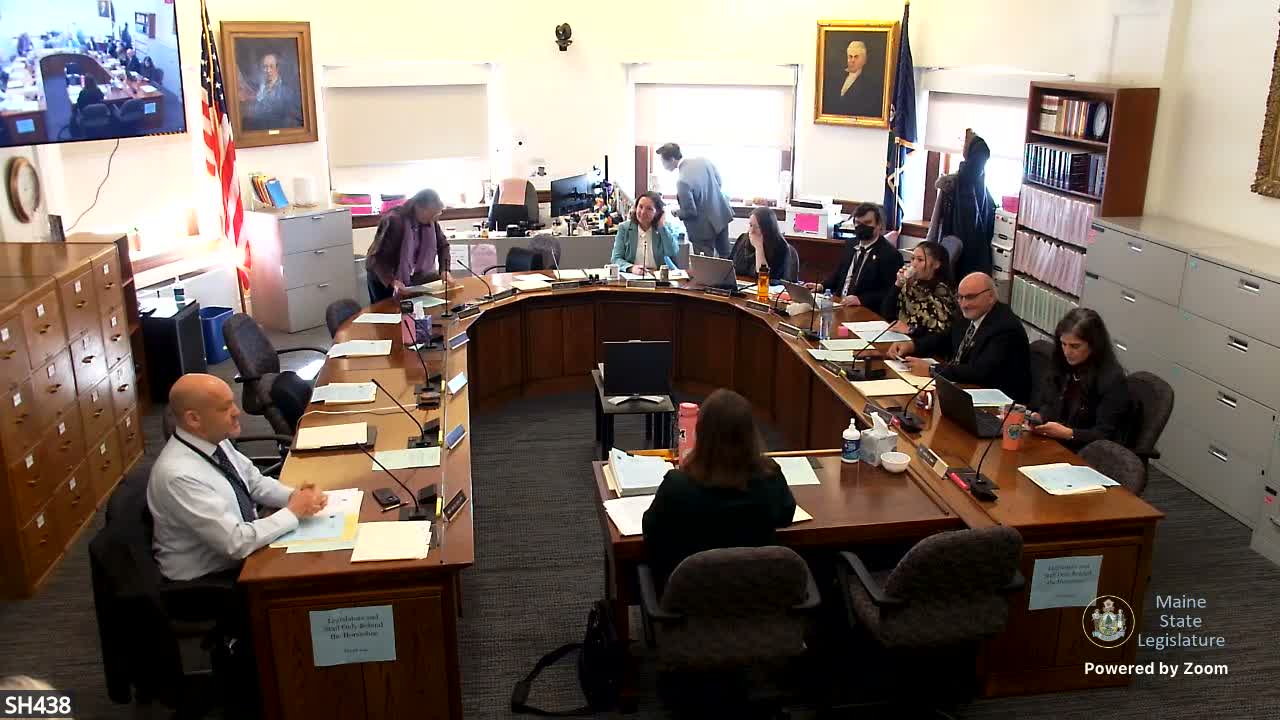
Summary
The joint Judiciary committee voted to advance LD 2207, which would eliminate statutes of limitations for aggravated *** trafficking and commercial ****** exploitation when victims were under 18. The committee amended the bill to specify an implementation date of Sept. 1, 2026, and voted to pass the work session as amended.
A joint Judiciary committee work session on Feb. 27 advanced LD 2207, a committee bill that would eliminate statute‑of‑limitations periods for the prosecution of aggravated *** trafficking and commercial ****** exploitation when the victim was under 18 at the time of the offense.
Janet, the committee analyst, told members the bill follows Criminal Law Advisory Commission (CLAC) recommendations to bring parity to limitations periods for sex‑related offenses against minors and explained how the proposed changes interact with existing law. She reviewed prior changes: the 2019 expansion of extended periods for certain offenses, a 2023 law that removed limitations for many crimes against minors, and last year’s LD 1427 that set a 20‑year limit for aggravated *** trafficking in some circumstances.
Janet also reviewed constitutional constraints. Citing U.S. Supreme Court and Maine Law Court precedent, she told the committee that extending a limitations period is constitutionally permissible so long as the original, shorter limitations period has not already expired for the defendant.
Committee members discussed policy alternatives: moving aggravated *** trafficking against minors into a no‑limitations category (matching other serious child‑victim offenses), moving certain offenses to a 20‑year window, or leaving the statutes as printed while directing further study of whether similar parity should apply to victims with mental disabilities. Members raised statutory‑definition questions about what the code means by a ‘person with a mental disability,’ and Janet pointed members to statutory language that frames that element as 'reasonably apparent' or 'known to the defendant.'
Representative Adam Lee moved to pass the work session, and proposed an amendment inserting an implementation date of Sept. 1, 2026. The committee voted to advance the bill as amended. The clerk recorded 7 votes in the affirmative, 3 in the negative and 4 members absent; members recorded by name in the roll call included Senator Anne Carney (yes), Senator Dave Hagan (no), Representative David Sinclair (no), and Representative Lee (yes). The committee closed the LD 2207 work session.
What happens next: the committee advanced LD 2207 as amended to carry the work session recommendation. If the bill continues through the process it will receive fiscal‑note review and final drafting of effective dates and application language in statute.