
Committee advances bill letting constitutional officers expand pay authority and remove staffing caps
Get AI-powered insights, summaries, and transcripts
Subscribe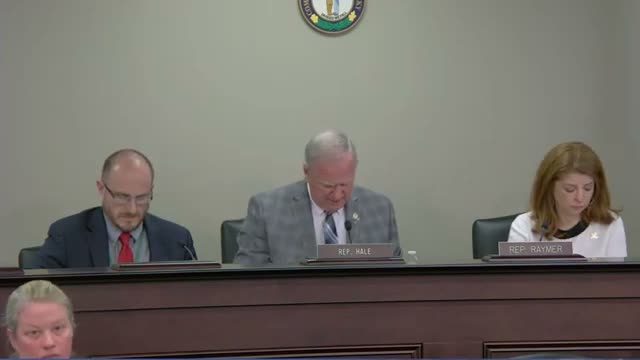
Summary
The House State Government Committee voted to advance House Bill 145, which would remove caps on nonmerit (political) appointees for independently elected constitutional officers and allow those officers to award merit-pay raises up to the midpoint or top of a range without Personnel Cabinet approval; the committee passed the bill 15–3 with one pass.
House Bill 145, which would remove staffing caps on nonmerit political appointees for independently elected constitutional officers and let those officers grant raises for merit employees up to the midpoint or top of salary ranges without Personnel Cabinet approval, passed out of the House State Government Committee on a favorable vote.
Representative Peyton Griffey (R-26th District), the bill’s sponsor, said the measure is a refile of last year’s House Bill 738 and is intended to “remove some layers of bureaucracy” and add flexibility to personnel decisions for independently elected officers. “So right now, they’re capped, and we would be removing that cap,” Griffey said, and he added the bill would let officers “give raises up to the midpoint or the top of that salary” without the extra Personnel Cabinet step.
Supporters framed the bill as a streamlining measure for constitutional officers. Opponents raised concerns about equity and pay compression across state government. Representative Hancock questioned why independently elected constitutional officers should receive broader salary authority than executive-branch agencies, noting existing compression fixes in the current budget and arguing for consistent treatment across branches. Hancock said she would vote no on the bill.
The committee recorded 15 yes votes, 3 no votes and 1 pass; the chair announced the bill passed with a favorable recommendation. The transcript does not identify who made the motion and second or the precise statutory cap numbers for nonmerit positions; those details were not specified during the hearing.