
Committee Hears Hours of Testimony on HB 12‑68 Amendment That Would Remove Routine Homeschool Notices
Get AI-powered insights, summaries, and transcripts
Subscribe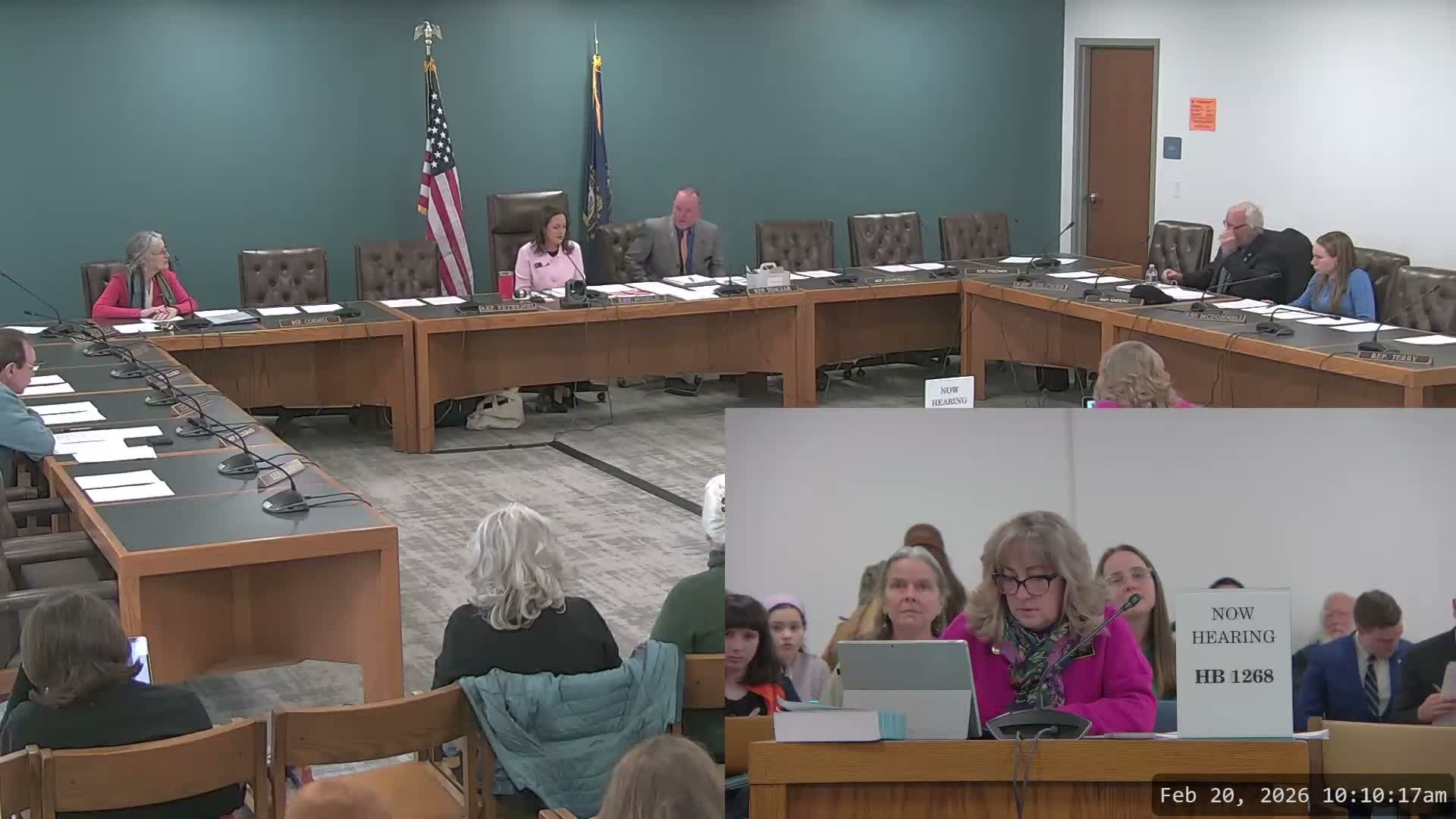
Summary
The House Education Committee heard extensive pro and con testimony on HB 12‑68 and a non‑germane amendment (202606h) that would make notification and annual evaluations optional for RSA 193‑A home educators while adding statutory protections on inspections, data sharing and evidence use. Supporters framed it as restoring parental rights; opponents warned of legal gaps with DCYF, truancy and special‑education law.
Representative Kristen Noble opened the hearing on HB 12‑68 and the committee’s non‑germane amendment, saying the changes aim to draw a clearer line between unfunded home education under RSA 193‑A and the Education Freedom Account pathway. Noble told the committee the amendment makes notification optional except when parents seek access to public‑school programs, makes annual evaluations voluntary and adds protections against warrantless home inspections and agency data sharing without parental consent. "Home education is not a negative," she said, arguing the bill would protect families from punitive treatment.
The committee then heard personal testimony spanning several hours. Alessandra Rodriguez Murray (Hillsborough District 20) testified in opposition from her experience as a homeschooled student, saying inconsistent documentation left her structurally unprepared for college: she had "no transcripts, no clear documentation of coursework" and did not begin college until her mid‑20s. Murray urged the committee to preserve mechanisms that would help students transition to higher education, such as annual check‑ins or connections to guidance counselors.
Many veteran home educators and advocates urged the committee to adopt the amendment. Witnesses described encounters with DCYF or school districts they said were intrusive or hostile; several asked the committee to include anti‑coercion language and civil remedies to deter bad‑faith reports. Diane Nolan and other witnesses presented cost‑saving calculations and individual success stories to argue that families responsibly educate children without routine state supervision.
Legal advocates and organizations also testified. Ralph Rodriguez of the Homeschool Legal Defense Association (HSLDA) said the amended bill ‘‘clarifies and strengthens’’ statutory recognition of home education and reduces unnecessary regulatory burden. Ian Hewitt, representing Cornerstone, argued that several other states operate without mandatory notification and that the amendment’s exclusionary language around evidence use and civil remedies (including fee awards) could provide meaningful protection in court.
Opponents and neutral witnesses raised procedural and legal concerns. Several speakers — including advocates and home educators who considered themselves in the ‘‘middle’’ — told the committee that removing notification and evaluation requirements without coordinating changes to related statutes (attendance, truancy, and the Child Protection Act) could leave families legally vulnerable and subject to invasive investigations. Erin Mertz, a home‑educating parent supportive of parental freedom, nonetheless warned that "sending a child to public school does not guarantee that child will be safe," underlining the complexity of balancing safety and liberty.
Committee members probed how proposed civil remedies would interact with mandatory‑reporting duties and asked whether mental‑state standards for bad‑faith reports are practicable. Proponents replied that carve‑outs for "articulable facts" would preserve mandated reporting for suspected abuse or neglect and that attorney‑fee provisions are a standard enforcement tool. Members also asked whether Connecticut’s no‑notice practice is an appropriate model; proponents said Connecticut’s statutory framework is instructive but that local practice matters.
At the close of public testimony the chair recessed and later opened a separate hearing on CACR 24 — a proposed constitutional amendment to affirm parental rights to direct their children’s education. The committee did not take votes on HB 12‑68 or the amendment during the hearing; the record remains open for written submissions and suggested language changes.
What happens next: the committee will retain the bill record and may incorporate stakeholder language or redrafts before marking the bill for committee action. Witnesses on both sides offered to provide drafting suggestions and technical edits via the committee's portal.