
House panel hears bill to align crime‑victim protections with safe‑leave rules
Get AI-powered insights, summaries, and transcripts
Subscribe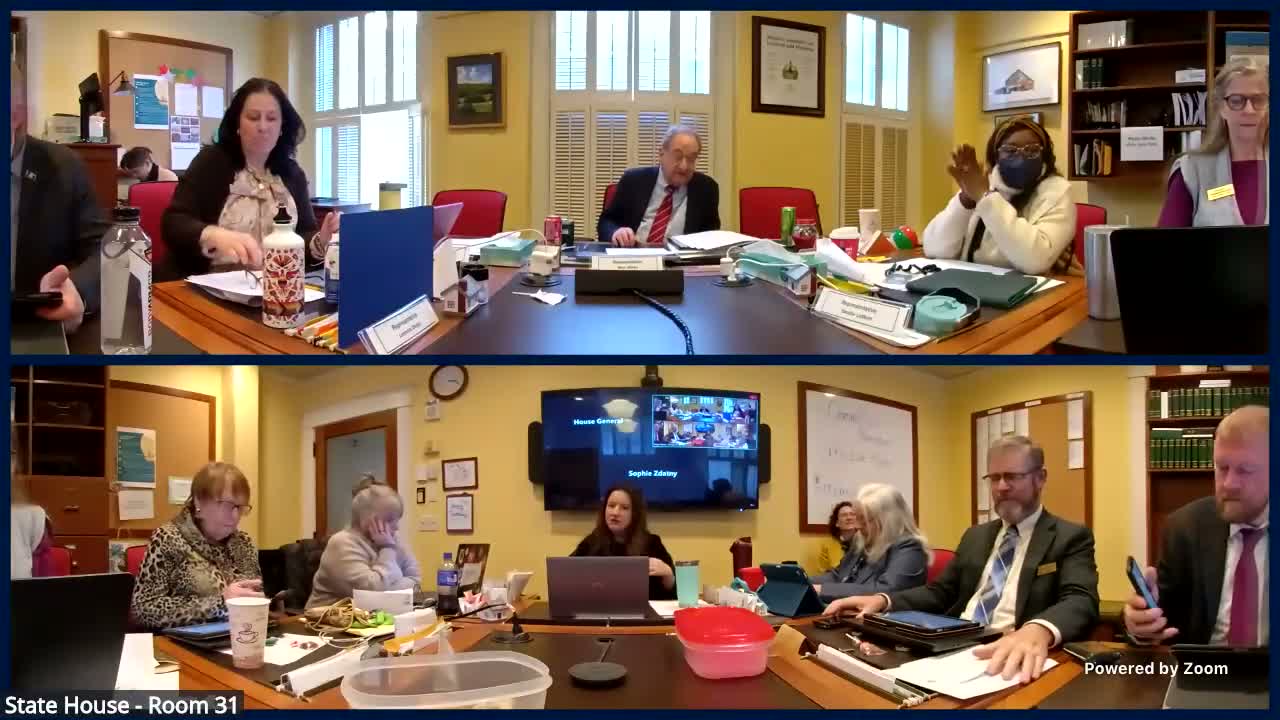
Summary
The House Committee on General and Housing considered H.887, which would add survivors of domestic violence, sexual assault and stalking to the Fair Employment Practices Act’s crime‑victim category and import safe‑leave documentation rules so survivors without court orders can access anti‑discrimination protections.
The House Committee on General and Housing on Feb. 24 considered H.887, a bill to align protections for survivors of domestic violence, sexual assault and stalking in the Fair Employment Practices Act with the documentation rules in the Parental and Family Leave Act.
Sophie Sedatny of the Office of Legislative Council told the committee the proposal copies the parental‑family‑leave list of acceptable supporting documentation into the Fair Employment Practices Act so that survivors who can take safe leave will also be able to claim status as crime victims for anti‑discrimination purposes. "This would allow somebody to let their employer know that they are a victim of domestic violence, sexual assault, or stalking, and so they would then have the protections under the Fair Employment Practices Act," Sedatny said.
The change is intended to address a gap the Attorney General’s victims unit identified, Sedatny said: survivors who have not obtained court relief such as an order against stalking or a relief‑from‑abuse order may be eligible for safe leave but lack the particular documents currently listed in the Fair Employment Practices Act that signal crime‑victim status.
Sedatny also acknowledged concerns raised on the senate side about self‑attestation language in the parental‑family‑leave statute. She said the bill uses the same language the General Assembly passed last session but noted employers and courts retain the ability to contest discrimination claims and that plaintiffs ultimately must show an adverse action was taken because of the protected status.
A committee member urged the House to advance its own version of the measure rather than rely on parallel senate language, and asked staff to invite witnesses from the Attorney General’s Office (Todd Dallas) and a network representative (Charlie Blisterman) to explain the need for alignment. "I think it could be passed pretty easily," the member said.
The committee agreed to schedule consideration of H.887 if time allows and to pursue testimony from the Attorney General’s Office. The panel adjourned until 09:15 the next day.