Get Full Government Meeting Transcripts, Videos, & Alerts Forever!
Get email alerts on the Indian Water Rights topic
No spam. Unsubscribe anytime.
Committee flags funding gap as it advances 10 Indian water rights settlements
Summary
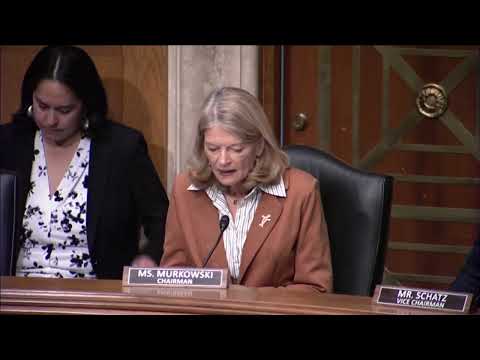
An unnamed committee leader told the Senate Committee on Indian Affairs that 10 bills before the panel are Indian water rights settlements intended to secure reliable water for tribal nations, but warned several include mandatory funding and "may be difficult to see through without a pay for."
An unnamed member of the Senate Committee on Indian Affairs opened the session by saying the committee is working to move a package of bills to the full Senate, including 10 Indian water rights settlements intended to guarantee tribes and neighboring communities reliable water access.
"These water rights settlements are the way that we help tribal nations obtain safe reliable water supplies that in turn improve public health and enable economic growth," the Unidentified Speaker said. The speaker described settlements as a way to end decades of controversy and provide certainty for tribes and surrounding communities.
The chair also cautioned about costs. "Indian water rights settlements are expensive and that's largely because it costs a lot to build a new infrastructure to physically access and develop water rights so that there is actual wet water for tribal citizens," the Unidentified Speaker said. The speaker added that "several of the Indian water settlements we are considering authorize some mandatory funding, meaning that they're gonna score," and warned, "I do worry this approach for settlements may be difficult to see through without a pay for for identified."
Why it matters: Indian water rights settlements typically pair legal agreements resolving competing claims with funding and infrastructure to put water to use. The committee's focus on these settlements signals the Senate is considering both the legal and budgetary steps needed for tribes to obtain long-term water supplies.
What remains unclear: The transcript records the chair's concern about a missing "pay-for" but does not identify specific offsets, funding sources, or which settlements include mandatory funding. Those details were not specified in the transcript.
The meeting then moved on to other sponsored legislation; the Unidentified Speaker turned the floor to Vice Chairman Schatz for further remarks.