Get Full Government Meeting Transcripts, Videos, & Alerts Forever!
Get email alerts on the Economy topic
No spam. Unsubscribe anytime.
Hill: Jobs report weak, Fed may ease; targeted tariffs preferable to across-the-board approach
Summary
Representative French Hill described the latest jobs report as weak and said the Federal Reserve may ease rates this fall; he argued against broad tariffs and urged resolving key trade agreements first to strengthen U.S. leverage with China.
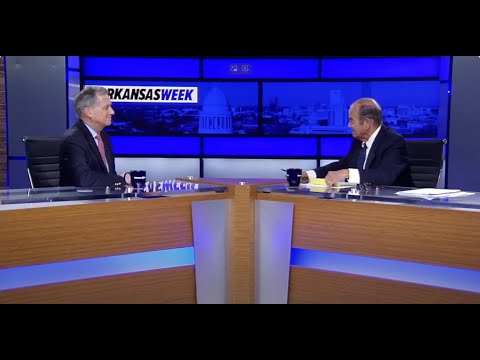
Representative French Hill told host Steve he viewed the most recent jobs report as "weak" and said the data suggest the economy is "biased towards slowing" rather than robust. "I think the Fed probably this early this fall will ease interest rates," Hill said, citing uncertainty in the economic outlook and noting Federal Reserve Chair Jay Powell's public statements that direction was unclear.
On trade policy, Hill criticized across-the-board tariffs and advocated a targeted, strategic approach: first secure trade settlement and agreements with partners under USMCA and with allies like South Korea, Japan, the United Kingdom and the European Union to improve negotiating leverage with China. "My best advice to the president would be, let's resolve USMCA, Korea, Japan, the UK, and the EU," he said, arguing that combined leverage with those partners would strengthen U.S. negotiating position.
Hill said tariff uncertainty has made business planning and capital spending cautious and that, depending on scope, tariffs can be inflationary. He noted businesses were sharing some tariff costs when rates were under about 20%, but that higher tariffs could cause supply shifts and purchasing changes.
What’s next: Hill said he has urged administration and agency officials to provide clarity on tariff policy and predicted companies would remain cautious until trade settlement outcomes become clearer.