Get Full Government Meeting Transcripts, Videos, & Alerts Forever!
Get email alerts on the Nuclear Safety topic
No spam. Unsubscribe anytime.
INL explains how TREAT simulates reactor accident conditions to test nuclear fuel
Summary
Idaho National Laboratory technical lead Colby Jensen described how the Transient Reactor Test Facility (TREAT) exposes fuel samples to rapid neutron-driven power transients to simulate accident conditions, monitor behavior and improve fuel designs.
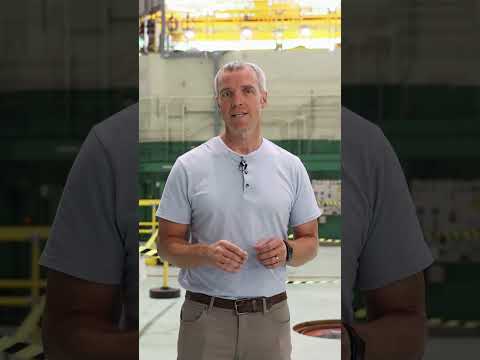
Colby Jensen, INL technical lead for transient testing at the Transient Reactor Test Facility (TREAT), outlined how the laboratory subjects nuclear fuel samples to rapid, controlled power transients to study performance under accident conditions.
“At TREAT, we test nuclear fuels under accident conditions to ensure they perform safely and effectively,” Jensen said. He described the process: fuel samples are placed inside a test device that is inserted into TREAT, then exposed to a rapid neutron pulse that heats the specimen and reproduces reactor accident environments.
Jensen said TREAT can simulate a wide range of reactor conditions. “In short bursts, it can reach power levels of 1,000 times of a big commercial reactor,” he said, and it also can be controlled to reproduce low decay-heat levels. That range, Jensen said, allows researchers to study both mild and extreme transients in representative conditions.
As an example, Jensen described a loss-of-coolant scenario: the sample is surrounded by water, the test intentionally drains the water to a lower tank to remove cooling, and the specimen heats to stresses that test its design margins. He said those experiments reveal how and when fuel behavior transitions from intact to damaged under realistic thermal and mechanical loads.
Instrumentation is central to the tests, Jensen said. Detectors monitor neutron emissions and other signals during the transient so researchers can precisely time and quantify the specimen’s response. “In short, we can push the fuel to its breaking point with precision measurements,” he said.
Jensen framed the work as both safety- and design-focused: studying failure thresholds helps operators run current reactors safely and guides development of improved fuel for future reactors. The presentation was an informational briefing; no policy decisions or formal actions were recorded in the transcript.