Lifetime Citizen Portal Access — AI Briefings, Alerts & Unlimited Follows
Mesa utility forecast: capacity fee covers $400M of growth projects; reserves and water risks discussed
Loading...
Summary
Utility staff told council that adopting a capacity fee moved about $400 million of growth projects off base utility rates and improved the five‑year utility forecast; presenters warned of inflationary cost increases for water/wastewater and said Colorado River cuts are a credit risk under bond rating reviews.
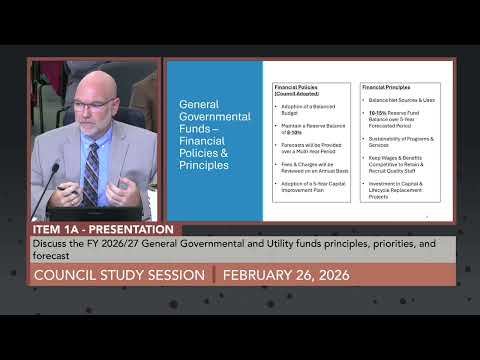
Utility staff presented an updated multi‑year forecast on Feb. 26, saying the recent adoption of a capacity fee allows Mesa to fund roughly $400,000,000 in growth projects without embedding that cost in base utility rates.
Staff outlined sharp cost increases across utility operations over the past four years — for example, water commodities and chemical costs rose more than 50% in several line items — and emphasized that the 91st Avenue water reclamation plant and Val Vista treatment plant have required higher maintenance spending. "The water commodity, those have increased 56% over this 4 year period," a utility presenter said while reviewing the operating‑cost trend.
Capacity fee and bond implications: staff said the capacity fee transfers the capital cost of growth projects out of base rates; debt service remains tracked separately but the forecast now shows the utility fund recovering to roughly 20% reserve levels toward the end of the horizon. Mike Kennington said a recent discussion with Fitch credit analysts identified Colorado River supply reductions as a risk factored into bond considerations. "We actually had a meeting with Fitch... and that did come up as one of the risks," he said.
Council concerns and examples: council members asked whether the city’s higher reserve targets were excessive and asked staff to explain the public purpose for maintaining reserves above policy minimums. Staff replied reserves are mainly for unexpected incidents (for example, a cited water main break that cost roughly $15,000,000), provide flexibility to time projects, and improve credit ratings — which can lower long‑term borrowing costs and benefit future ratepayers.
Capital projects: staff said priority utility projects include completion of the Central Mesa reuse pipeline, completion of smart metering this calendar year and the Signal Butte Water Treatment Plant expansion through 2027. Staff also said wells for growth are included in capacity‑fee projects while rehabilitation of existing wells is tracked in the base utility forecast.
Next steps: staff will proceed with utility‑side rate and capacity‑fee discussions as part of the upcoming budget process and an impact‑fee study aimed at ensuring "growth pays for growth" where state law permits.