Get Full Government Meeting Transcripts, Videos, & Alerts Forever!
Get email alerts on the Historic Preservation topic
No spam. Unsubscribe anytime.
Historic preservation commission outlines landmarking, considers local historic district
Summary
The Historic Preservation Commission presented the role of local, state and national registers, explained benefits such as state tax credits and a city mill rebate, and discussed outreach and a petition threshold (50% by area) for any proposed local historic district.
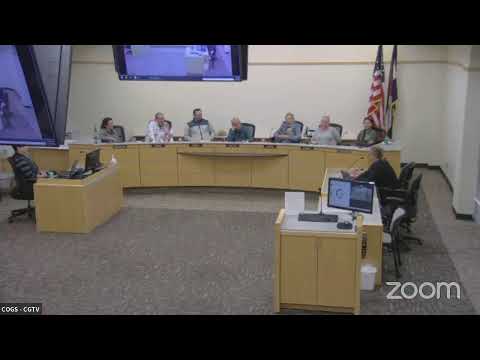
Emery of Community Development briefed the Planning & Zoning Commission on Oct. 22 about the Historic Preservation Commission's mission, local benefits of landmarking and steps needed to form a local historic district.
Emery said Glenwood Springs is a Certified Local Government under the National Historic Preservation Act, which establishes the National Register at the federal level and state historic preservation offices. He noted the city has eight national/state registered structures and 13 local landmarks and described the local process: an owner applies for landmarking, the Historic Preservation Commission reviews the application and makes a recommendation to City Council, which makes the final decision.
On benefits, Emery said local landmark owners may be eligible for a city property‑tax rebate (the city portion of the mill levy) and for state of Colorado tax credits intended for rehabilitation projects; he estimated typical residential rebate amounts in a range depending on assessed value. He emphasized that national or state register listing is separate and not subject to local exterior review, while local landmark status triggers a local landmark alteration certificate process for exterior changes.
Commissioners and Emery discussed a potential local historic district east of downtown. Emery explained that the ordinance requires a petition signed by property owners representing 50% of the land area in the proposed district before the Commission will consider a district application. Commissioners raised typical concerns — owner consent, outreach, district boundaries and how rules would apply to noncontributing properties — and stressed the need for community engagement before any petition is pursued.
Emery described outreach steps already taken, such as surveys, public presentations and informational materials: "preservation is a conversation with our past about our future," he said, quoting the National Park Service language used in his slides. He also noted practical incentives and trade‑offs: while landmarking can bring tax credits and a rebate, it involves an extra review step for exterior changes; removal of a landmark would follow a formal application process and City Council decision.
The presentation highlighted the museum's role as a research resource for landmark applicants and noted that local landmarks and surveys helped define the tentative boundary the Preservation Commission used in discussion. Emery said the Commission's near‑term goals include bolstering the local landmark program, establishing a local historic district option and considering demolition/deconstruction rules to protect historic fabric.
Commissioners indicated support for outreach and education to property owners, and staff said they will coordinate additional public engagement before any formal district petition is pursued.