Get Full Government Meeting Transcripts, Videos, & Alerts Forever!
Get email alerts on the Quasi Judicial Training topic
No spam. Unsubscribe anytime.
City attorney trains planning commissioners on quasi‑judicial rules, ex‑parte communications
Summary
City Attorney Holly Wells gave an extended training explaining quasi‑judicial versus legislative roles, the limits of ex‑parte contacts, how the record constrains decisionmaking, options for drafting findings and written decisions, and best practices to avoid due‑process errors in permitting and appeals.
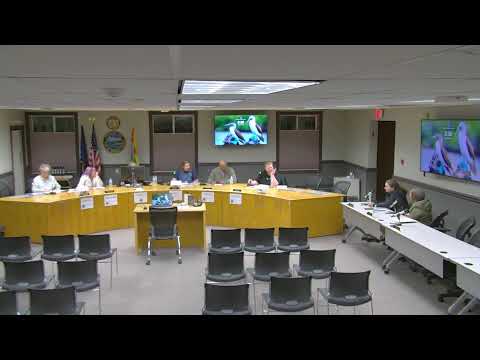
City Attorney Holly Wells delivered a comprehensive training to the Wasilla Planning Commission on Feb. 24, focusing on the commission’s quasi‑judicial role, the importance of keeping the hearing record limited to submitted evidence, and how to handle ex‑parte communications and conflicts.
Wells framed the commission’s quasi‑judicial duties as similar to a judge’s responsibility to decide based on the record: "So, basically, the record is a box. And if it's not in the box, you can't judge it." She walked commissioners through notice requirements, the burden applicants bear to demonstrate permit criteria, and the risks when commissioners consider information obtained outside the record.
Wells used a recurring hypothetical—whether a local fire department has a ladder truck—to illustrate the problem of outside information. She advised commissioners to disclose any ex‑parte contacts on the record and, when necessary, to continue a hearing, request a site visit or reopen the record so all parties can respond. She also explained that the commission may make findings on the record and then direct staff or counsel to draft a written decision, or alternatively adopt a packet resolution as written findings.
On abstention and conflicts, Wells said commissioners may need to refrain from participating if they acquire disqualifying information during a hearing; otherwise, decisions should be made only on the information contained in the hearing record. She emphasized procedures to protect due process and reduce appeals risk, noting that some procedural flexibility exists but must be used with care.
Commissioners asked many practical questions about evidence, the planner’s role, and whether findings should be part of the original motion or drafted afterward; Wells gave examples of common community practices (resolutions for routine permits, written decisions for complex cases) and recommended additional targeted trainings and role‑play exercises.
What’s next: the attorney said staff will work with the commission to schedule follow‑up training sessions and will propose code changes (Title 16 updates) where appropriate to clarify notice and procedural rules.