Get Full Government Meeting Transcripts, Videos, & Alerts Forever!
Get email alerts on the Community Culture Events topic
No spam. Unsubscribe anytime.
Local organizer pitches Mexican Heritage Celebration and asks county support; commissioners flag timing and procurement constraints
Summary
A group led by Estella Garcia asked Lea County to consider supporting a Mexican Heritage Celebration and requested county funding of about $500,000 to stage an educational and cultural event at the fairgrounds; commissioners praised the idea but said timing, animal logistics and procurement rules (RFP) mean the fairboard and staff must follow formal processes before public funds could be used.
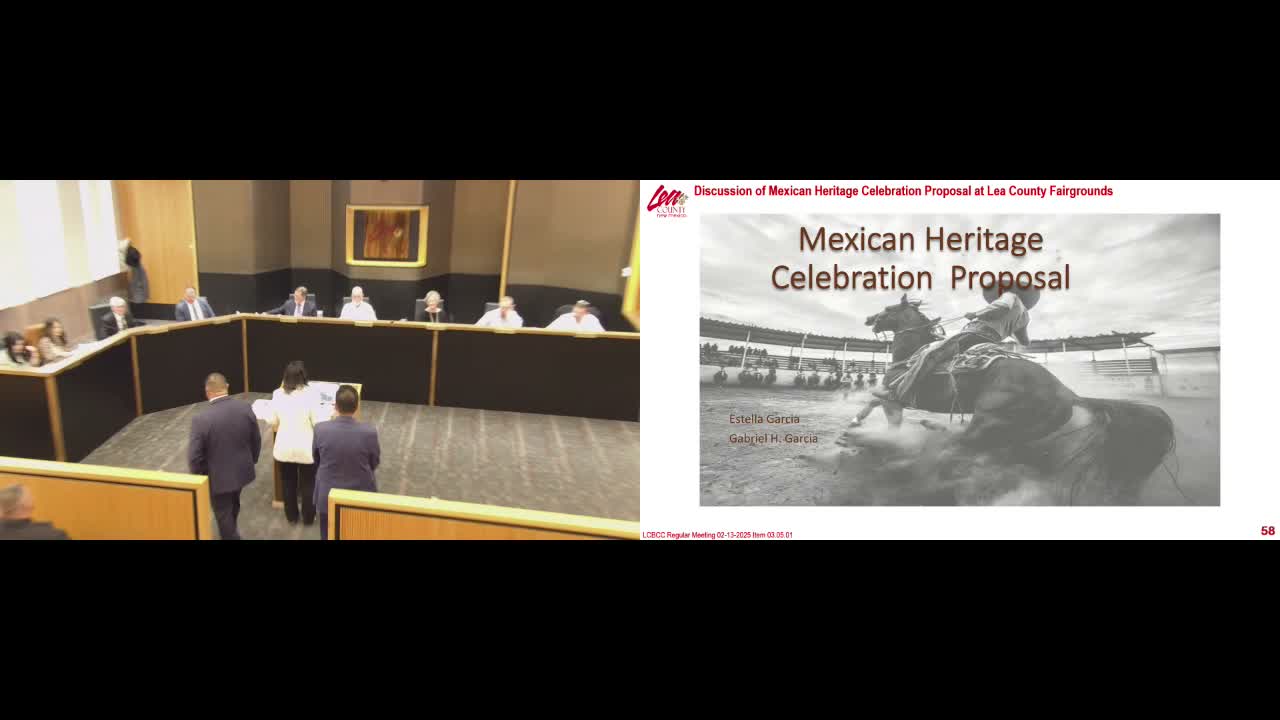
Estella Garcia and community partners presented a proposal to revive a Mexican Heritage Celebration at the Lea County Fairgrounds, describing a multi-part event that would include charreada (traditional Mexican rodeo), mariachi and folklorico performances, youth programming and a headlining concert. Garcia said the concept is intended as a family, educational and cultural event and "is not meant to be made to make a political statement."
Antonio Reyna, a production company proprietor, described the economic potential and audience: he cited county demographic data and argued a high-quality cultural event could draw visitors, boost local gross receipts and support small businesses. Reyna said a production-level version of the event would require substantial production costs and presented a proposed county ask of about $500,000 to cover staging, livestock transport, talent and production management if the county were to consider direct support.
Commissioner response and procurement constraints: Commissioners and fairgrounds staff were supportive of the cultural intent but flagged practical constraints. Fairgrounds staff and former fairboard members explained that the existing fair schedule and PRCA rodeo requirements make staging a large livestock event during the fair difficult; July 1 deadlines for fair preparation and PRCA facility requirements were cited. County procurement rules were raised by one commissioner: if public money is used for production, any contracting for services such as production, stock person or talent procurement would generally need to follow an open RFP process that allows competitive bids. As staff attorney/interim manager counsel noted, the county could support the concept but would have to follow procurement rules and may need to run an RFP rather than directly award a contract to the presenters.
Alternative options discussed: Commissioners and presenters discussed holding the event outside the fair (e.g., in October or at the Events Center) or running an RFP so local firms could bid. Presenters indicated flexibility on timing and venue and offered to return with more detailed budgets and a procurement-compliant plan.
What happens next: Commissioners did not commit public funds at the Feb. 25 meeting. Staff suggested the fairboard and county procurement office evaluate timing, animal logistics and RFP approaches; presenters were invited to return with a detailed, procurement-ready proposal if they wish.