Get Full Government Meeting Transcripts, Videos, & Alerts Forever!
Get email alerts on the Water topic
No spam. Unsubscribe anytime.
Multi-agency team outlines Longhorn Estates water issues, residents prioritize infrastructure and governance
Summary
A team led by UNM and regional water partners told the Curry County Commission residents of Longhorn Estates face infrastructure and governance gaps; bacteriological, PFAS and arsenic testing came back negative and next steps include community meetings, forming a mutual domestic water association and pursuing partnership options.
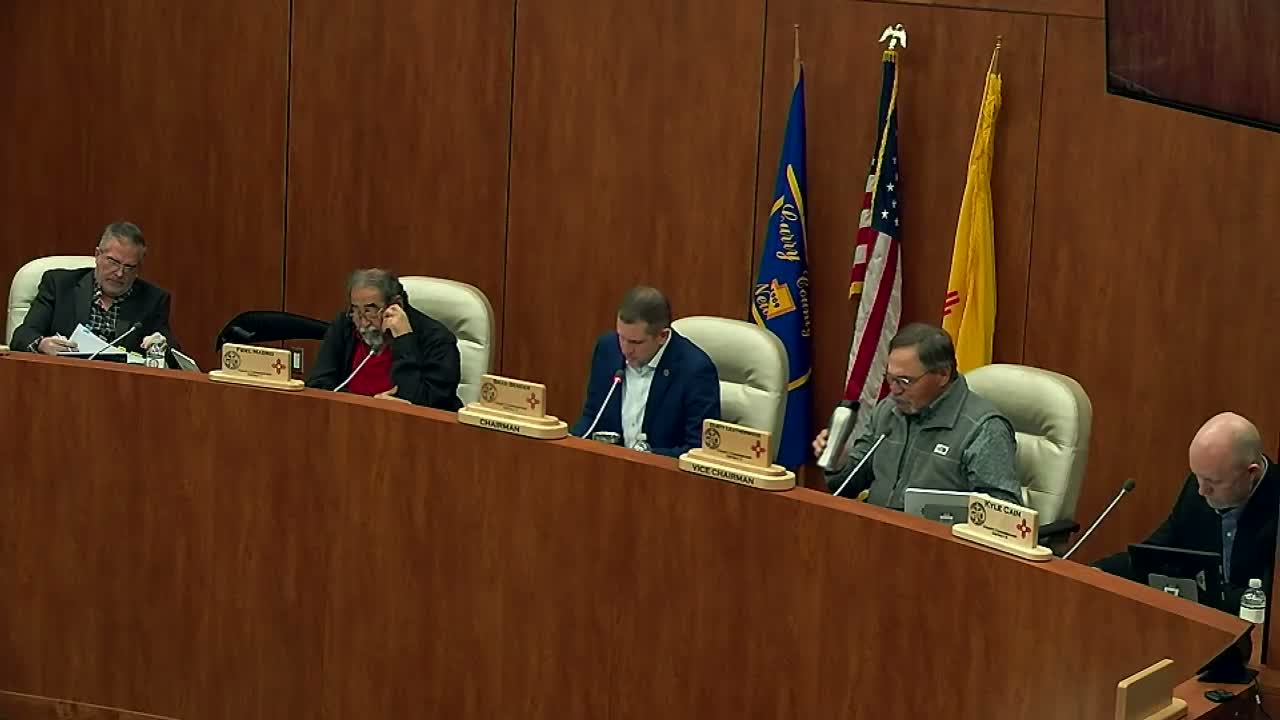
A multi-agency team updated the Curry County Commission on Jan. 14 about water-system problems and community outreach at Longhorn Estates, a subdivision of roughly 74 hookups that has not had regular testing for more than four years and lacks a formal water board and certified operator.
Presenter Mr. Mondragon said the team — including the University of New Mexico’s Southwest Environmental Finance Center, the Rural Community Assistance Corporation and the U.S. Water Alliance — has been working with residents and the New Mexico Environment Department to document system deficiencies and to build local confidence in planning and governance. He said a November 12, 2024, community meeting drew 17–20 residents who ranked priorities such as replacing aging infrastructure, ensuring water affordability and creating a community-owned or regionally operated governance structure.
The team reported bacteriological sampling by Metro Rural Water Association returned negative results and that samples were negative for PFAS and arsenic. Mondragon said the team has located articles of incorporation and prior governing documents (found in a resident’s records) and is evaluating those to help form a mutual domestic water association.
Commissioners praised the outreach. Mondragon said the next step was another community meeting scheduled the evening of Jan. 14 at the Eastern Plains Council of Governments and that the team will continue to support residents in defining governance, rates and the path to sustainable operations.
Quote: "Our team is working with residents of the Longhorn Estate community to make sure that the drinking water system has all the tools it needs to provide high quality water now and in the long term," Mondragon said.
Why it matters: Longhorn Estates lacks regular testing, formal governance and a certified operator — gaps that create both public-health and long-term affordability risks. The report’s negative contaminant tests ease immediate public-health alarms but do not eliminate the need for governance and capital work.
What comes next: Continued community meetings, technical assistance from partner organizations, formation of governance documents and exploration of regional partnerships or other funding and operating models.