
Judicial leaders flag five Supreme Court seats on 2026 ballot and outline court policy priorities
Get AI-powered insights, summaries, and transcripts
Subscribe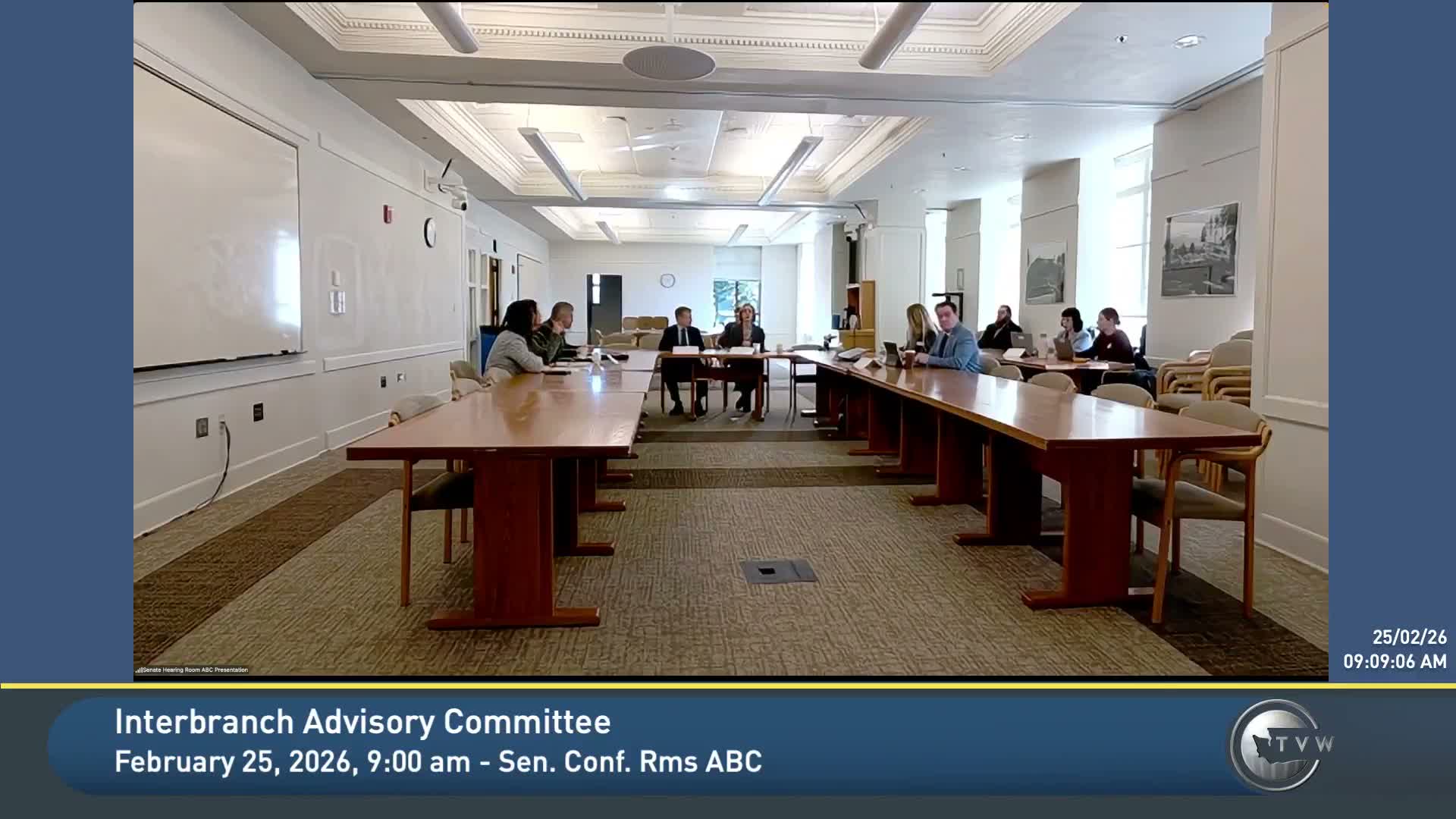
Summary
Branch leaders told the interbranch advisory meeting that multiple Supreme Court seats will be up in November 2026, that a steering committee is forming for transitions and onboarding, and that the court is developing internal AI guidance while addressing NextGen bar exam and entity regulation pilots.
Chief opened the meeting with a Supreme Court update, asking members to welcome the court’s newest justice, Colleen Melody, who joined in January. The chief said the court is in a period of significant transition: Justice Madsen will retire on April 1 (the governor intends to appoint a successor), Justice Charles Johnson is reaching the constitutional maximum age and will not seek reelection, and Justice Montoya Lewis has announced she will not run again. “Make no mistake, there will be 5 seats on the Supreme Court on the November 2026 ballot,” the chief said.
Leaders said the branch has formed a steering committee to manage onboarding and knowledge transfer for incoming justices. The chief also described operational priorities beyond casework: the court is “developing an internal AI protocol” and is coordinating with WISPA and other partners on AI and court rules. The court has asked the practice of law board to take on legal technology issues and to convene stakeholders on those topics.
On admission standards, the chief noted the court issued an order setting a passing score for the NextGen uniform bar exam, with a comparability process for applicants who previously took the legacy UBE. The practice of law board and Bar-related partners are working on portability and admission issues across states.
Jaylee Schultz, the branch’s legislative director, summarized related bills: Substitute House Bill 2178 (a technical fix) and Senate Bill 5868 (a request to add superior court judges in Skagit and Yakima counties) remain alive and are moving through committees. She also summarized Engrossed Substitute Senate Bill 6086, a judicial security bill that combined two earlier proposals; the substitute version removed provisions addressing unlawful online release of personal information and kept threat‑assessment provisions, while adding the Board for Industrial Insurance Appeals judges to the definition of judicial officer and renaming the security consultant role to security personnel.
Next steps: leaders said Governor’s office vacancy processes are underway for the April appointment and that the branch will continue coordinating through the steering committee, rulemaking channels, and the legislative process as bills move through executive sessions and floor votes.