SeaTac (SCA) presents 31‑project master plan, says FAA NEPA found no significant impact; SEPA EIS to add environmental justice analysis
Loading...
Summary
SCA (SeaTac) described a 31‑project master plan including a proposed second terminal with 19 gates, baggage and curb improvements, and a ground transportation center; SCA said FAA issued a NEPA finding of no significant impact and that the Port will run a SEPA environmental impact statement that will include further environmental‑justice and air‑quality analysis.
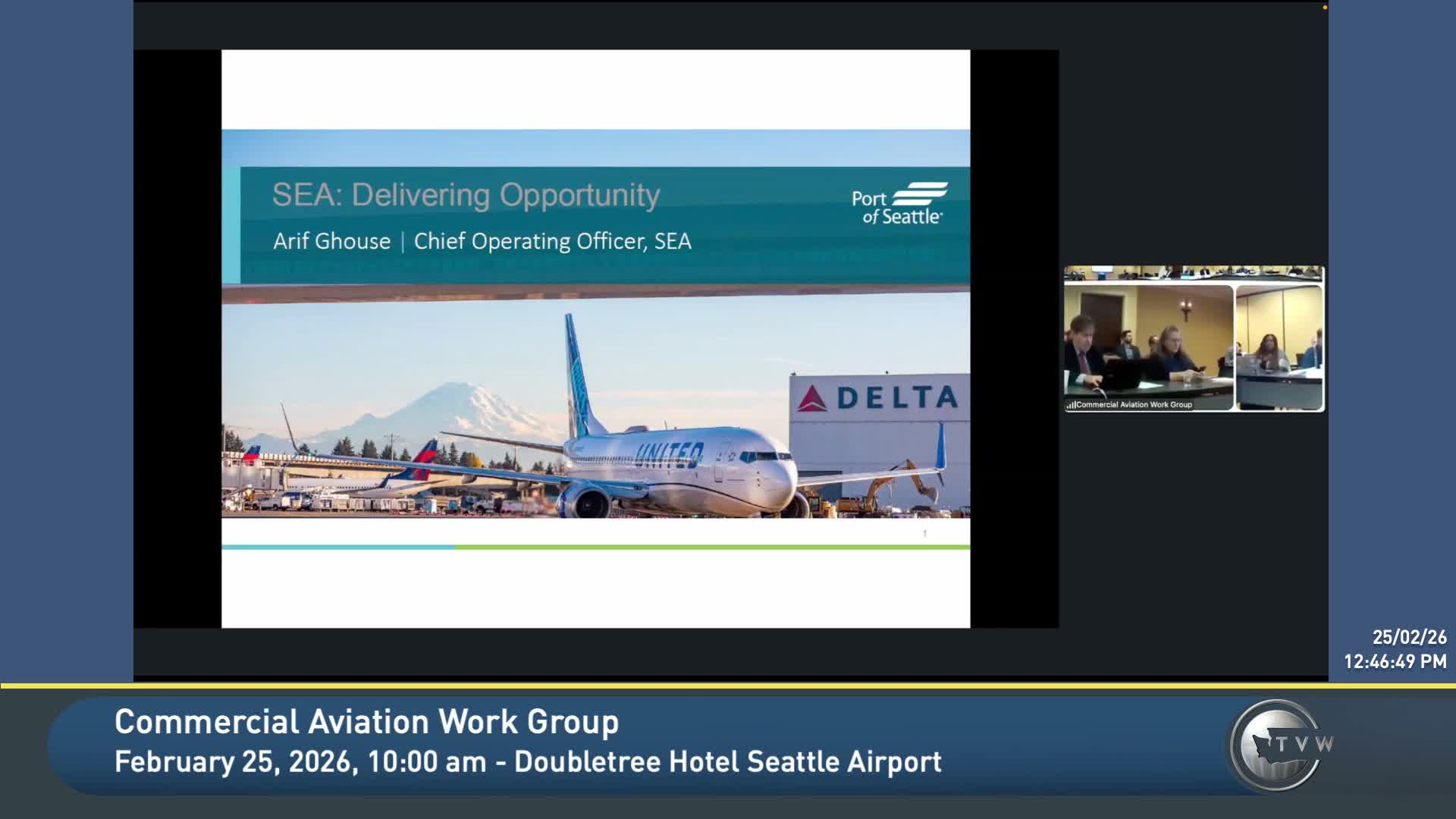
SCA (the city’s primary airport operator) briefed the Commercial Aviation Work Group on Feb. 26 about a 31‑project master plan and the environmental review path it will follow. "In 2019, we were serving 52,000,000," Albert, SCA’s chief operating officer, said as he outlined demand growth and the need to improve customer experience while operating inside a constrained footprint.
SCA described near‑term investments already completed or underway (checkpoint expansions, baggage system upgrades, curb and roadway improvements and north‑end gate work) and proposed a second terminal to the north with roughly 19 additional gates, added roadways, a new parking structure, a ground transportation center, and an elevated people mover or connector. SCA told the group the FAA completed an environmental assessment under NEPA and issued a Finding of No Significant Impact for the master plan package; SCA said the Port will lead a separate SEPA environmental impact statement that will include additional analyses not in the federal EA, including advanced dispersion modeling and explicit environmental‑justice review.
Community members used the public‑comment period to press for stronger mitigation and compensation for neighborhoods near the airport. JC Harris, a community representative, urged that “any second airport consideration” include public‑health protections and compensation for fence‑line communities. Port staff responded that the draft NEPA EA did include environmental‑justice analysis in appendices and that the forthcoming SEPA process will provide additional opportunities for public comment and technical work.
On ground access, SCA said it is studying a ground‑transportation center to improve connections to transit and separate curbside circulation; project concepts include a dedicated access road, additional curb lanes, and a new parking structure designed to accommodate moving walkways and higher accessibility standards. SCA reported a measurable uptick in rail usage (about 11% of passengers currently use light rail) and said it is coordinating service and modeling with WSDOT where appropriate, while noting statewide high‑speed rail remains early in WSDOT planning.
Funding and mitigation questions were frequent in the Q&A. Committee members and commenters asked whether tolling, pricing of curb access, higher PFCs, or alternative revenue sources would be used to pay for capacity and curb improvements; Port staff said those revenue and policy options are being modeled but that any changes must work within federal law, airline agreements, and competitive constraints.
SCA said its SEPA draft EIS is under preparation with public release targeted later this year and a final SEPA decision expected next year; the Port described ongoing outreach (open houses, technical meetings, multilingual engagement) and said technical experts will conduct air dispersion and environmental‑justice modeling as part of the SEPA process. The work group moved from the presentation into discussion of follow‑up items, and the meeting set the next full session for July 8.