Get Full Government Meeting Transcripts, Videos, & Alerts Forever!
Get email alerts on the Education Budget topic
No spam. Unsubscribe anytime.
Weston board reviews revised budget after health‑insurance spike; parents urge protecting staff
Summary
Board members and administration agreed to advance a revised operating request with a 3.91% increase after a state health‑insurance projection raised district costs; parents at public comment urged preserving staffing and the district’s grade‑break structure as the board prepares capital and operating votes.
The Weston Board of Education reviewed a revised operating budget on a night of public comment and detailed staff responses, with administration saying an updated health‑insurance projection pushed their operating request to a 3.91% year‑over‑year increase.
Parents who spoke during the allotted public‑comment period urged the board to protect staffing levels and to preserve the current grade‑break organization amid plans for a middle‑school infrastructure project. “I a 100% approve and think [the budget] was very thoughtfully done,” parent Lisa Yanchi said, and asked the board to retain the pre‑K–2, 3–5 and 6–8 structure she credited with district success. Chad Hepner, a parent and former board member, urged the board to prioritize expansion of enrichment programs and questioned the district’s use of classroom technology, quoting research in testimony: “When tech enters education, learning goes down.” Another parent, Aaron Burakoff, said he moved to Weston for the schools and asked the board to avoid staffing cuts that would reduce individualized instruction.
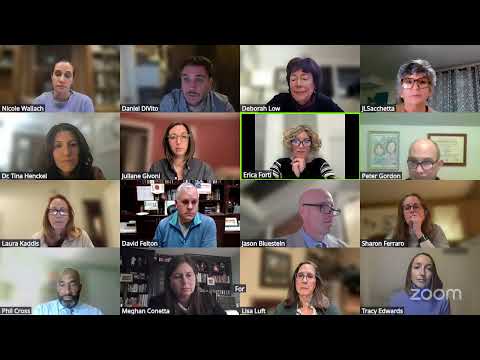
Superintendent Eric Forte opened the board’s question‑and‑answer session, which grouped submitted queries into topics. Phil (district staff) presented late adjustments driven by a state health‑insurance partnership projection that the state indicated could reach about a 15% increase for Fairfield County. Phil said the district’s gross premium change was “just over 200,000” (about $210,000), and that employee premium cost‑sharing offsets reduced the net budget impact to roughly $168,000. He said the administration expects a final state update in March.
Phil also identified offsets and adjustments in the proposal: the first of three planned early‑retirement payments will be about $84,000 beginning in fiscal 2027, and the special‑education program has identified roughly $170,000 in savings tied to changes in student needs. Taken together with other puts and takes, administration reported the operating increase stands at 3.91%.
Board members probed program‑level details. A question about instructional‑materials spending confirmed the proposed increase for materials (outside salaries and benefits) is under 1% of the total budget; administration noted 1% of the current proposed budget is slightly more than $600,000. Julie presented statewide EdSight absence data and told the board that Weston's average classroom‑teacher absence holds near 13 days (with pandemic years requiring caution). The district reviewed the substitute budget in that context and pointed to the teacher contract’s leave provisions (two personal days and 15 sick days, with carryover reported in the presentation).
School‑level operations were also discussed. Phil said he had asked contractor First Student to re‑evaluate bus runs to reduce overall ride times and potential costs; Tracy explained the early learning center requires two vans because route duration—not just passenger count—prevents serving all students in the allotted time on one vehicle. Enrollment snapshots presented to the board showed October 1 counts of 176 (2021), 183 (2022), 151 (2023), 142 (2024) and 172 (2025), with a medium projection of 171 for next year; members flagged sixth‑grade sectioning and concerns about preserving teaming models if sections are altered.
Tina (curriculum and instruction leader) described the district’s multi‑tiered system of support and how interventionist schedules are built around student data: tier‑2 group sizes of about 3–5 students, tier‑3 groups of 1–3 students, minimum 30‑minute sessions and prescribed weekly meeting frequencies that make interventionists’ schedules complex and require rebuilding at least three times per year. In a sample schedule Tina said about two‑thirds of an interventionist’s workweek is direct student academic support.
Board members and administration generally agreed that further meaningful reductions to the budget would likely require cuts to personnel or benefits, and that the district should continue to seek efficiencies (for example, through potential route reductions with First Student or by monitoring insurance‑reserve options). The board scheduled upcoming meetings to finalize the operating budget and to review the capital budget; the chair and superintendent reminded members that a final state insurance update is expected in March.
At the meeting’s close, board member Sharon thanked the administration for its thorough preparation and moved to adjourn; members responded affirmatively and the meeting ended.
Sources: public‑comment remarks and administration responses as recorded in the meeting transcript.