Get Full Government Meeting Transcripts, Videos, & Alerts Forever!
Get email alerts on the Commercial Real Estate topic
No spam. Unsubscribe anytime.
Study: Minnetonka faces elevated office vacancy but sees redevelopment opportunities at big retail site
Summary
Marquette Advisors told the Minnetonka EDAC that office vacancy stands near 16.5% and that large-block vacancies (former headquarters and big-box retail) present both recruitment challenges and redevelopment opportunities; staff and commissioners discussed incentives and master‑developer approaches.
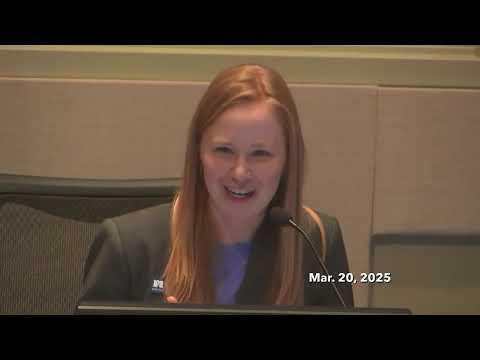
Brent Wittenberg of Marquette Advisors presented a commercial market analysis to the Minnetonka Economic Development Advisory Commission on March 20, highlighting sector-by-sector performance across industrial, office and retail real estate.
Wittenberg said the city’s industrial base — much of it built in the 1970s and 1980s — performs relatively well, with vacancy around 8.1 percent in places and limited new supply expected near Minnetonka due to site constraints. He then turned to office: "If our overall vacancy rate is 16.5%, there are many, many buildings, in fact, most that are well under 10%," he said, underscoring a pattern where a few very large, recently vacated or downsized headquarters-style buildings lift the overall vacancy number even as many smaller buildings remain occupied.
Why it matters: the town has several large vacancies that require different strategies than typical small-suite leasing activity. The commission and consultants discussed recruitment levers (tax considerations and build-out assistance), constraints on economically feasible conversions of large office blocks, and potential roles for the city in master-planned redevelopment.
Specifics and local examples: Wittenberg identified Opus Park and several large buildings as points of focus, and singled out the Westridge Market property as containing more than 130,000 square feet of available retail space (former Dick's/Bed Bath & Beyond/Staples configurations). He characterized Westridge as "problematic in terms of the current situation" but also as a plausible redevelopment site for housing or a mixed-use approach depending on ownership objectives.
Commissioners asked whether medical uses had been overlooked for conversions; Wittenberg said medical demand exists, but retrofitting for health care can be costly and requires targeted analysis. Staff noted successful recruitment examples (Stratasys) and ongoing background discussions with major property owners (including UnitedHealth Group, which vacated portions of a building but retains presence in others).
Next steps: staff and the commission agreed the analysis would inform EIP priorities and outreach to large employers and property owners. Several commissioners recommended intentional recruitment of new businesses and a focus on creating opportunities for newer, smaller businesses to access space in high-demand nodes.
Ending: the consultant report and staff commentary will be used to shape the EIP first draft (due to EDAC in May) and future council conversations about incentives, TIF and targeted redevelopment strategies.