
Mosinee School District highlights student competitions, expands career-cluster work into middle grades
Get AI-powered insights, summaries, and transcripts
Subscribe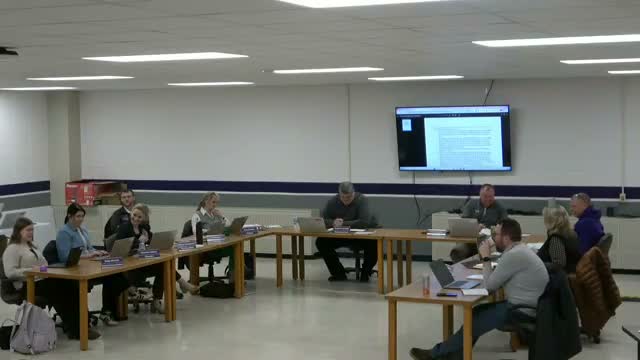
Summary
District administrators reported multiple recent student successes (DECA, SkillsUSA, FCCLA, FFA and NHS), and outlined an expanded Academic & Career Planning program that brings career-cluster panels and course-selection support to eighth-graders and strengthens junior-year conferencing and dual-credit pathways.
An administrator presented the Mosinee School District’s monthly student-achievement report and described steps to expand academic and career planning (ACP) into middle school.
The report noted that DECA medaled in five of six district events and that three students auto-qualified for the State Career Development Conference; SkillsUSA students won second- and third-place finishes at a regional competition; FCCLA returned with six golds and a silver and qualified for the Wisconsin State Leadership Conference; FFA ran a community donation drive for the Marathon Humane Society; and the National Honor Society organized a food drive for Covenant Community Presbyterian Church. “We’re super excited to get into the eighth grade,” a presenter said, describing efforts to teach career clusters and help students identify pathways.
Administrators described Jan. 28’s course-selection night, which paired panels of current high-school students and recent graduates with parents and eighth-graders to illustrate career clusters and the courses that support them. Student panelists included Dakota Duberstein (advanced manufacturing), Adia Zecharas (finance) and Genevieve Thompson (digital art), who spoke about courses, club involvement and workplace experiences tied to their clusters.
The ACP team said the district will continue to emphasize dual-credit and Advanced Placement opportunities, student-led conferences and “junior conferencing” — a personalized meeting in junior year to review transcripts, graduation requirements and post‑high‑school plans. On flexibility, presenters said dual-credit courses are intended to transfer and that students can change pathways; “once you're locked into something at ninth grade, it doesn't mean you have to go down that path,” a presenter said.
Board members asked how ACP advising is delivered (group presentations versus individual meetings) and whether families could meet more frequently; the administration said junior conferencing and student-led conferences provide opportunities for individualized planning. The board did not take formal action on the presentation; administrators said they will continue integrating ACP activities across the year and will advertise community sessions connected to strategic planning.