
Trinity County outlines draft integrated plan for new Behavioral Health Services Act, emphasizes housing and suicide prevention
Get AI-powered insights, summaries, and transcripts
Subscribe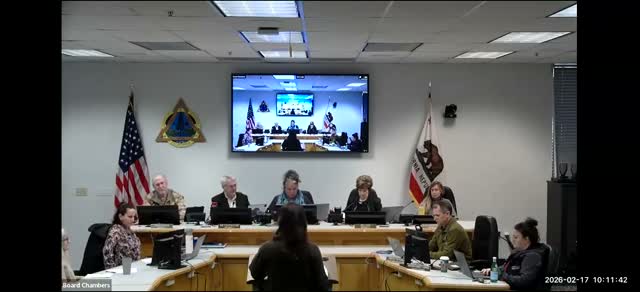
Summary
County staff described the state Behavioral Health Services Act changes and a draft three‑year integrated plan that reallocates behavioral health funding toward housing and full‑service partnerships; survey respondents prioritized suicide prevention and youth services.
At a Feb. 17 meeting the Trinity County Health & Human Services director, Liz Hamilton, briefed supervisors on implementing California's Behavioral Health Services Act (BHSA), the successor to MHSA. Hamilton said statewide voter changes approved in 2024 redirect the 1% millionaire tax into a behavioral health block grant that realigns spending buckets, including a new larger housing allocation and an emphasis on integrated behavioral health and substance use services.
Hamilton said the state is earmarking about 30% of BHSA funds for housing initiatives and 35% for full‑service partnerships to serve people with the most complex behavioral health needs, while counties will receive 90% of the total funding. She told the board the county must prepare a three‑year integrated plan, accept a 30‑day public comment period on a draft, and return to the board for adoption in May with a planned go‑live of the new fiscal structure on July 1.
The county launched a 16‑question survey tied to the plan; Hamilton reported 90 preliminary responses, with suicide prevention, overdose prevention and underdiagnosed behavioral health conditions ranked highest. She said Trinity County recorded 44 reported deaths by suicide between 2016 and 2024, and that both youth and people 65 and older were identified as high‑risk groups in local data and survey responses.
Hamilton described opportunities and constraints: integrating mental health and substance use disorder services under one contract, increased community engagement requirements, and a need to expand education so residents understand eligibility and services. Board members encouraged town‑hall outreach in outlying districts and offered to host presentations to raise awareness.
Hamilton invited supervisors and staff to participate in upcoming mental health advisory board review meetings and urged residents to take the county's online survey when available.