
Lake County residents press supervisors for rent stabilization, retroactive moratorium on mobile home fees
Get AI-powered insights, summaries, and transcripts
Subscribe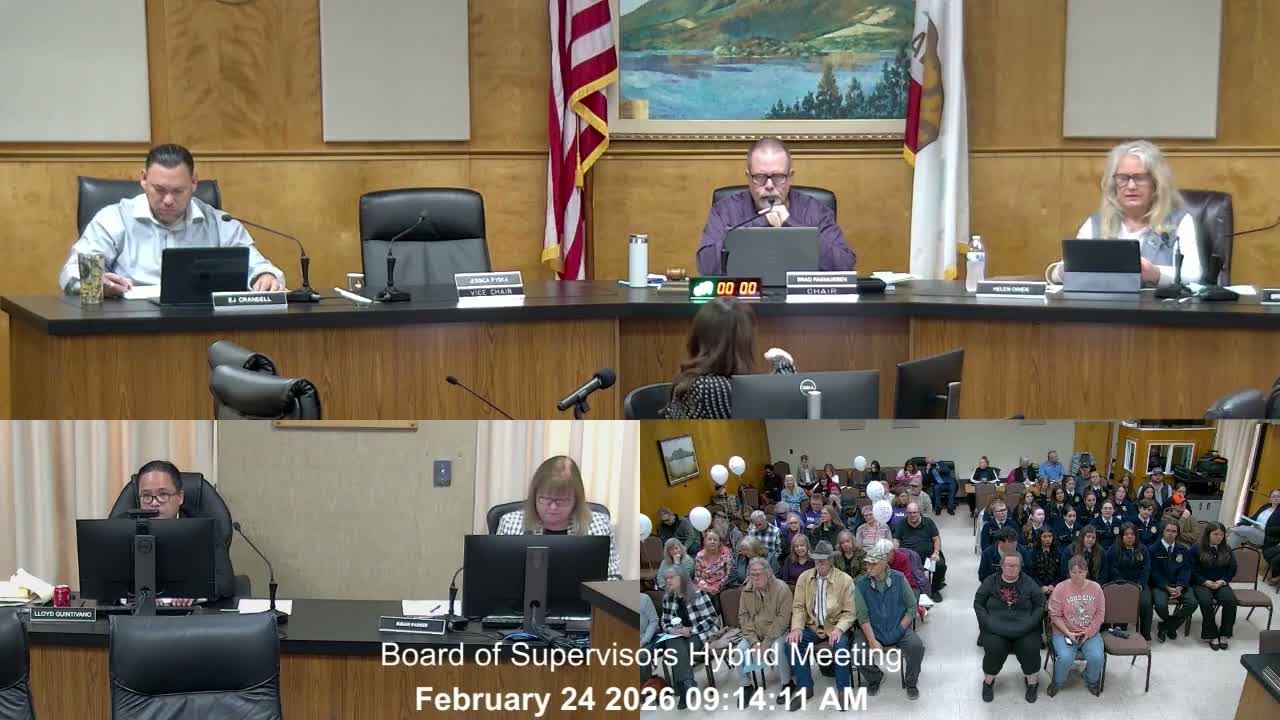
Summary
Mobile home residents and advocates told the board that pass‑through charges and recent rent increases threaten seniors and low‑income households; speakers urged adoption of a rent stabilization ordinance and a moratorium retroactive to Jan. 1, 2026, and asked that the issue be placed on the next agenda.
Residents of Lake County urged county supervisors on Tuesday to adopt a rent‑stabilization ordinance (RSO) and to impose a retroactive moratorium on mobile‑home park pass‑through fees starting Jan. 1, 2026, saying sudden charges will threaten seniors and other low‑income homeowners.
Maya Lynn, a Lake County resident, said mobile homeowners “own our homes, but we rent the land beneath them,” and asked the board to adopt an RSO and a moratorium retroactive to 01/01/2026 to protect residents who cannot realistically relocate. “When space rents increase sharply, we cannot simply relocate,” she said.
Speakers from Sterling Shores and other parks described immediate harms they said would follow this month. Barbara Armenino said Caritas, the owner/operator of Sterling Shores Senior, notified residents of pass‑through charges totaling about $450,000 to be paid by 67 households beginning March 1 and amortized over 10 years—about $60 per household per month. She said that combined with a 5% increase imposed Oct. 1, 2025, the result is roughly a 12% rise in housing costs in six months.
Hillary Mosier, volunteer regional manager for the Golden State Manufactured Homeowners League, told supervisors Lake County has about 150 mobile home parks and that mobile homes account for at least 25% of the county’s affordable housing. She said she emailed the board a suggested ordinance that, she asserted, follows state law and avoids loopholes.
Retirees and long‑term residents said fixed incomes make even modest increases destabilizing. Steven Zirker, a pensioner, contrasted the roughly 2.7% consumer‑price index for 2025 with the larger pass‑throughs and asked the board to close what he called a loophole that allows operators to impose open‑ended fees.
Speakers also requested greater transparency from park operators. Ted Maglite, a local real estate broker, said residents had asked for park‑level profit‑and‑loss information but received only conglomerate data, and he asked whether any supervisors have ties to Caritas.
No board action was recorded during public comment. The meeting moderator closed the public comment period after multiple speakers and noted the comments for the record. Residents asked that the moratorium and RSO be placed on the board’s next agenda for formal consideration.