
Lake County residents urge board to impose moratorium and rent‑stabilization for mobile home parks
Get AI-powered insights, summaries, and transcripts
Subscribe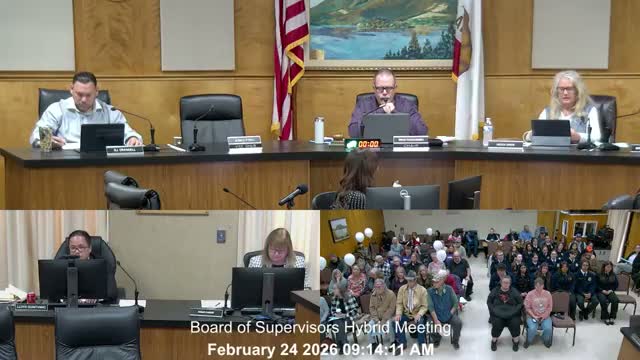
Summary
Dozens of residents told the Lake County Board of Supervisors on Feb. 24 that rapid pass‑through fees and rent hikes threaten seniors and fixed‑income households; speakers urged a retroactive moratorium to Jan. 1, 2026 and a strong rent‑stabilization ordinance.
Dozens of Lake County residents pressed the Board of Supervisors on Feb. 24 to adopt a rent‑stabilization ordinance (RSO) for mobile home parks and to impose a retroactive moratorium on space‑rent increases beginning Jan. 1, 2026. Speakers said sharp, site‑specific fee changes are forcing homeowners — many elderly or on fixed incomes — into untenable choices.
Maya Lynn, a Lake County resident, told the board she was asking the supervisors “to adopt a rent stabilization ordinance and to implement a retroactive moratorium 01/01/2026 for mobile home parks in Lake County because too many residents are already relying on their family members just to afford their space rent.” Lynn described mobile homeowners as uniquely vulnerable because they own their dwellings but rent the land beneath them.
Other speakers provided numbers and examples to underline the urgency. Hillary Mosier, volunteer regional manager for the Golden State Manufactured Homeowners League, said Lake County has about 150 mobile home parks — “more per capita than any other county in the state” — and that mobile homes make up at least 25% of the county’s affordable housing stock. Barbara Armenino, a Sterling Shores resident, described a notice from park owner Caritas that would pass through more than $450,000 in capital charges to 67 households — roughly $60 per household per month amortized over 10 years — and said the combined increases could total 12% in six months for some residents.
Speakers accused park managers and certain county processes of lacking transparency and urged the board to place an RSO and a retroactive moratorium on a forthcoming agenda. Several asked the board to close identified loopholes they said allow pass‑through fees to increase residents’ costs without independent review.
The board did not take immediate action to add an unposted urgency ordinance: County Counsel earlier said, under the Brown Act, adding an extra item to today’s agenda would require a four‑fifths vote. Chair Rasmussen closed public comment noting the remarks were on the record and that supervisors would move forward with regular agenda items. Several supervisors later said they intended to follow up and discussed scheduling and technical committees to review options for an RSO and any retroactive moratorium.
The board did not vote on a moratorium or RSO on Feb. 24; residents said they expect the matter to return for formal consideration.