
Sound Transit warns of $34.5 billion affordability gap as Seattle officials press on cost sharing and station impacts
Get AI-powered insights, summaries, and transcripts
Subscribe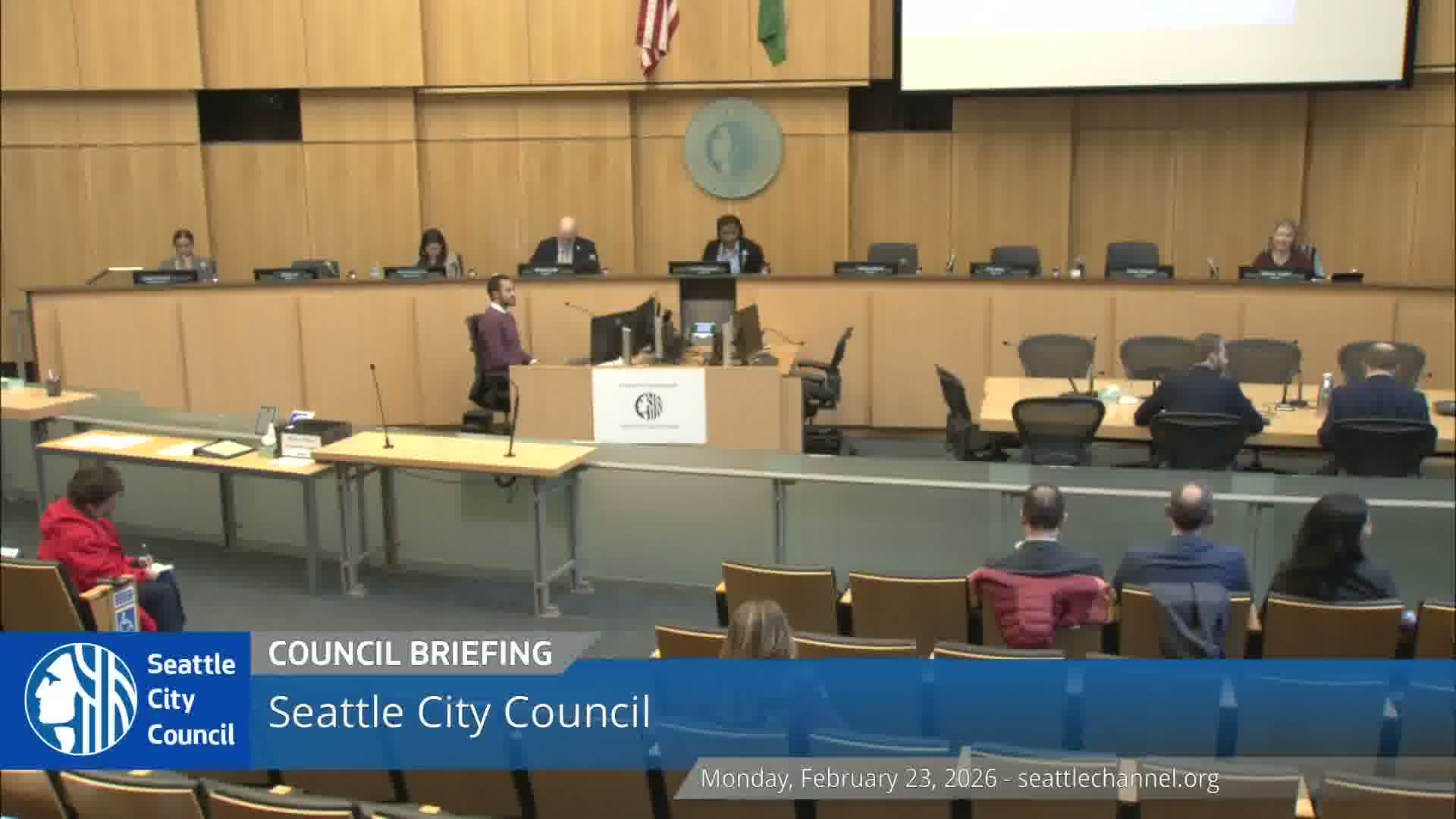
Summary
Sound Transit briefed the City Council Feb. 23 on the enterprise initiative and ST3 project status, citing a $34.5 billion gap in cost savings or new funding and announcing key openings (Cross Lake connection March 28). Council members pressed agency staff on alignment with Seattle’s land‑use changes and on the city’s share of downtown tunnel costs.
Sound Transit delivered a briefing to the Seattle City Council on Feb. 23 outlining the agency’s enterprise initiative, current project timelines and the tradeoffs the board will consider to keep the ST3 program affordable.
Alex Krieg, Sound Transit’s enterprise planning lead, told councilmembers the agency has identified a large shortfall as part of its affordability work: "the agency must identify $34,500,000,000 in cost savings and or new funding to deliver the full ST3 program." He said that figure reflects updated cost data across multiple projects, cost risks tied to operations and higher prices for new light‑rail vehicles.
Sound Transit staff highlighted near‑term project openings and schedules. Cody Reiter and others said the Cross Lake connection will open March 28, adding Mercer Island and Judkins Park stations and extending Link service across the I‑90 bridge to Redmond; construction is progressing at Pinehurst Station with a target for third‑quarter 2026, and the Graham infill station was advanced into preliminary engineering with a targeted 2031 service date.
Councilmembers asked how the enterprise initiative will account for the city’s concurrent land‑use and comprehensive plan changes. Sound Transit staff said they rely on Puget Sound Regional Council land‑use projections for ridership modeling and that the city team will review environmental analyses (for example the Ballard Link DEIS) and call out where updated local data should be considered.
Several councilmembers raised cost‑sharing and equity concerns about the second downtown tunnel. Council member Strauss said Seattle’s North King subarea is being asked to pay 51% of the next downtown tunnel and argued the tunnel is a regional asset; Sound Transit offered a clarification that the North King subarea includes the city of Shoreline, Lake Forest Park and some unincorporated areas. Agency staff said cost‑sharing and project‑phasing options will be part of the scenario development now underway for the March board retreat.
Sound Transit staff also acknowledged ongoing work to find programmatic savings, project scope adjustments and phasing that preserve passenger experience while improving affordability. They said some options will require time, board engagement and possible action by other entities to realize.
The briefing closed with councilmembers urging attention to community impacts — including station-area benefits for Chinatown‑International District and South Seattle — and with Sound Transit agreeing to return with further updates as scenarios are developed.