Get Full Government Meeting Transcripts, Videos, & Alerts Forever!
Get email alerts on the Medical Cannabis Hospice topic
No spam. Unsubscribe anytime.
Senate committee advances 'Ryan's Law' to let hospice patients continue medical cannabis use
Summary
HB 4142 A, known as "Ryan's Law," was advanced to the Senate floor after emotional family testimony and expert statements. The bill would expand OMMP coverage for hospice/palliative patients, require designated facilities to allow and manage medical cannabis use, and protect nurses who discuss cannabis with patients; several senators voiced concerns about 'shall' mandates and lack of Oregon hospice or medical-board testimony.
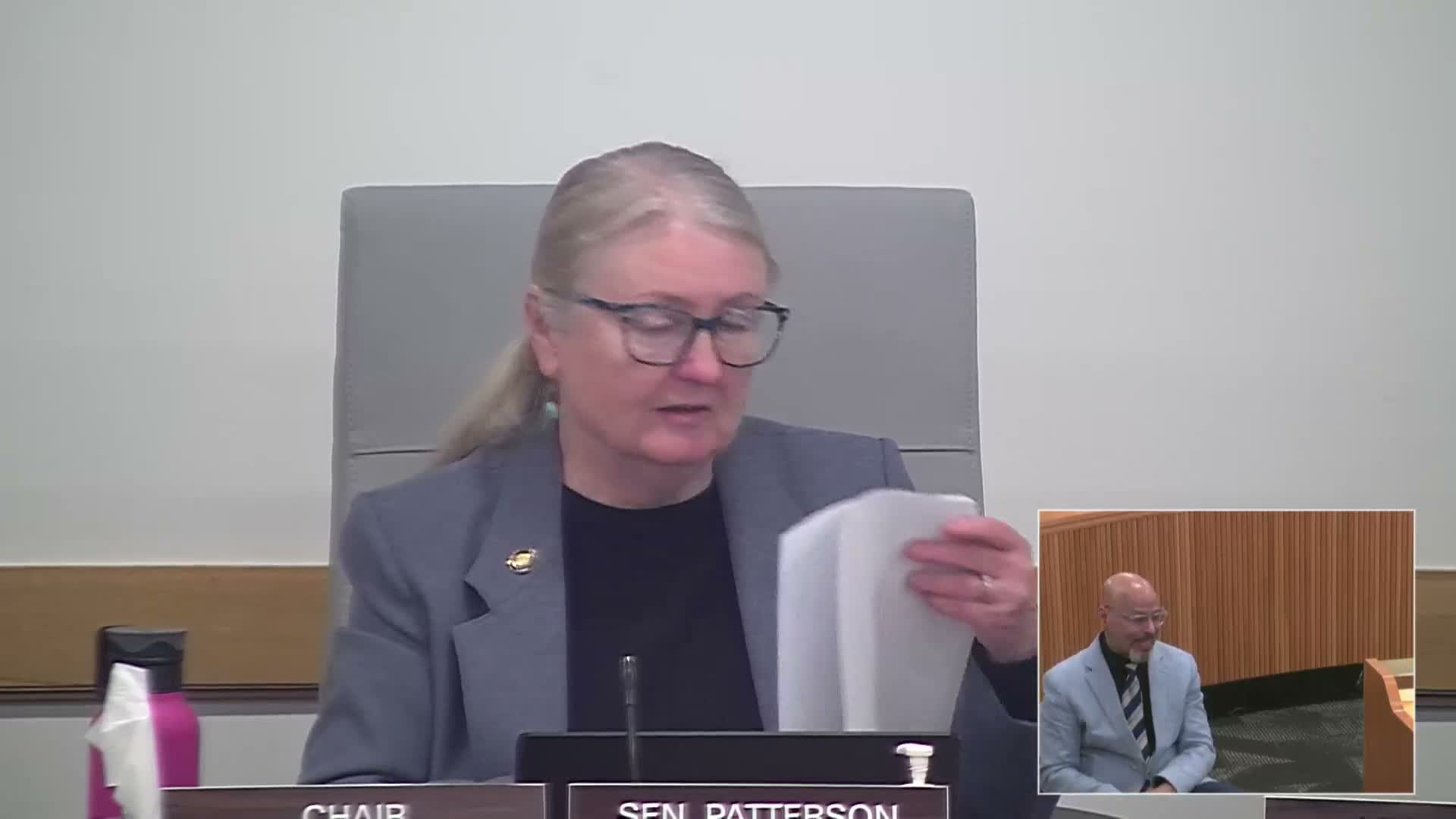
The Senate Health Care Committee on Feb. 25 advanced House Bill 4142 A — branded in testimony as "Ryan's Law" — which would expand the definition of debilitating medical condition for Oregon Medical Marijuana Program (OMMP) patients to include hospice, palliative and comfort care, and require certain care organizations to allow and manage medical cannabis use on-site.
Ann Marie Beckstrom, chief of staff to Rep. Farrah Chaychi, read the sponsor's testimony that the bill's aim is to ensure OMMP patients are not forced to abandon lawful cannabis therapy when they enter hospice or palliative care. "This bill is meant to address that gap," the sponsor's testimony said, noting that as of January 2025 the OMMP showed very limited use of organizational caregivers and that the bill is intended to establish guardrails, policies and training for staff.
Families and clinicians gave emotional and technical testimony. London Strickland described their sister's terminal pain and said hospice staff declined cannabis even when family members believed it could help. Jim Bartel, Ryan's father and an advocate who helped draft a similar law in California, said his son "woke up the next morning wide awake, pain free" after a transfer to a hospital that allowed medical cannabis; Bartel urged Oregon to adopt protections modeled on Ryan's Law.
Clinical experts supported the measure with qualifiers. Dr. Jill Simonian, a pharmacist, said the bill promotes continuity of care, medication-safety frameworks and staff training; she asked that pharmacists be considered for liability protections similar to nurses'. Heather Maness, a registered nurse and cofounder of the Cannabis Nurses Network, told senators the bill protects therapeutic communication and aligns with national nursing guidance.
Committee members pressed witnesses on specifics: the bill prohibits inhalable forms in facilities and focuses on oral or tincture forms, witnesses said. They also discussed regulatory gaps: OMMP products are not FDA approved and are subject to state-level testing and certificate-of-analysis systems rather than federal approval. Several senators questioned why the bill limits the State Board of Nursing's disciplinary authority for nurses who discuss medical marijuana; witnesses said the provision is intended to reduce fear among clinicians tied to the drug's Schedule I federal status and encourage open, supervised clinical dialogue.
A central point of contention was Section 3's use of "shall" to require specified facilities to allow medical cannabis on the premises. Several senators said they were reluctant to impose a mandate that might prompt some faith-based or small providers to stop offering hospice services; proponents argued the "shall" language protects patients who are unable to hunt for alternative facilities during limited windows of terminal illness.
After extended discussion — and repeated statements of sympathy for families who described suffering — Vice Chair Hayden moved HB 4142 A to the Senate floor with a "do pass" recommendation. The motion carried, though several members recorded they would vote no; Senator Campos was listed as the carrier for now. Committee members said they would continue work with OHA, boards and hospice providers in subsequent sessions to address concerns raised on disciplinary authority, facility obligations and implementation details.
What happens next: HB 4142 A moves to the Senate floor for further consideration. Committee debate highlighted the human impact cited by families and clinicians and flagged areas for follow-up: input from Oregon hospice providers, the State Board of Nursing, the Medical Board and technical fixes to liability and facility language.