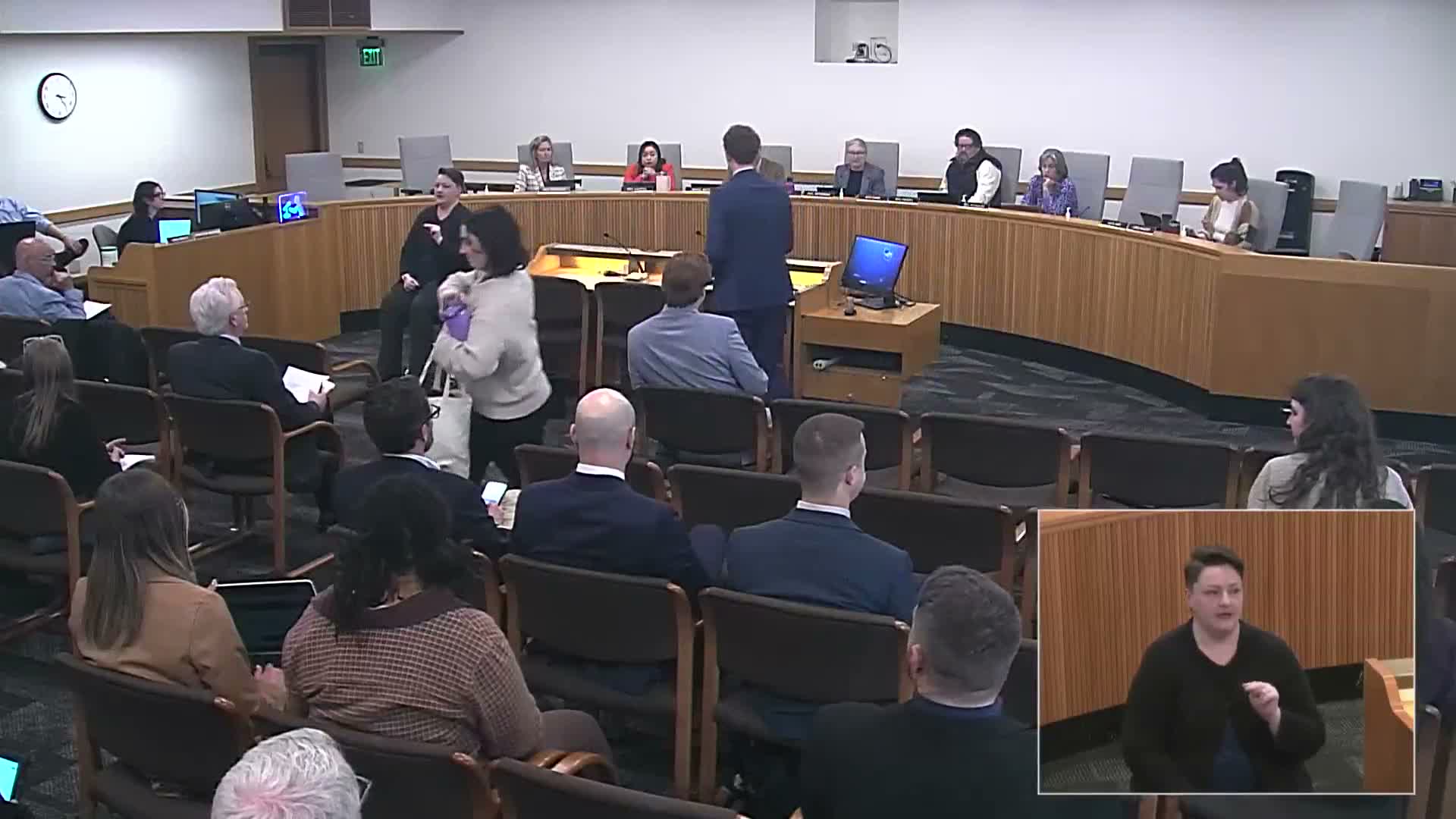
Senate Health Care committee advances bill to preserve emergency medical transport reimbursements
Loading...
Summary
The committee voted to send House Bill 4156 A to the Senate floor. Supporters said the bill would give Oregon flexibility to preserve federal Medicaid reimbursements to EMS providers (the GEMT program) if federal funding mechanisms change; OHA told the committee the bill is specific to GEMT and would not alter hospital IGTs as written.
The Senate Committee on Health Care voted to advance House Bill 4156 A on Feb. 25, a measure supporters said is intended to protect federal Medicaid reimbursements that help fund ambulance and EMS services across Oregon.
Aaron Lewis, testifying for House sponsor Rep. Dacey Graber, told the committee that HB 4156 would preserve federal Medicaid reimbursement for delivery of critical fire and EMS services statewide and give Oregon the ability to pivot to alternative federally approved reimbursement methods so the GEMT program can continue without interruption. "The last thing EMS providers need right now is further uncertainty about their funding streams," Lewis said, urging committee members to support the bill.
Amy Hannifin of the Oregon Fire Chiefs Association said EMS reimbursements are not keeping pace with costs and highlighted the program's local impact. She told the committee the current Oregon Medicaid fee schedule reimburses $420.62 for an ALS treatment and transport, which she said ‘‘doesn't come close to covering the cost.’’ Hannifin said more than $18,000,000 were reimbursed to public EMS providers last year through fee-for-service and CCO GEMT programs.
Nathan Roberts of the Oregon Health Authority (OHA) clarified that HB 4156 is specific to the GEMT intergovernmental transfer mechanism and, as written, would not require OHA to change hospital IGTs. "This bill is specific to the GEMT intergovernmental transfer and, as written, that is a compliant mechanism," Roberts said, adding that the measure would position the state to adopt a different federally compliant mechanism if federal rules change.
Supporters characterized the bill as a precautionary, narrowly tailored statutory change that would not immediately alter expenditures but would allow the state and stakeholders to respond if federal policy shifts threatened GEMT funding. Vice Chair Hayden moved HB 4156 A to the Senate floor with a "do pass" recommendation; the motion passed and Chair Patterson said they would be the carrier for the measure.
What happens next: the bill now goes to the Senate floor. Committee testimony and OHA answers signaled broad support among emergency-services stakeholders but left implementation specifics — including any potential matching requirements if a new mechanism is used — to future rulemaking and interagency work.