
Senate Labor and Business Committee advances HB 4,116 after debate over 36% cap and legal risk
Get AI-powered insights, summaries, and transcripts
Subscribe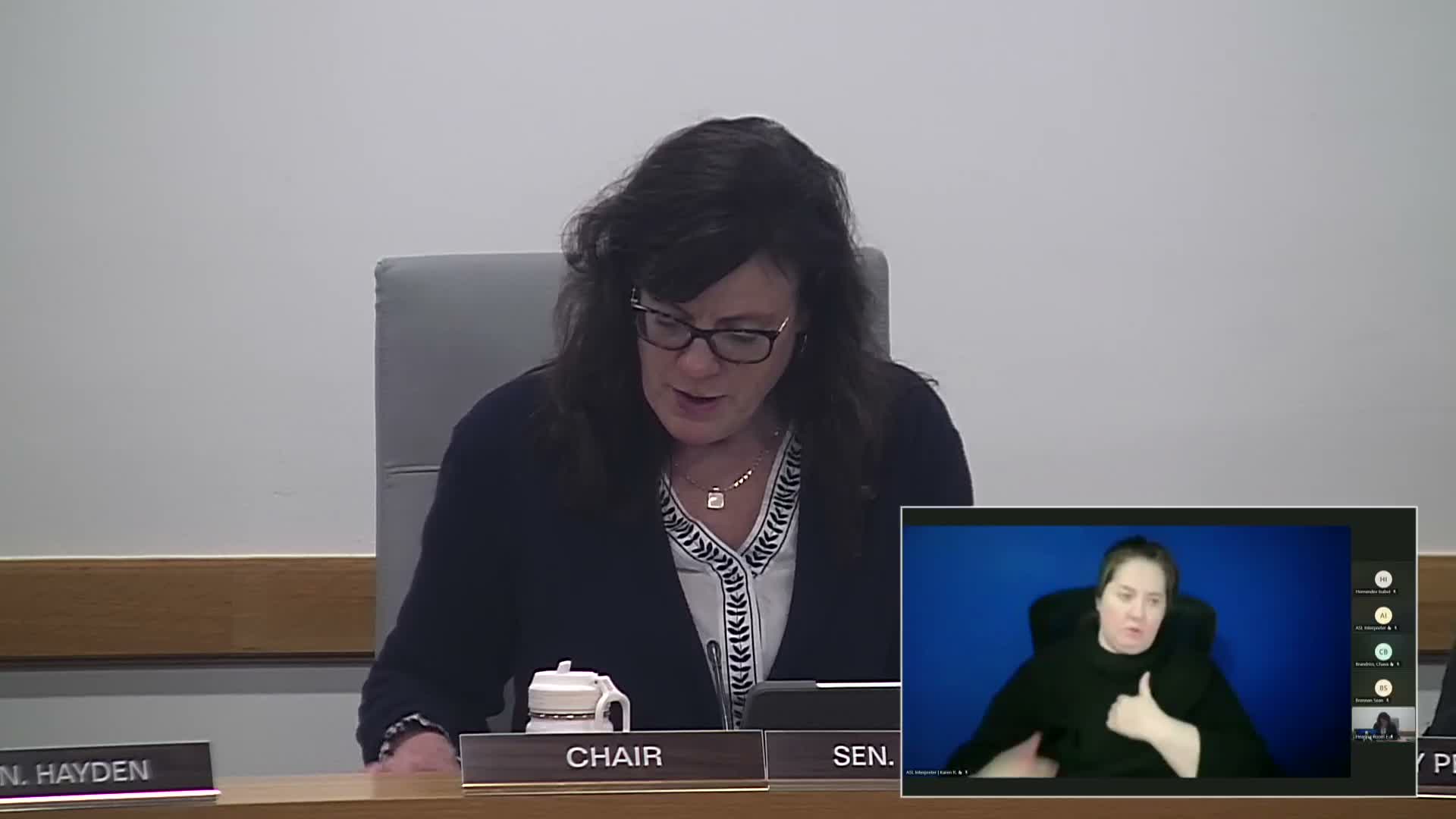
Summary
After a public hearing and work session Feb. 26, the Senate Committee on Labor and Business voted to advance House Bill 4,116 — which would opt Oregon out of federal interest‑rate preemption for certain state‑chartered lenders — to the Senate floor with a due‑pass recommendation following debate on enforcement, data gaps and litigation risk.
The Senate Committee on Labor and Business moved House Bill 4,116 to the Senate floor with a due‑pass recommendation on Feb. 26 after a lengthy public hearing and work session on whether to opt Oregon out of federal preemption that allows interest‑rate exports by some out‑of‑state lenders.
The bill would make state‑chartered consumer finance lenders subject to Oregon law and its 36% annual percentage rate cap, rather than allowing interest‑rate exportation under federal statutes. Legislative Counsel Sean Brennan told the committee, “this bill does address only state chartered institutions or other licensees of who are consumer finance lenders in the state,” and described the measure as using an opt‑out from the DIDMCA to put state‑chartered institutions under Oregon’s regulatory cap.
Supporters including Representative Nathan Sosa, who testified for the bill, argued the change creates a clear regulatory rule for enforcement. “What we do is we create a bright line rule that says we don't care what the arrangement is, we don't care who you are, if you are a state regulated financial institution, everybody has to comply with our interest rate cap of 36%,” Sosa said, arguing the policy avoids prolonged company‑by‑company litigation.
DCBS staff — TK Keane, Administrator with the Division of Financial Regulation, and policy manager Jesse O'Brien — told the committee their enforcement work now requires detailed, fact‑specific inquiry into arrangements between fintech firms and banks, which can be time‑consuming and lead to long administrative or litigation processes. O'Brien said DCBS examinations identified roughly 31,000 loans above the 36% cap in recent examinations but that the agency does not capture borrower‑level identities or the loan purpose in routine reporting, so it cannot say how much of the $61,000,000 figure cited in testimony was used for medical debt.
Opponents and outside counsel warned of legal and practical issues. Hava Brandos of Davis Wright Tremaine, representing plaintiffs in Colorado litigation challenging a similar law, urged the committee to address language she said could have extraterritorial effects, including a provision that would treat payments debited from an Oregon account as subject to the law even if the loan was made elsewhere. “This part of the law is extremely confusing and seems to apply…if I then debit my Oregon bank account in order to pay that loan that I got in another state, this law does still apply,” Brandos said, arguing the provision could create conflicts and new litigation.
Consumer advocates supported HB 4,116. Chris Coughlin of Oregon Consumer Justice said Oregon’s decision to cap rates at 36% protects many consumers and cited other states that have lower caps while still providing credit access.
During the work session the committee considered and rejected an amendment (dash‑3) that would have replaced the measure and created a 12‑member Task Force on Equitable Access to Short‑Term Financial Products to study the issue and report by Dec. 15, 2026; that amendment failed on a roll call. The committee then voted to advance the base bill to the floor with a due‑pass recommendation. Recorded roll call votes on the final motion included Sen. Campos (Aye), Sen. Draisen (No), Sen. Pederson (Aye), Sen. Hejic (No) and Chair Taylor (Aye); Chair Taylor announced the motion passed and named Sen. Courtney Neron Mislan as floor carrier with Sen. Campos as co‑carrier. Vice Chair Hayden served notice of a minority report.
The committee’s action sends HB 4,116 to the full Senate for consideration amid continuing disagreement on enforcement capacity, potential unintended shifts in credit sources for vulnerable borrowers, data gaps about who holds high‑interest loans and unresolved questions about how federal litigation could affect the statute’s reach.
What happens next: HB 4,116 will appear on the Senate floor calendar under the sponsorship and carrying arrangements announced by the committee; supporters urged prompt floor consideration while opponents flagged the likelihood of legal challenges that could land the issue in federal court.