Get Full Government Meeting Transcripts, Videos, & Alerts Forever!
Get email alerts on the Nomination Confirmation topic
No spam. Unsubscribe anytime.
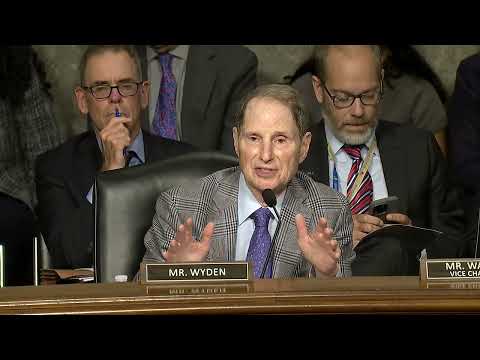
Senate Committee on Finance exchange over domestic-terror designations and lethal force precedes senator’s opposition to nominee
Summary
At a Senate Committee on Finance confirmation hearing, an unnamed senator pressed nominee Miss Simmons on whether U.S. law permits designating domestic terrorist organizations and on the legality of killing rather than capturing suspects; Miss Simmons said her work focused on foreign-designation authority and deferred operational legal questions to military counsel, and the senator announced he would oppose the nomination.
A hearing before the Senate Committee on Finance opened with an unnamed senator entering a letter from 21 organizations into the record and pressing nominee Miss Simmons on legal limits for designating domestic terrorist organizations and for lethal military operations.
The senator said, "Confirmation hearings of intelligence agency general counsels are the only opportunity Congress and the public have to hear the nominees' views before they go on to make legal decisions in secret," and warned that "this year's intelligence authorization bill would eliminate Senate advice and consent for both the CIA and ODNI general counsels," a change he said would make this the "last of these hearings." He asked to enter a letter from 21 organizations into the hearing record; the committee accepted the submission "Without objection."
The senator asked Miss Simmons whether "there is any basis in law for designating domestic terrorist organizations." Miss Simmons replied that her focus at the State Department "has been on a foreign terrorist organization designation," and cited (as read in the hearing) "8 USC section 11 89," saying the statute's analysis requires that an organization be foreign and listing factors such as the base of operations and the location and nationality of members.
Pressed for a yes-or-no answer, Miss Simmons reiterated that her work centered on foreign-designation authorities and said she had reviewed legal authorities with respect to domestic organizations. The senator said he had left a prior meeting believing she had concluded there was no legal basis for domestic designations; he also referenced the president's position that he could designate Antifa as a domestic terrorist organization and asked for clarity for the record.
The senator next asked, "Is it legal to kill people who they could have captured or arrested?" Miss Simmons said there had been "submissions to Congress from the administration, a war powers report and a notice under section 12 30," and that "the general counsel of the Department of War" had attended a classified briefing; she said she would refer questions about those military activities to military counsel.
After the exchange, the senator said he had expected Miss Simmons to offer clearer policy direction and announced, "I'm going to be opposing your nomination." The transcript does not record any formal vote or further action on the nomination in the segment provided.
Why it matters: Confirmation hearings for intelligence agency legal advisers are a principal public forum for probing how nominees would interpret and apply legal authorities that govern classified operations and agency actions. Committee members flagged both statutory questions about domestic terrorist classifications and operational legal questions tied to the administration's use of force.
What remains unclear: The hearing transcript records statute and section citations as "8 USC section 11 89" and "section 12 30," which appear in the spoken record but are not presented in a standard statutory citation format in the transcript. The nominee repeatedly emphasized that her prior work focused on foreign-designation authorities and that operational legal questions involving the military should be handled by military counsel.