Get Full Government Meeting Transcripts, Videos, & Alerts Forever!
Get email alerts on the Solar Ordinance topic
No spam. Unsubscribe anytime.
Residents urge 1‑mile setback as Iberia Parish hears competing views on solar ordinance
Summary
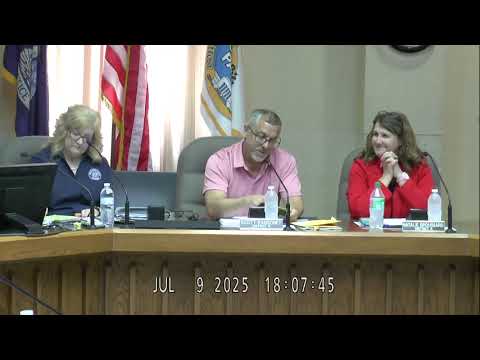
At a July 9 public hearing, dozens of residents urged the Iberia Parish Council to restrict industrial solar projects — many asking for a 1‑mile setback from homes — while developers cited new state law (Act 279 of 2025) and economic benefits and urged more modest local rules.
Dozens of residents told the Iberia Parish Council on July 9 they oppose siting industrial solar farms near homes and farms, and many urged the council to adopt a one‑mile setback in any final local ordinance.
"If an outright ban on solar projects is not possible in our parish, I ask that you move this ordinance forward," said Angela Scott of 319 Lucerne Drive, urging the council to require a one‑mile buffer to protect property values, limit noise and reduce fire and drainage risks. "Imagine all the homes within a one‑mile radius losing 6.9% of their value, at no fault of their own," she said, referring to a study she cited.
Supporters of tighter limits described risks they say are specific to Iberia Parish: potential changes to drainage, hurricane debris scattering toxic panels, and damage to agricultural land and community character. "We said no because forming isn't just a business. It's who we are," said farmer Virginia Judis, recounting how a proposed facility would have been a deciding factor in her parents' home purchase.
Representatives of Recurrent Energy, the developer involved with the Acadiana solar proposal, urged the council to adopt setbacks and buffers aligned with the state law signed this year. Joshua Chevalier, speaking for Recurrent, said the legislature and governor enacted Act 279 of 2025, which the company interprets to provide for 300‑foot setbacks from property lines and 35–50‑foot vegetative buffers. He said the Acadiana project would bring more than $175 million in direct capital investment and about $43 million in additional tax revenue over the project's life.
"Setbacks like that and the setbacks found in neighboring parishes are reasonable, constitutional land‑use regulations," Chevalier said, and he asked the council not to rush the process.
Multiple speakers who said their homes or family farms would be near proposed projects urged the council to either extend the existing moratorium or adopt the more restrictive 1‑mile standard. Lonnie Scott, whose property borders one proposed site, told the council that keeping a one‑mile buffer is needed to protect future generations from abandoned panels and irreversible land changes.
Councilmembers did not vote on the substantive setback question at the July 9 meeting. They introduced for publication an ordinance to add chapter 120 to the parish code creating standards for renewable energy/solar energy developments and scheduled future hearings. The council also heard that the moratorium and other planning‑and‑zoning processes will determine whether projects can proceed immediately if a moratorium lapses.
What comes next: the council introduced summary number 53‑72 (an ordinance to enact chapter 120) for publication and further review. Planning and zoning review, public comment and subsequent council hearings were mentioned as the next steps before any final local rules would take effect.