
Board presses for concrete plans after MTSS overview as middle‑school scores lag
Get AI-powered insights, summaries, and transcripts
Subscribe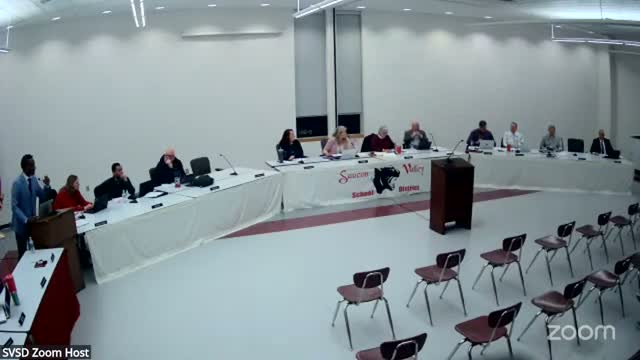
Summary
Saucon Valley board heard a detailed MTSS (multi‑tiered system of supports) presentation outlining schoolwide tiered interventions and referral counts. Directors pressed for explicit, grade‑level actions after data showed middle‑school academic weaknesses and mental‑health referral spikes.
The Saucon Valley School District board spent the largest portion of its March 10 meeting on a detailed presentation about the district’s multi‑tiered system of supports, or MTSS, and followed with extended questions from directors about measurable outcomes for struggling students.
Doctor Tienhor, who led the presentation, described MTSS as a three‑tier framework that uses universal instruction and data to identify students who need extra help, then routes them to targeted (Tier 2) or intensive (Tier 3) supports. He told the board that 240 students had been referred districtwide this year, producing 376 total referrals because some students were referred for multiple concerns. “So the total number of students who were referred thus far this year… it’s 240 students,” he said.
The presentation broke the work down by building. At the elementary level staff run frequent benchmark screenings (MAP, DIBELS) and a student success team that meets twice monthly. Elementary Tier 1 and Tier 2 supports include differentiated classroom instruction, short small‑group interventions, occupational therapy and the ACE after‑school program (about 19 third‑ and fourth‑grade students enrolled). For middle school the presenter reported 96 students and 166 referrals so far, with spikes in sixth‑grade referrals and a substantial share attributed to mental‑health and behavioral concerns.
Board members asked for clearer evidence that MTSS interventions will move broad achievement measures such as PVAS growth or Keystone Algebra proficiency. Director [speaker 14] told the presenter, “I feel worried about this,” and pressed for more than general language about ‘refining IE time’ and family partnerships. Other directors asked which grades and cohorts were driving referrals and whether behavioral and mental‑health referrals were contributing to the academic declines seen in standardized trends.
Tienhor and other administrators said the MTSS teams in each building review benchmark and diagnostic data to identify barriers and select interventions, and that success measures include returning students to Tier 1 and shortening the time spent in Tier 2 or 3. He noted the district partners with outside providers — including the Lehigh Valley Health Network and the Caring Foundation — for outpatient therapy and substance‑use supports. He confirmed middle‑school ACE enrollment is eight students and that Tier 3 may include one‑to‑one academic work and counseling.
Directors requested follow‑up: granular, grade‑level analyses linking the MTSS referral data to PVAS/Keystone outcomes and an academic update describing specific next steps for middle‑school math and reading. The board asked staff to return with more targeted action plans and historical trend data so elected members and the public can better assess whether interventions are reducing deficits.
The meeting closed the MTSS segment with administrators agreeing to provide additional data and with several directors urging a follow‑up focused on specific academic interventions rather than only system descriptions.