
Attorney for tenant urges reversal in eviction case, panel questions whether HUD VAWA form is required
Get AI-powered insights, summaries, and transcripts
Subscribe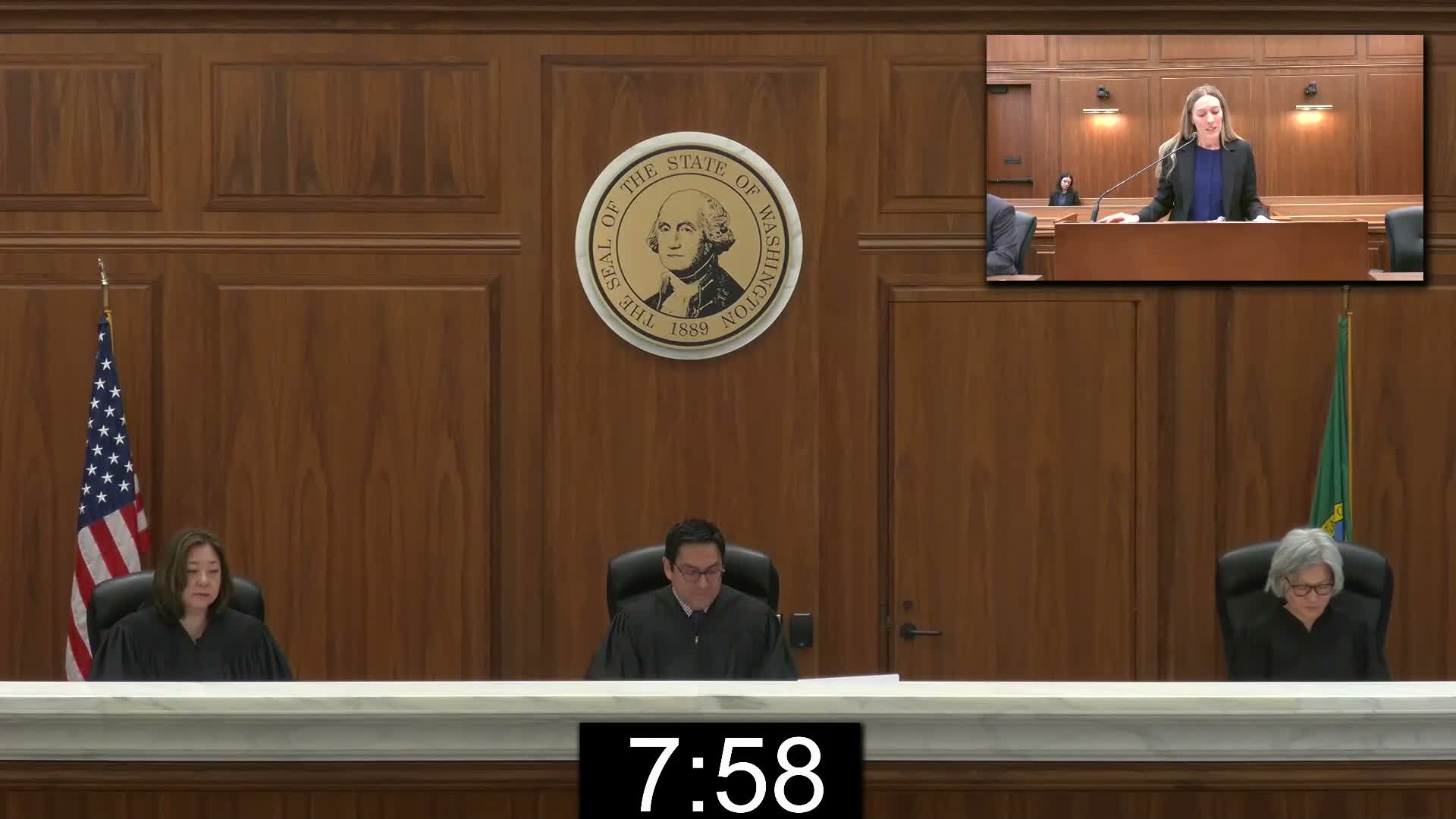
Summary
At oral argument in State v. Navos, tenant counsel said the landlord27s eviction notice violated the Violence Against Women Act by failing to include HUD27s required VAWA notice and certification form; the court debated whether a summary could amount to substantial compliance and took the case under advisement.
An appellate panel heard argument in State v. Navos over whether a landlord27s eviction notice that omitted HUD27s Violence Against Women Act (VAWA) notice and certification form required dismissal of the eviction.
"This court should reverse the judgment in the eviction case below," attorney Christina Jacquard told the panel, arguing that Navos27 notice did not comply with the VAWA statutory requirement to deliver HUD-created forms that inform tenants of their rights and provide a way to document eligibility for protections.
Jacquard told the court she would focus on three points: that VAWA unambiguously requires landlords to provide the HUD forms with any eviction notice; that Navos did not actually or substantially comply when it omitted the forms and only referenced them as if attached; and that the omission requires dismissal of the unlawful-detainer action because the statutory precondition for bringing the eviction was not satisfied.
Judges pressed whether the applicable standard is strict compliance with the federal "shall" language or a state-law substantial-compliance doctrine that sometimes excuses technical defects. One panel member asked whether a short summary that alerts a tenant to VAWA rights could satisfy the notice requirement.
Jacquard replied that providing only a summary shifts the burden to tenants, many of whom are low-income, elderly or have disabilities, to find the correct HUD forms online and that Congress enacted the form-delivery requirement to prevent that access barrier. "The notice merely put the tenant on notice that a statute exists," she said, which she argued is not equivalent to furnishing the statutorily mandated forms.
Opposing counsel argued the substantial-compliance test should govern and urged the court to require proof of "actual prejudice" to a tenant before finding a defect fatal. That counsel said the concise summary included in Navos27 notice accurately described who is covered and directed tenants where to find the forms, and suggested that, in practice, a short summary may be more likely to be read than a multi-page HUD form.
The panel and counsel debated precedent cited by both sides (including case names discussed at argument) and whether federal "shall" language can be harmonized with state eviction procedures and remedies. Counsel for Navos also argued that the expansion of eviction-related rights in some jurisdictions (including access to counsel in eviction cases) reduces the risk that a tenant would be prejudiced by a missing form.
Jacquard likened the omission to failing to give statutorily required 30-day notices in other contexts and said reversal is required because the landlord did not comply with a mandatory precondition to bring the eviction action.
After hearing argument from both sides and extensive questioning, the panel took the case under advisement. "Case has been submitted, taken under advisement," the presiding judge said, and the court recessed.
The argument record shows the dispute centers on statutory interpretation (whether the HUD form must be attached) and remedy (whether omission requires dismissal). The court did not announce a decision at the argument.
Next steps: the court will issue a written opinion resolving whether the omission of HUD27s VAWA notice and certification form is a jurisdictional or forfeitable defect that requires dismissal, or whether substantial compliance or lack of prejudice permits the eviction to stand.