Appeals panel hears dispute over who must prove reasonableness of law‑firm fees
Loading...
Summary
An appellate panel heard argument in Law Office of Craig Gourley v. Moroz on whether a law firm must prove that its rates and hours were reasonable to recover unpaid fees and whether the trial court improperly granted summary judgment based on procedural default rather than on the merits. Counsel debated the role of RPC 1.5 and burden‑shifting on summary judgment.
An appellate panel heard oral argument in Law Office of Craig Gourley v. Moroz over whether a law firm seeking unpaid fees must prove the reasonableness of its billing as part of a breach‑of‑contract claim and whether the trial court erred by granting summary judgment after finding the opposition procedurally defective.
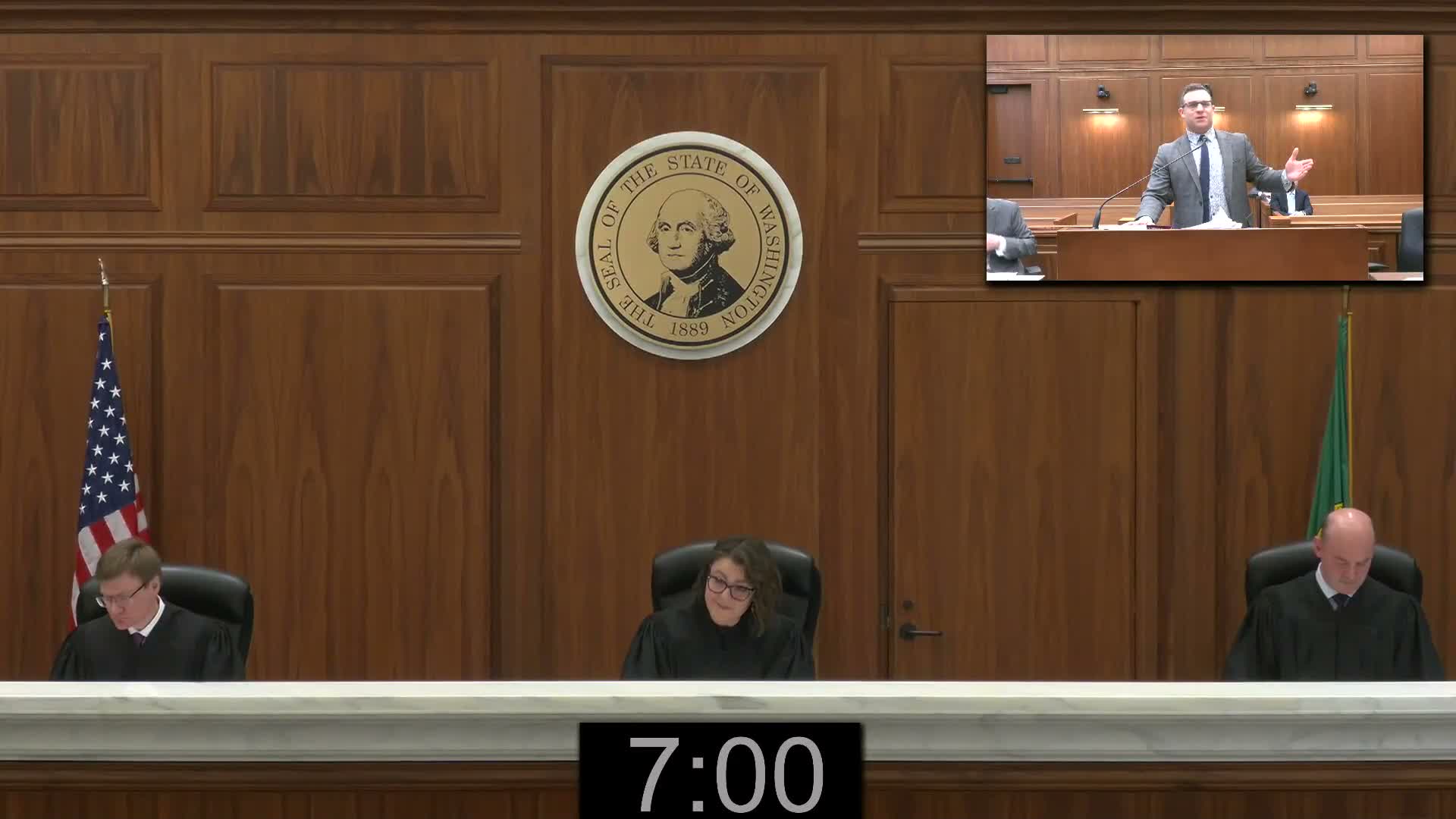
Appellants’ counsel Rory Cosgrove of Carney Badley Spellman told the court he would press procedural grounds for reversal and then “dive right into the low hanging fruit,” arguing the firm had inserted “an unenforceable provision … purporting to require their clients to waive all objections to their billing invoices,” and that the reasonableness issue is properly before the court on undisputed facts.
Cosgrove relied on the rules of professional conduct and state precedents to press that reasonableness is a required inquiry. “RPC 1.5(a): a lawyer should not charge or collect an unreasonable fee,” he said, identifying the ethical rule as the source of public‑policy concern that, in his view, informs the breach‑of‑contract analysis.
Respondent counsel Thomas Elhaas, arguing for the Gourley firm, said the firm had submitted a declaration and contemporaneous billing records and used established methods to support the fee claim. “You do have to fall back on the lodestar method, which is exactly what we did,” Elhaas told the panel, and he argued those materials satisfied the trial court’s ability to assess the claimed amounts.
The panel’s questioning focused on two linked issues: (1) whether proof of reasonableness is an element of a breach‑of‑contract claim for unpaid attorney fees or instead arises only where a party seeks quantum meruit or prevailing‑party fees, and (2) how summary‑judgment mechanics affect the allocation of production and persuasion burdens. Judges pressed both sides on contrary authority cited in briefs, whether the record shows the trial judge evaluated reasonableness or instead resolved the case on procedural grounds, and whether courts may rely on a client’s lay declaration to create a triable issue without an expert.
Appellants argued that, even if the initial procedural posture favored the firm, the Morozis’ later filings (characterized by counsel as a substantive CR 56(f) opposition) presented triable factual disputes about whether the time billed and services rendered were reasonable. Respondents countered that the record included prior rulings approving the rates and that the trial court had billing records and a declaration from the firm’s attorney to evaluate fees connected to collection efforts.
Counsel and the panel cited several authorities discussed in the briefs and during argument, including Daley v. Tostone, Davis Wright Tremaine v. Peterson, R.J. Godet and Associates, Keck v. Collins and the procedural standards governing summary judgment (including Celotex‑style burden principles), to advance competing views about burden‑shifting and the proper scope of review on appeal.
The panel also noted an inconsistency in the record’s spelling of the appellants’ names: portions of the transcript and filings use both “Moroz” and “Marosi.” The parties’ counsel discussed the underlying evidence and procedural history rather than submitting additional factual material at argument.
Appellants reserved time for rebuttal; the respondent completed argument and the counsel thanked the court. The panel did not announce a ruling from the bench at the conclusion of oral argument.
Next steps: the court will take the arguments under advisement and issue an opinion or order at a later date; no decision was made on the record at the hearing’s end.