Lifetime Citizen Portal Access — AI Briefings, Alerts & Unlimited Follows
House passes omnibus emergency bill after hours-long debate over process and policy
Loading...
Summary
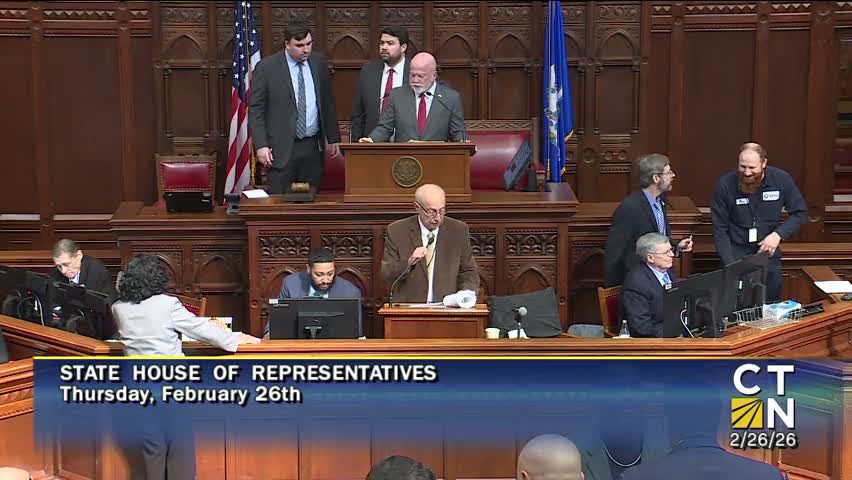
The Connecticut House adopted an emergency-certified omnibus (SB 298) on Feb. 26, 2026, after extended floor debate and multiple points of order protesting the use of the emergency certification process to advance education, public-safety and labor provisions without fresh public hearings.
HARTFORD — The Connecticut House voted on Feb. 26 to adopt a large, emergency-certified omnibus (SB 298) that bundles spending adjustments and policy changes across education, public safety, government operations and labor programs. Members spent hours on the floor disputing whether the measure met statutory standards for emergency certification and whether dozens of included items should have been considered through the normal committee hearing process.
The bill’s sponsor framed the measure as a practical response to several immediate needs: correcting budget glitches, funding adult education and judicial arbitration settlements, and avoiding disruptions to school construction projects and other programs. Representative Elliott told the chamber the arbitration-related resolution included a 2.5% wage increase affecting about 2,000 judicial-branch positions and estimated retroactive pay would cost about $8 million.
Opponents repeatedly argued the compilation of roughly 90 sections into a single ‘‘emergency’’ bill short-circuited transparency and public input. Representative O’Day challenged whether the written emergency certification met the statutory requirement to state the facts that make immediate action necessary. The Speaker and the majority leader defended the certification authority of the presiding leaders and said the law grants them the discretion to certify items they deem time-sensitive.
Several members objected to particular policy items in the package, including a pause in implementation of a racial-imbalance identification law, new reporting and procedural requirements tied to civics and multilingual-learner education, and additions to school-health reporting. Lawmakers pressed authors for effective dates and for detailed programmatic justifications; sponsors said many measures addressed district requests and in some cases remedied drafting or timing problems from prior sessions.
One of the most contentious threads concerned a labor-related section that would impose new limits and worker-access rules for quota or ‘‘work speed’’ systems at warehouse and distribution centers. Sponsors described protections for bathroom and meal breaks, notice requirements for quotas, and access to employers’ ‘‘speed data’’ on periodic requests; backers said it would protect hourly workers from unreasonable productivity tracking. Critics said the proposals impose compliance costs and litigation risk, could interfere with collective bargaining and might drive employers and jobs away. Several members said they expected substantial additional committee work before similar changes should become law.
The House adopted the emergency certification and the omnibus bill after roll-call votes. Supporters said the move was necessary to resolve practical and fiscal problems quickly; opponents warned that the process set a concerning precedent about packaging broad policy changes into emergency votes. The Speaker said the House would continue to address remaining concerns during the session’s committee work.
The bill’s final text ties many implementation and reporting details to state agencies and sets effective dates ranging from immediate to July 1, 2026, for different sections. Several members said they intend to seek follow-up fixes during the regular committee schedule.
Ending: The House adopted SB 298 as amended; lawmakers expected further committee follow-up on numerous sections in the weeks ahead.