Get Full Government Meeting Transcripts, Videos, & Alerts Forever!
Get email alerts on the DHS Response topic
No spam. Unsubscribe anytime.
DHS says hotel placements ended, reports hiring and contract steps; auditors press statutory limits
Summary
Maryland's Department of Human Services told a legislative briefing it had removed youth from hotels, implemented 100% background checks where it says it has authority, expanded kinship placements and is pursuing contracts and rate reform to boost capacity; auditors and some lawmakers pressed statutory and data questions.
Maryland's Department of Human Services told a Feb. 12 joint committee briefing that it has taken operational steps since the audit period to reduce hotel and hospital overstays, expand kinship care and strengthen background checks.
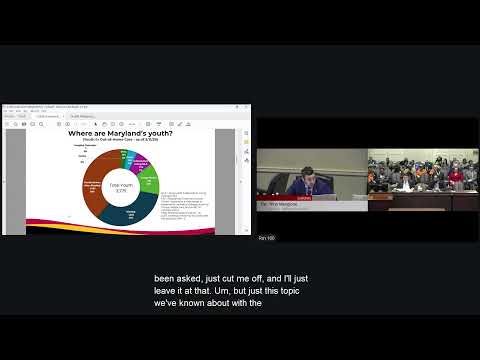
"As of yesterday, and actually back going into the fall, there are no DHS youth that is to say a youth that is committed by a court to the care of the state in a hotel," Webster Gee, chief of staff for DHS, said while presenting the agency's update. Gee added that hospital overstays had fallen more than 65% from January 2025 and that DHS is tracking approximately 3,775 youth in out-of-home care.
What DHS says it has done: DHS and SSA leadership said they implemented 100% background checks for guardians and providers "the moment" the auditors raised the issue, increased kinship placements (from roughly 20% to about 33% of placements since passage of the 2024 Kinship Care Act), and are pursuing rate reform and procurement steps to add provider capacity. The department reported $27 million in FY26 budget investments that supported new provider contracts (a first round in Sept. 2025 and additional planned contracts in spring 2026) and said a statewide RFP for 1-to-1 services will go before the Board of Public Works in March.
Where disagreement remains: DHS told members it believes statutory limits prevent the agency from running background checks after a court closes a guardianship. OLA and some legislators disputed that legal reading and urged statute changes; DLS previewed bills to centralize checks in State Police and to provide FBI rap-back alerts.
Placement and data questions: DHS said the October directive led to removing the 19 youth then in hotels into licensed placements (traditional foster homes, therapeutic group homes, residential treatment centers or returns to family when safe). DHS acknowledged data and monitoring gaps during the audit period and said it is implementing CJAMS and an "electronic health passport" this summer for better data integration, plus weekly statewide case-management meetings and new fiscal controls for large expenditures.
What's next: DHS leaders committed to provide additional requested data (detailed placement breakdowns, the investigative report into high-profile incidents, and contract details) and to work with the General Assembly on statutory clarifications. Committee members requested the investigative report and follow-up documentation.