
Council selects East Central as preferred focus for participatory budgeting effort
Get AI-powered insights, summaries, and transcripts
Sign Up Free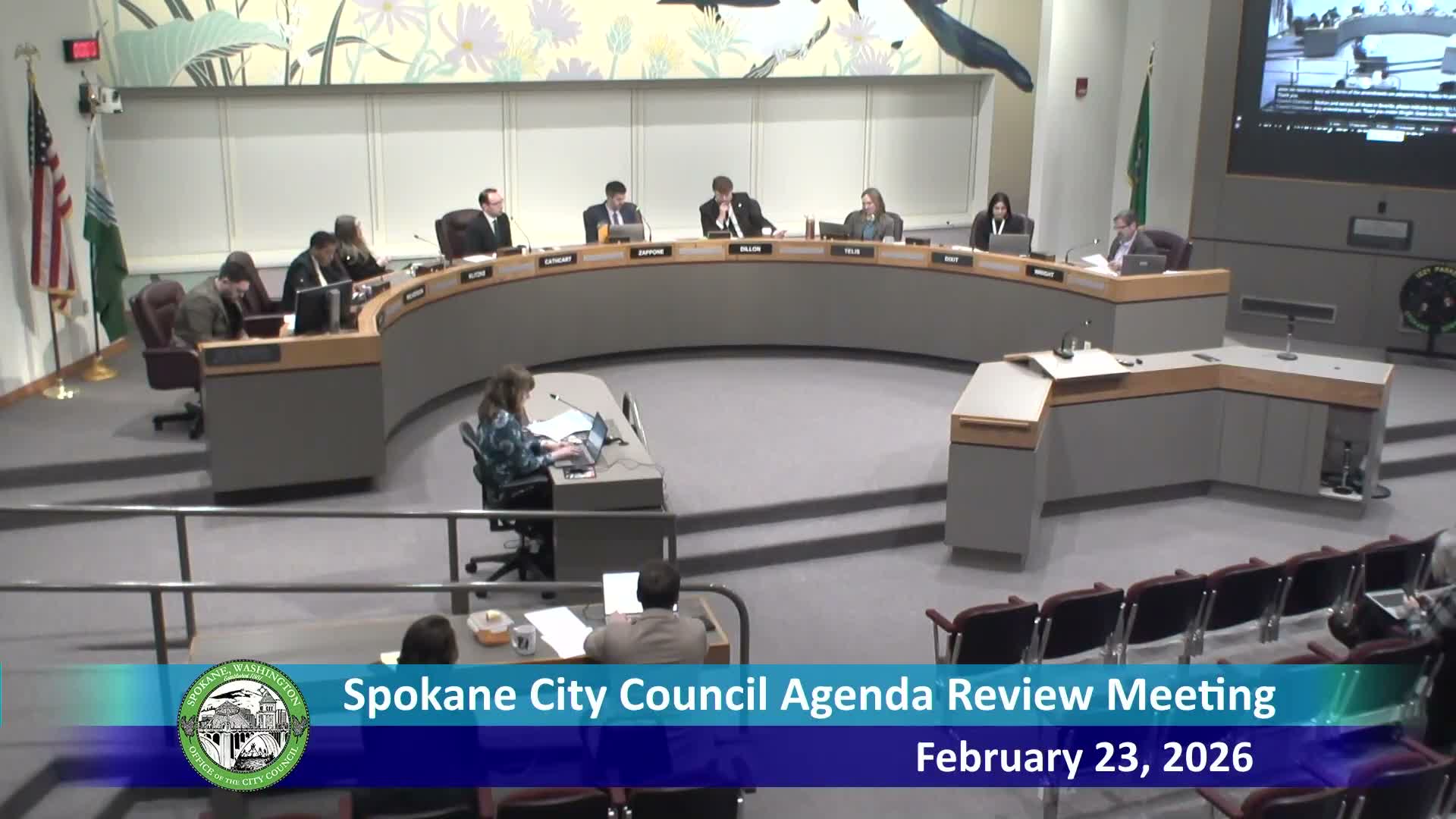
Summary
After competing amendments from Council members Dixit and Wilkerson, the council adopted language preferring East Central for an initial participatory budgeting focus rather than Hilliard; councilors cited environmental justice, prior commitments and capacity as factors.
The Spokane City Council voted to identify East Central as the preferred focus area for a community participatory budgeting pilot after a lengthy debate that acknowledged the competing needs of Hilliard and East Central neighborhoods.
Council member Dixit presented the case for Hilliard, citing historic harms from freeway construction, railroad impacts and economic distress; Dixit said Commerce and a community advisory committee had recommended both neighborhoods. Council member McCluskey and others also spoke in favor of Hilliard, noting brownfields and contamination concerns.
Council member Wilkerson and supporters argued East Central better matched the planned climate‑resilience scope, ongoing East 5th Avenue projects and the city’s prior commitments to the neighborhood. Dixon stressed the sub‑area planning work nearing completion and the city's prior resolution in 2021 committing to East Central investment.
Outcome: The Wilkerson amendment designating East Central as the preferred focus was adopted in council action during the session. Councilors noted that the Department of Commerce’s initial allocation (described in the meeting as approximately $600,000 for environmental study) would seed studies that could later support implementation projects.
Implementation: Staff cited that Commerce and the city will follow the advisory committee recommendations and that further community outreach and project scoping will accompany any funded study. Councilors emphasized the decision was not intended to pit neighborhoods against each other; several asked for processes that preserve fairness and outreach.
Speakers quoted in this article are drawn directly from the meeting transcript; the adopted amendment will be incorporated into the resolution going forward.