
Spokane Council narrows proposed kratom ban, adopts restrictions on certain products
Get AI-powered insights, summaries, and transcripts
Sign Up Free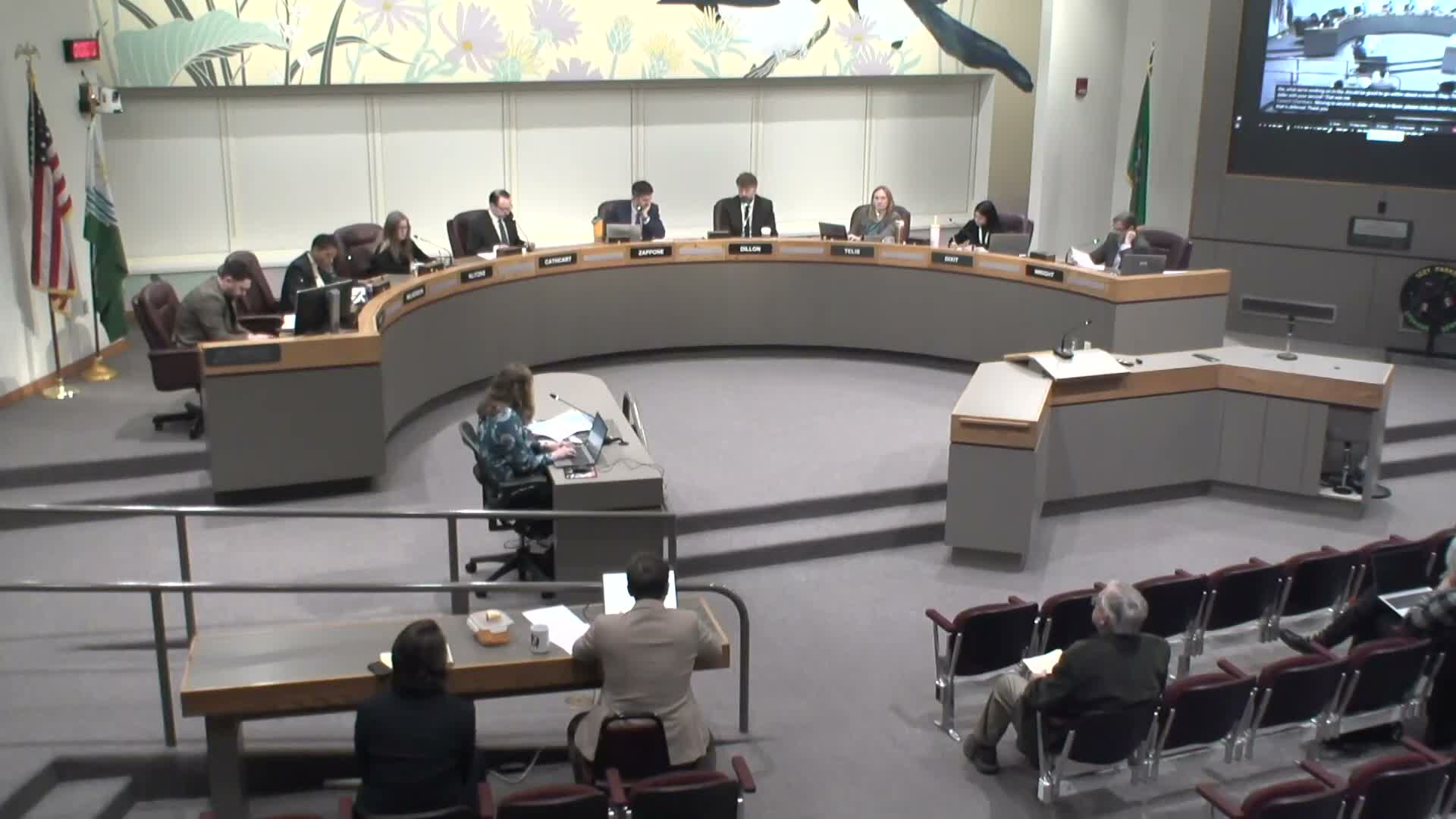
Summary
After emotional testimony and extended debate on enforcement limits, the council adopted an amendment that prohibits sale or distribution of kratom products containing synthesized alkaloids, those with 7‑hydroxymitragynine above 2%, or products attractive to children.
The Spokane City Council adopted a narrowed local restriction on kratom sales after a lengthy discussion that balanced public‑health concerns, enforcement limits and harm‑reduction testimony.
Council member Cathcart, who proposed the amendment, described it as a targeted approach rather than an outright ban: “Rather than just an outright ban, it does three things: it says that no person shall knowingly sell, offer to sell, or distribute within the city of Spokane any kratom product that 1) contains or is adulterated with synthesized kratom alkaloids or synthesized kratom constituents, 2) contains 7‑hydroxymitragynine at a level above 2%, and 3) is attractive to children.”
Why it matters: Councilors said the measure aims to reduce youth exposure and unsafe products while avoiding criminalization of users. Several members described tragic cases and the limitations of existing federal regulation and local enforcement.
Debate highlights: Council members traded concerns over whether local authorities can reliably distinguish whole‑leaf kratom from adulterated or synthetic products and whether restricting retail availability will push buyers to unregulated online sources. Council member Dylan said the city lacks full authority to regulate chemical distinctions but supported restrictions that mirror recent state proposals. Council member Teles described the issue as a ‘‘roller coaster’’ and cited autopsy reports and unknown contents in retail bottles as motivators for action.
Outcome and enforcement: The council adopted the Cathcart amendment as the working approach for ordinance C36820; transcript voice tallies were recorded and reported as passing (reported 6–1). The adopted language focuses on retail sale and distribution inside city limits; the ordinance as amended does not criminalize possession and allows continued personal use and online purchases outside the city’s retail channels.
Next steps: Staff and legal counsel will incorporate the Cathcart language into the ordinance text and return it for the next steps in the legislative calendar. Council members noted enforcement capacity and the need to coordinate with county or state health and law‑enforcement partners to track product testing and compliance.
Speakers quoted in this article appear verbatim in the meeting transcript; the city has not yet released implementing regulations or enforcement details.