
Spokane City Council adopts package of rule changes after weeklong revisions
Get AI-powered insights, summaries, and transcripts
Subscribe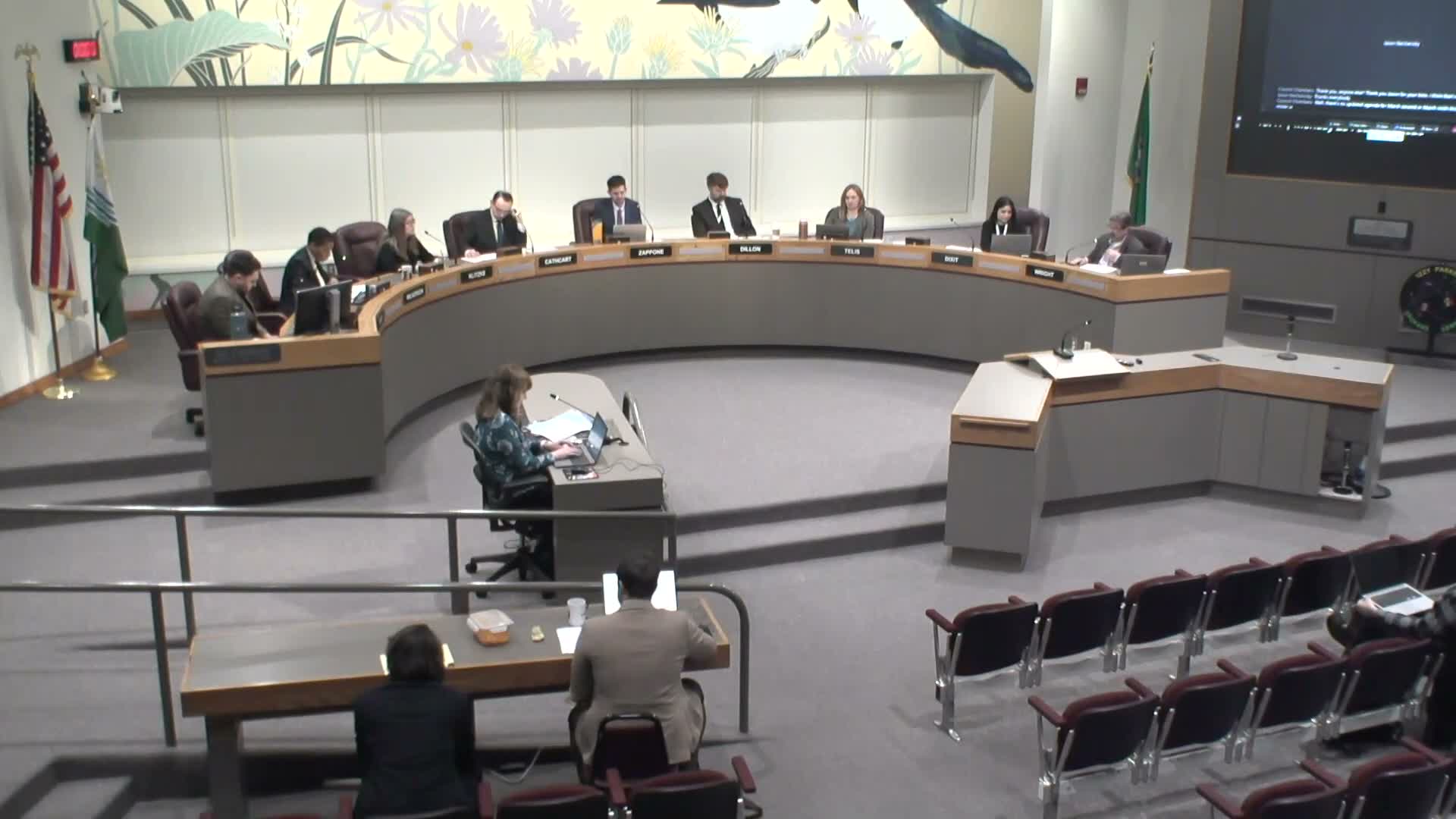
Summary
The Spokane City Council adopted a modified set of council‑rules amendments after a day of debate and several Cathcart changes that preserved public testimony and added procedural safeguards; some proposed controls on council spending and overtime failed.
The Spokane City Council on Tuesday adopted a consolidated package of amendments to its internal rules after hours of debate and multiple last‑minute changes.
Council President Wilkerson opened discussion on a Wilkerson–Zapone–Klitzke amendment packet that the body ultimately adopted as modified by a series of Cathcart amendments. Council member Cathcart framed his proposals as procedural clarifications and accountability measures for council office spending and staff procedures, saying the changes would improve transparency: “I just wanted to include this, so that we have some sense of if there are going to be staff recommended changes to the rules that there would be a process for filtering or discussing those, prior to it coming forward as a formal recommendation.”
Why it matters: The adopted package alters how the council handles amendments, public testimony and some internal budget controls. Supporters said the changes increase public access and provide a clearer timeline for legislation; opponents warned some language could be administratively burdensome or conflict with state law.
What the council did: The council voted on and resolved a set of linked items: - Cathcart amendment #22 (formalizing a staff procedure for rules amendments) passed (roll voice reported 6–1). Cathcart said this gives the operations committee a first pass on staff recommendations. - Cathcart amendment #23 (a ‘three‑touch’ legislative process to broaden early public input on non‑emergency ordinances) was adopted after debate (reported vote 4–3). The amendment requires additional scheduled opportunities for public input unless a larger majority votes to bypass the extra week. - Cathcart amendment #24 (preserving existing public‑testimony time allocations and clarifying speaker timing) passed (reported 6–1). - Cathcart amendment #25 (revising testimony sign‑up form fields to capture position, accessibility needs and limit the published written record to email body text) was amended on the floor to require that the form “at minimum” include certain fields and passed as amended.
What failed: Two Cathcart proposals aimed at tightening budget controls did not pass. Amendment #20, which would have prohibited legislative assistants from incurring overtime and added penalties for council members whose staff accrued unauthorized overtime, failed (voice vote reported; result recorded as failing). Amendment #21, which would have specified that the council president’s $10,000 allocation be quarterly, was defeated on the record (reported 2–5). Opponents noted the city’s budget cycle and travel seasonality as reasons the quarter‑by‑quarter restriction could be impractical.
Debate highlights: Members repeatedly emphasized public access and staff workload. Council member Klitzke raised concerns about implementation logistics and urged clearer operational guidance from the council’s consultant and staff. Council member Dixon advocated for public notice and clarity about which draft version was under consideration. Several members said they supported more public involvement but wanted time for public education on any complicated changes.
What’s next: Councilors agreed to carry language forward and to reconcile any overlapping provisions. Wilkerson said the modified packet, as amended, will be reflected in the rules brought back for final consideration and for implementation steps with staff.
Speakers quoted in this article are identified from the council’s agenda‑setting transcript; vote tallies are the counts reported during the meeting.