
Akron commissioners ask council for administrative support to expand Fire Department REACH visits
Get AI-powered insights, summaries, and transcripts
Subscribe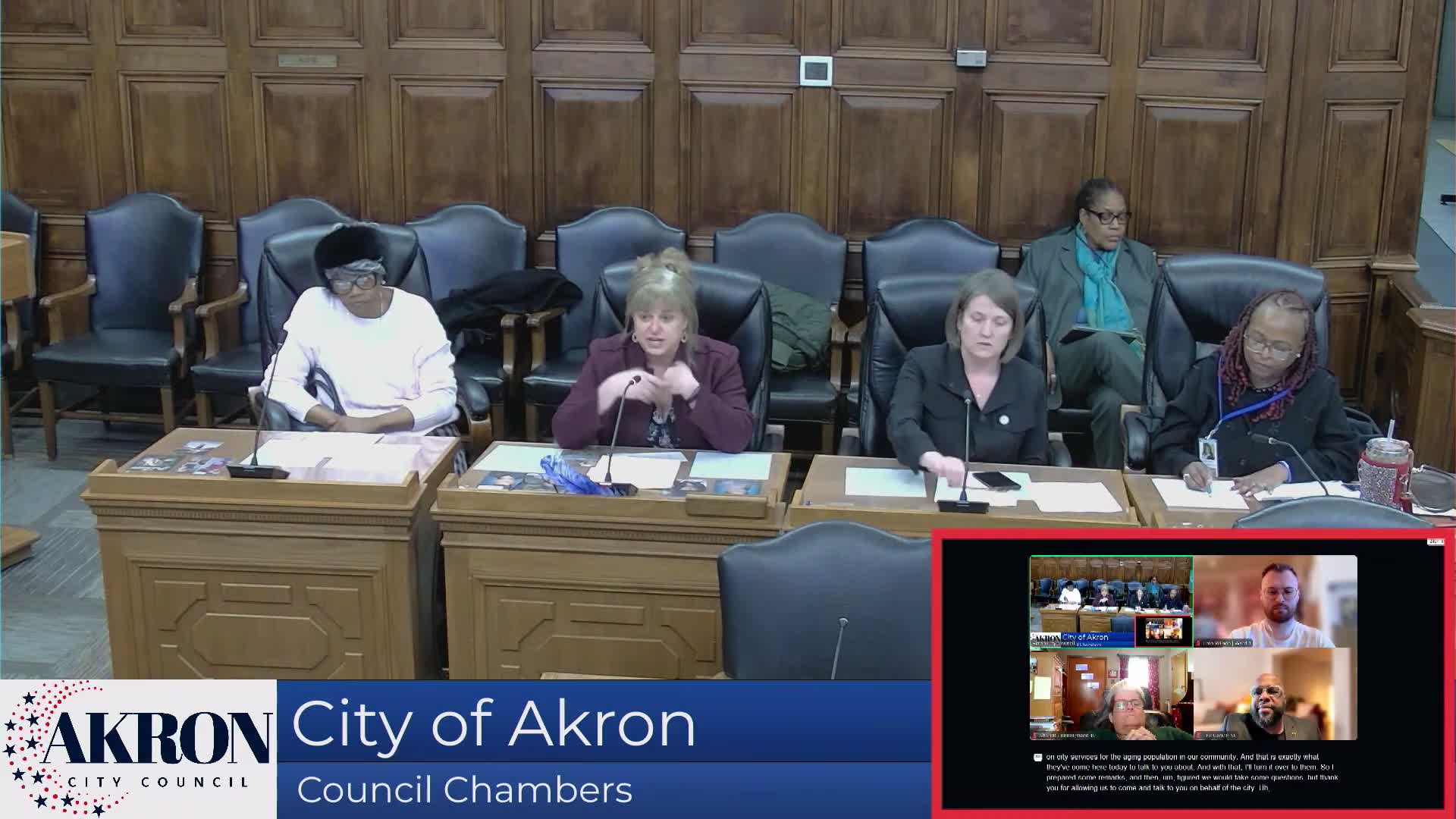
Summary
Commission on Aging members told the Health & Social Services Committee that Akron’s REACH program — a one-paramedic city effort that helps older residents avoid nursing homes — needs an administrative hire to manage referrals and scheduling and to increase the number of people served.
Karen Herdlika, vice chair of Akron’s Commission on Aging, urged the Health & Social Services Committee to add an administrative staff position to the Akron Fire Department’s REACH program, saying the lone paramedic assigned to the effort spends too much time on scheduling and paperwork and not enough on direct client work.
“If you’re not familiar with the REACH program, it is a small program that the city of Akron fire department has that has huge benefit to the older adults of our community,” Herdlika told the committee. She said REACH provides fall-prevention counseling, installs small safety equipment and connects older residents with services that help them remain in their homes.
The commission asked the committee to consider the added position during the current budget process, arguing that a modest investment would increase the number of older adults the program can serve. Herdlika said the program has operated for about six years and the current budget covers one paramedic and "about $5,000 for supplies," while the paramedic also handles referrals, scheduling and administrative tasks that limit the program’s reach.
Committee members pressed for more financial detail before committing to new staffing. One council member asked whether REACH is run by the fire department; Herdlika confirmed it is a city-run service modeled on national best practices. Herdlika and staff said the program sometimes refers residents to other local programs but that many people fall into the "gap population" — households that do not qualify for Medicaid yet lack resources to pay for home care.
Herdlika and presenters also warned that some federal funding streams are uncertain: she cited potential cuts to Older Americans Act and Title III allocations and said those changes could increase pressure on local programs. Herdlika noted that Summit County is one of seven Ohio counties without an older-adult levy, and encouraged philanthropy and local coordination to help fill gaps.
To follow up, staff agreed to provide the committee with the program’s budget details, grant status and comparisons to similar county programs. The Health & Social Services Committee thanked the presenters and adjourned after asking staff to return with those figures.
Next steps: presenters will provide the requested budget and levy-comparison information to committee members for further consideration during the city’s budget process.