
Spokane County briefing: drug-involved fatalities plateauing but remain high, presenter says
Get AI-powered insights, summaries, and transcripts
Sign Up Free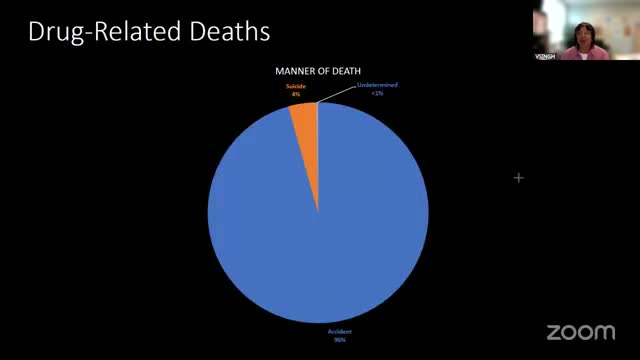
Summary
A county public-health presenter summarized provisional data showing 344 drug-involved fatalities as of Feb. 3 and 329 accidental overdose deaths in 2025 versus 333 in 2024; 73% of accidental deaths involved mixed drugs, most often fentanyl and methamphetamine, and most fatalities occurred in private residences.
At a Feb. 24 Spokane County commissioners briefing, the county’s public-health presenter (identified in the meeting as "Doctor Zing") gave a provisional review of local drug-involved fatalities and overdose trends.
The presenter said that as of Feb. 3 the county had recorded 344 total drug-involved deaths; most were accidental overdoses. He focused on accidental deaths for trend analysis and reported 329 accidental overdose deaths in 2025 compared with 333 in 2024, describing the change as a flattening of a previously upward trajectory but noting that the plateau remains “at a very high number.” He emphasized the data are provisional and about 15 cases remained pending verification.
The presenter said 73% of accidental overdose deaths involved mixed drugs, most commonly a combination of fentanyl and methamphetamine, and that when a single drug was identified fentanyl was most common. He also described demographic and location patterns: a majority of decedents were male and most overdoses occurred in private residences (including friends’ homes and hotels/motels); fewer than 20% occurred outdoors or in public restrooms.
Commissioners asked how Spokane County compares with state and national trends. The presenter said his dataset is local and ahead of state reporting; he said more reliable comparisons will be possible midyear after state laboratory results and death-certificate data are cleaned up.
The presenter outlined classification rules used in county reporting: people in transitional housing or shelters are counted as unhoused, and persons living in vehicles or dying in hospitals after arriving from an unhoused location are counted as unhoused. He said additional analysis on proportional impacts by housing status would appear in the county’s annual report once pending cases are finalized.
No policy vote resulted from the briefing; the presenter said he would return with updated numbers once pending cases were resolved.