
Witnesses tell House committee schools should not use school-aid dollars to fund bond campaigns
Get AI-powered insights, summaries, and transcripts
Subscribe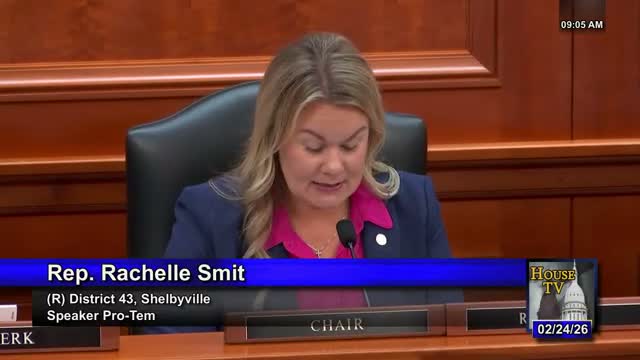
Summary
Supporters of House Bill 5,032 told the House Committee on Election Integrity that school districts should not use school-aid funds to pay for planning or campaign-style communications tied to bond elections, urging private fundraising and greater transparency; witnesses urged data collection on failed millages and clearer fund accounting.
Lansing — Supporters of House Bill 5,032 told the House Committee on Election Integrity that public-school districts should not use school-aid dollars to plan or promote bond elections.
"They are basically gambling with taxpayers' school aid dollars," Representative Kelly said in opening testimony, describing repeated bond attempts in Saginaw Township and arguing that school districts use school-aid funds to pay for architects, planning and election costs before a bond vote.
Richard Poljan, who said he worked on the 2025 St. John's bond campaign, told the committee the local campaign environment included a separate "yes committee" and a district communications position that was funded in part by the district and in part by the city. "Our concern was, how do you educate neutrally?" Poljan said, adding that the bond was ultimately defeated.
Nicole Lee, a Saginaw Township homeowner and member of two volunteer "vote no" campaigns who joined by Zoom, said low-turnout, single-issue elections were being targeted with sophisticated paid communications. "In 2023, we defeated a quarter billion dollar bond proposal 77 to 23%," Lee said, and described extensive websites, social media campaigns, yard signs and paid consultants tied to the 2025 effort. She urged HB 5,032 to require transparency about funds used to inform voters and to bar use of school taxpayer dollars for campaign purposes.
Committee members pressed witnesses on implementation and definition questions. Representative Colazar asked how officials would distinguish school-aid dollars from other local or private funds. Representative Kelly suggested that school foundations and separate campaign committees could supply materials that the bill would bar from being paid out of school-aid dollars. Kelly acknowledged that his testimony did not include a running total of campaign expenditures but cited an analysis showing roughly $2.8 billion in bond issuance in one recent year as context.
Chair Smith and other members noted the bill focuses on the use of school-aid funds and encouraged compiling data on failed millage campaigns and the costs of attempted bond campaigns to inform future decisions.
The committee did not take a vote on HB 5,032 during this hearing. The next step for the bill was not decided at the session's close.