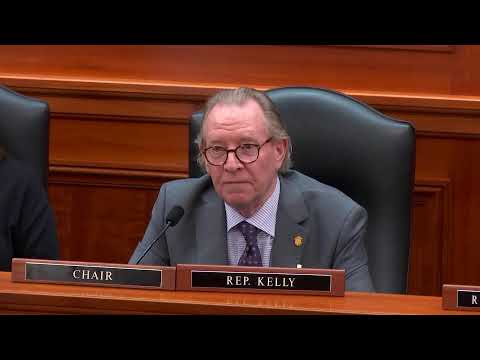
Committee hears $100M tutoring, expanded GSRP and literacy investments in governor's proposal

House Appropriations Subcommittee on School Aid and Department of Education · February 25, 2026

Get AI-powered insights, summaries, and transcripts

Subscribe
AI-Generated Content: All content on this page was generated by AI to highlight key points from the meeting. For complete details and context, we recommend watching the full video. so we can fix them.

Summary

Presenters outlined proposed literacy and early-learning investments in the FY27 executive recommendation, including $100 million for high-impact tutoring, expanded Great Start Readiness Program slots, literacy coaches, and a proposed public dashboard to track literacy outcomes.

State Budget Office officials and HFA analysts told the House subcommittee on Feb. 3 that the governor's FY27 school-aid recommendation emphasizes literacy and early learning with several new and continuing investments.

Beth Bullion of the State Budget Office said the recommendation includes $100,000,000 over two years for high-impact, evidence-based tutoring and an additional $50,000,000 (over five years) for professional learning in early literacy. "This program is modeled after high-impact tutoring that showed positive results in prior pandemic recovery efforts," Bullion said, citing evaluations conducted by Clinton County RESA.

The proposal would expand the Great Start Readiness Program (GSRP) with roughly $143,000,000 to increase slots and an additional $25,000,000 for startup grants plus $18,000,000 for GSRP transportation needs. The recommendation also allocates $10,000,000 for literacy coaches (about one additional coach per ISD) and continues funding for the Michigan Learning Channel and other literacy supports.

Bullion and Alex Holmden of the State Budget Office also said the package includes a public dashboard requirement for MDE to post literacy objectives and performance metrics to improve transparency and accountability. Committee members warned that the dashboard requirement could create additional workload for DTMB and MDE and asked about resources and timing to implement it.

Committee members asked several follow-ups, including whether media-literacy one-time funding remained in the package (staff said one-time funding was cut but ongoing lines remain) and whether AI training for teachers was addressed (presenters said a continuing $500,000 carve-out supports Michigan Virtual's leadership role on AI work with MDE). Presenters said adult-education funding was returned toward prior levels and continues to be routed through ISDs.

The hearing closed with requests for more historical data on declining-enrollment funding and implementation details for literacy and early-learning programs.