House subcommittee reviews governor's school-aid plan, weighing a 2.5% per-pupil boost and new weighted funding
Loading...
Summary
The House Appropriations Subcommittee on School Aid reviewed the governor's FY2027 executive recommendation that would raise the foundation allowance by 2.5% and roll major categorical dollars (at-risk, ELL) into a new weighted pupil membership, shifting funding structure and giving districts more discretion.
The House Appropriations Subcommittee on School Aid on Feb. 3 heard an overview of the governor's FY2027 executive recommendation, which proposes a $325 million increase to the foundation allowance (a 2.5% raise) and a reorganization of several categorical programs into a new weighted pupil membership that would allocate additional dollars to districts for students with greater needs.
Jacqueline Mullen of the House Fiscal Agency, who presented the summary, said, "The executive proposes $325,000,000 to increase the foundation by 2.5%," moving the per-pupil foundation from $10,050 to $10,300. She also said the proposal reduces cyber school funding to 80% of the target foundation, which would lower the cyber per-pupil amount to $8,240.
Why it matters: The change aims to make funding more formulaic and to narrow gaps by increasing weights for higher-need students. Mullen told the panel the administration would roll about $1.4 billion from existing at-risk and English-language-learner (ELL) lines into the new weighted membership. "The intent is to keep the same structure of funding for these pupils," she said, but to create a separate allocation that provides districts more discretion on how they spend the dollars while preserving some reporting requirements.
The governor's recommendation also includes a set of operational and cost adjustments. HFA noted targeted cost adjustments for Detroit Public Schools Community District tied to local millage revenue shifts, and a proposal to fold extra FTEs for dropout-recovery students into the foundation so those positions would be funded automatically rather than prorated.
Committee members pressed for data and clarifications. Representative Granville asked how many districts opted out of last year's mental-health/school-safety funding tied to specific boilerplate language; Mullen said participation "was down to 200-something" out of roughly 800 districts and agreed to provide exact counts. On dual enrollment, Mullen clarified the proposed $20 million reimbursement is intended to cover tuition costs only; transportation, books and course fees would remain the responsibility of families or districts unless otherwise specified.
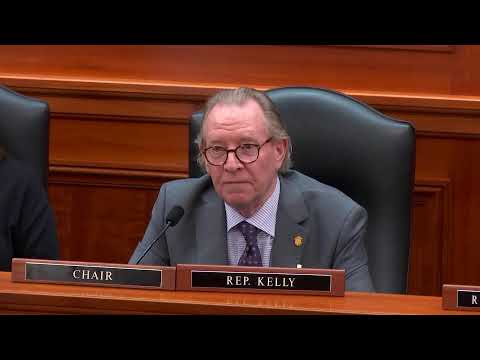
The subcommittee requested additional materials, including the line-by-line Excel and the school-aid fund balance sheet that show ending balances for FY25–FY27 under the executive recommendation and a FY28 baseline projection. Chair Kelly said staff will follow up with more detail and historical comparisons of declining-enrollment support.
Votes at a glance: The committee approved the minutes for its Feb. 3 meeting by unanimous consent; no other formal votes on budget bills were recorded in the hearing.