Get Full Government Meeting Transcripts, Videos, & Alerts Forever!
Get email alerts on the Student Achievement topic
No spam. Unsubscribe anytime.
Staff presents midyear CCRPI and I‑Ready results as district shows modest gains
Summary
A district staff member told trustees the Governor’s Office of Student Achievement has posted single CCRPI scores and walked the board through midyear I‑Ready data showing K–5 gains and projections for spring milestones; staff cautioned that progress and subgroup measures are volatile and noted device compatibility issues.
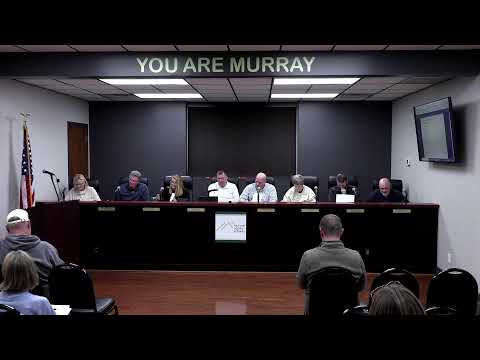
A staff member presented midyear student-achievement data to the Murray County school board on Jan. 5, saying the Governor’s Office of Student Achievement (GOSA) has released single CCRPI scores and the district’s overall CCRPI rose about two points compared with last year.
The presenter explained CCRPI’s components — content mastery, progress (student growth percentiles), closing gaps (subgroup targets) and readiness — and said GOSA now calculates a single CCRPI score after CCRPI itself stopped publishing a single number. The staff member said that “progress and closing gaps are a little volatile,” and that changes in those components can swing a school’s single score even when content-mastery results are stable.
Board members heard that kindergarten through second grade and fifth grade showed notable midyear gains on I‑Ready diagnostic windows, and that the district’s K–8 cohort projections show modest improvement in most grades. The presenter noted that projections assume either typical growth or stretch growth between now and spring milestones and that a second projection will be available after spring testing.
Trustees asked whether the district’s midyear comparison data included neighboring systems; staff said a separate spreadsheet contains last year’s milestone and CCRPI comparisons for nearby systems and offered to distribute it. The presenter also attributed some reading gains to the AMERA screening program and daily 1:1 tutoring, saying fewer students were being flagged for reading difficulties this year.
Staff cautioned that technology issues affect some screening and practice tools: Chromebook–headset compatibility has required device updates and the district plans Chromebook refreshes to address microphone/headset problems before the next testing window.
The board concluded the discussion with a plan to revisit projections after spring milestones and to distribute comparative data to trustees. No formal action was taken; the discussion was informational.