
Georgia Senate committee hears competing claims over river 'right of passage' bill
Get AI-powered insights, summaries, and transcripts
Sign Up Free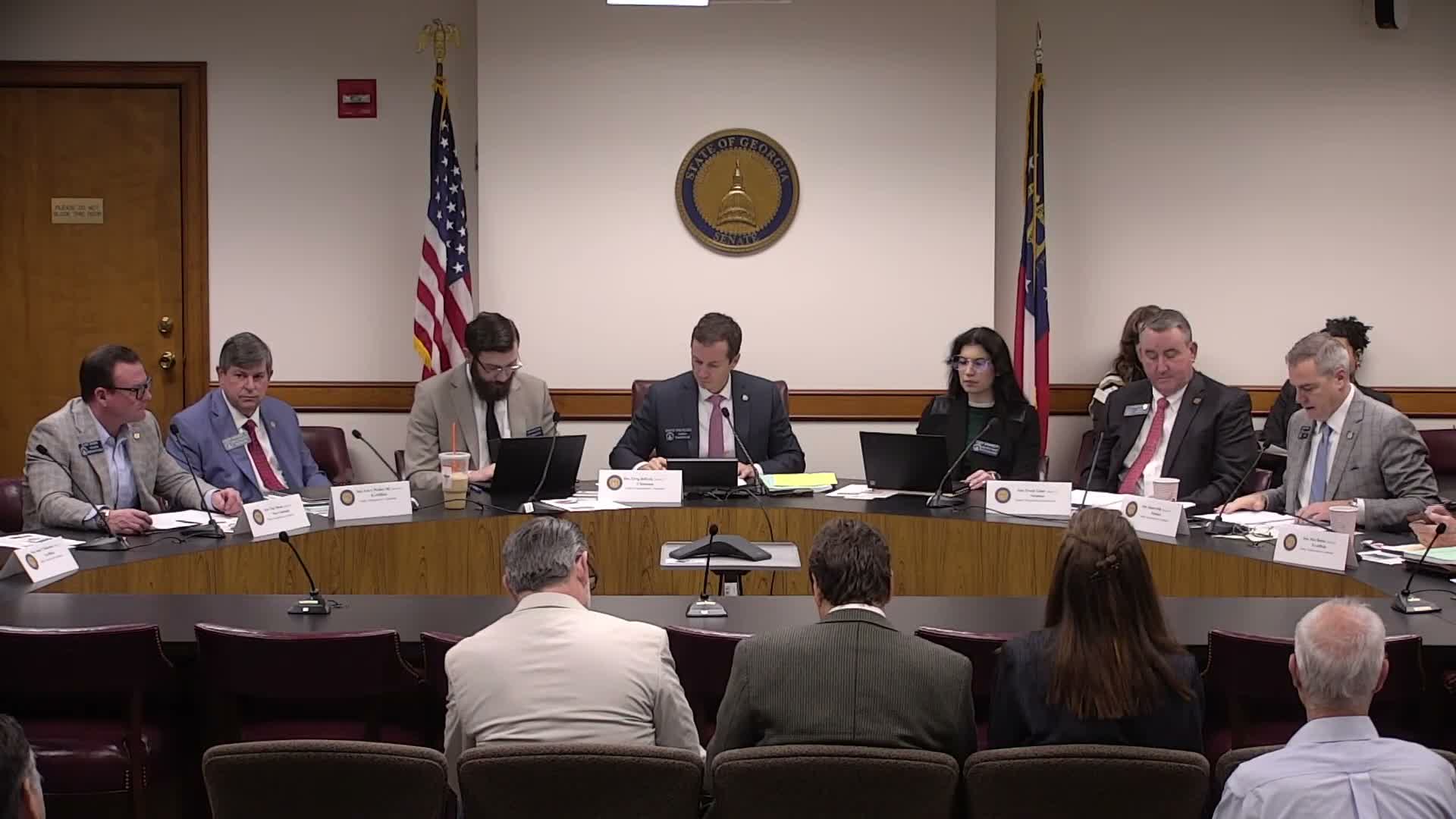
Summary
Supporters told the Senate Transportation Committee that Senate Bill 511 would clarify a public easement for passage on rivers and streams to protect outfitters and tourism; opponents including farm and landowner groups said the language would infringe private property rights and could amount to an uncompensated taking. The panel requested a formal legal opinion and took no vote.
Senate Transportation Committee members heard sharply divided testimony on Senate Bill 511, a short measure the sponsor said would “clarify” a public right to travel (‘‘passage’’) down Georgia rivers and streams used for recreation.
The bill’s sponsor told senators the measure is intended to protect what he called “Georgia river heritage” and to confirm that people may transit waterways “solely for passage,” while prohibiting stopping to fish, hunt or disturb stream banks. Rena Peck, executive director of Georgia Rivers, told the committee, “Floating is not tied to the land. It’s an easement.” She and other supporters said outfitters and tourism businesses need legal certainty to operate without harassment.
“Nanahala Outdoor Center…employs 600 people,” a written statement read into the record and cited by Peck, who said the bill would protect jobs by affirming passage rights for small rivers outfitters. Joe Cook of Georgia Rivers told senators, “You wouldn’t be taking any property from any property owners if you pass this bill because you’re still going to own the stream bed. This is all about a passage, or public easement for passage down these streams.”
Supporters and witnesses described instances where paddlers were told to leave waterways or where law enforcement responses varied, including an attorney’s account of being physically prevented from continuing a canoe trip on the Upper Chattahoochee. Attorney Craig Pendergrass recounted that a landowner “waded out into the river, grabbed our canoes, and wouldn’t let us go down” and said a trespass warrant followed his trip.
Opponents — including representatives of the Georgia Farm Bureau and the Georgia Agribusiness Council — said the bill would alter longstanding property rights. Adam Bellflower of the Farm Bureau told the committee, “We see this bill 511 as a direct infringement on the private property rights of nonnavigable landowners” and argued that current code and case law limit public passage to waterways that meet a navigability test.
Several lawyers and committee members debated the state’s legal history. Testimony cited an 1849 Georgia Supreme Court decision (Young v. Harrison) and later cases; witnesses disagreed on whether Georgia recognizes two types of nonnavigable waterways (one subject to a passage easement) or a single nonnavigable category whose owners retain exclusive possession. The legal dispute over whether codifying passage would amount to a compensable taking was central to the hearing.
Committee members asked legislative counsel to prepare a written opinion clarifying how existing Georgia law treats navigable and nonnavigable streams and whether a public easement of passage is recognized for particular types of waters. The chair said the committee would continue the conversation; no vote was taken.
Supporters framed SB 511 as a tool to protect rural economic development, public safety and conservation stewardship by encouraging responsible recreational use. Opponents urged caution to preserve private property rights and raised practical concerns — including fencing and cattle in streams — that they said could complicate unqualified passage rights.
The hearing closed with several senators on the record opposing the bill’s current interpretation and with the committee directing legislative counsel to report back. The committee adjourned without taking formal action.