Get Full Government Meeting Transcripts, Videos, & Alerts Forever!
Get email alerts on the Residential Infrastructure Districts topic
No spam. Unsubscribe anytime.
Bill to create residential infrastructure districts draws sharp questions and public opposition
Summary
Representative Stevens presented HB 317, a bill to allow landowners to form Residential Infrastructure/Workforce Residential Districts (RIDs) that issue bonds and levy assessments on participating properties; testimony from Sierra Club lobbyist Neil Herring warned of higher housing costs and limits on county remedies. Committee held the measure for further hearings and did not vote.
Representative Stevens presented House Bill 317 and described an accompanying constitutional amendment, HR 17192, to authorize a new general-law mechanism allowing landowners to petition to create a Workforce Residential/Residential Infrastructure District (RID). Stevens said the approach is modeled on a Florida structure used since about 1990 and would provide a financing tool for smaller or rural counties that cannot otherwise issue bonds for infrastructure.
Stevens told the committee a RID would be a special-purpose local government created by ordinance after local approval; it would be governed by a board elected by participating landowners and would be limited to building and maintaining infrastructure. “It’s a special purpose unit of government created by an ordinance of the city or the county where the RID is located,” Stevens said. He emphasized that RIDs would not have zoning or police powers and that “debt of a RID should not be an obligation of the state or general purpose or local government.”
Stevens described the financing mechanism: landowners within a RID would agree to uniformly tax themselves, bond financing would fund roads, drainage, utilities and amenities, and the debt would be secured by a lien on participating properties that “runs with the land.” He cited disclosure requirements in the bill that would require prominent notice in purchase contracts so buyers would know an assessment is attached to the land.
Several representatives pressed Stevens on consumer protections and long-term effects. Representative Veil asked how first-time buyers and workforce residents would be notified and whether assessments could create unforeseen long-term costs; Stevens pointed to buyer-disclosure language in the bill. Committee members also asked about whether utilities provided by a RID would be mandatory; Stevens said responsibilities are delineated in the governance documents and that counties typically retain a first right to provide existing services.
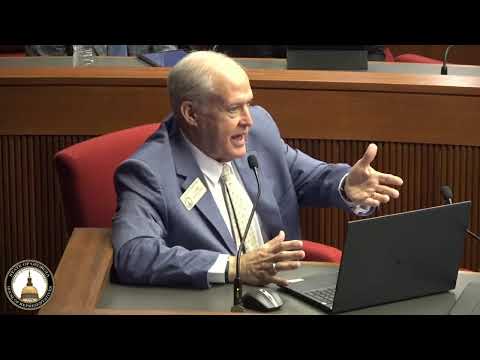
Public testimony opposed the bill. Neil Herring, a lobbyist for the Georgia chapter of the Sierra Club and for Flint Riverkeeper and Chattahoochee Riverkeeper, urged rejection and warned the measure could raise housing costs and create a new form of government. “If you read the bill carefully…It says no liens on the property. It says it can’t be attached. It can’t be sold at public outcry,” Herring said, arguing that similar districts in Florida failed in some cases and that the 2008 ballot measure creating a comparable authority had been rejected by voters. Herring also said the bill would obligate counties to collect purchaser payments alongside ad valorem taxes — a provision he described as burdensome for counties.
Committee members and Stevens responded that the bill is intended to help rural counties finance infrastructure without exposing the broader tax base and that many provisions are designed to avoid putting taxpayers at risk. Stevens asked that the companion constitutional amendment HR 17192 be held until the committee’s second meeting; the chair agreed. The committee did not vote on either HB 317 or HR 17192 and scheduled further hearings.