Citizen Portal
Sign In

Residents clash over Satan‑branded student club at Michigan City Area Schools public forum

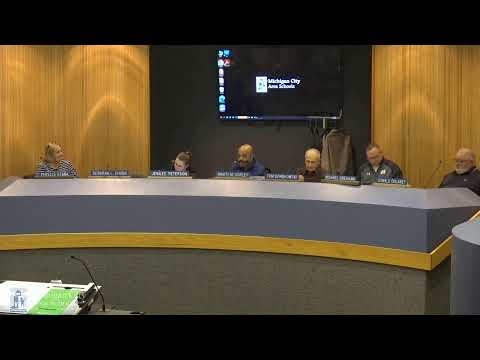
Michigan City Area Schools Board of Trustees · November 20, 2024

Loading...

AI-Generated Content: All content on this page was generated by AI to highlight key points from the meeting. For complete details and context, we recommend watching the full video. so we can fix them.

Summary

Dozens of residents urged the Michigan City Area Schools board to block an after‑school group styled as a ‘Satan’ club, citing religious and safety concerns; other speakers defended the group as an expression of religious freedom. The board said it cannot single out one club without risking civil‑rights violations and took no ban action.

Dozens of residents used the board’s public‑comment period to press the Michigan City Area Schools Board of Trustees to reject a student club styled as an ‘After School Satan’ club, while others defended it as a response to religious oppression.

Aaron Osminkarski told the board: “By their fruits, you will recognize them,” and asked what “fruit comes from the satanic temple,” saying the group’s online merchandise mocks Christianity and “undermines local laws.” Other speakers raised sharply different concerns: Johannes Pularg warned the club could import criminal activity, asking what the club meant by the word “wrath.” Pam Bailey called the club “evil” and urged parents to keep children away; Jerry Bailey cited the pledge of allegiance as inconsistent with a Satan‑branded presence in schools.

Several speakers defended the group and the principle of equal access. Sherry Lundstrom said the organization “was created in reaction to a lot of religious oppression” and framed its purpose as religious freedom. Crystal Sobeys, a parent, argued that if the district permits a faith club, it must allow other nonacademic clubs and that parents who object should choose not to have their children participate.

Andrew Ketchum, citing the group’s website, noted that the after‑school organization states it “does not believe in introducing religion to public schools and will only open a club if other religious groups are operating on campus,” and questioned whether students and parents understood the implications of starting or approving a faith club.

Board members acknowledged the intensity of the public comments but emphasized legal constraints. A board member who identified consulting the district attorney warned that singling out one nonacademic club for prohibition could constitute a civil‑rights violation. “To say this club is allowable, but this club is not would be a civil‑rights violation based on religion,” the board member said, arguing that a selective ban would force the district either to allow all nonacademic clubs or to shut them down entirely.

The board did not vote to ban or otherwise take disciplinary action against the club during the meeting. Instead, trustees urged community engagement and recommended that parents who disagree with particular student organizations participate constructively — by communicating with students and school staff — while the district follows legal guidance on club eligibility.

The board’s next regular meeting is scheduled for next month; no formal action on the club was put on that agenda during this session.