Get Full Government Meeting Transcripts, Videos, & Alerts Forever!
Get email alerts on the Education Budget topic
No spam. Unsubscribe anytime.
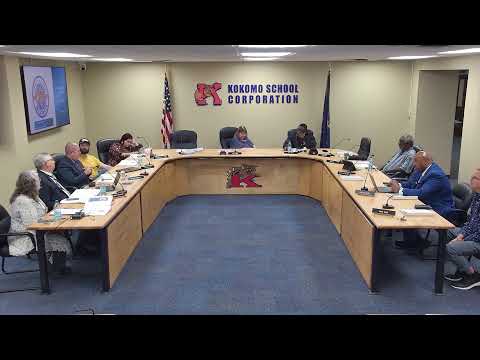
Kokomo School Corporation previews $48M education budget, $18M operations plan and debt steps
Summary
District staff told the Kokomo School Corporation board the proposed 2026 appropriation includes a $48 million education fund and an $18 million operations fund, flagged circuit‑breaker and TIF impacts on receipts, and previewed an anticipated GO bond vote and tax‑anticipation warrant request coming before the board.
Kokomo School Corporation staff presented the board with an overview of the district’s proposed 2026 budget on Tuesday, laying out a $48,000,000 education fund appropriation and an $18,000,000 operations fund request while explaining how state and local tax mechanics will affect receipts.
The presentation, led by the district’s budget presenter and administrative staff, walked board members through key inputs: net assessed valuation (NAV), average daily membership (ADM), the Department of Local Government Finance (DLGF) review process and the October 1 count date that largely determines state tuition support. The presenter said, “So we’re proposing a budget, $48,000,000,” and emphasized that most education fund revenue is ADM‑driven state tuition support.
Why it matters: board members and staff said the district has moved from years of declining enrollment to increases at all three levels, producing additional revenue but also immediate staffing and appropriation needs. Staff warned long‑running state policy changes — including revisions to textbook funding and categoricals — have shifted some costs and that the district must account for circuit‑breaker credits and tax‑increment financing (TIF) arrangements that limit the portion of assessed value schools can capture.
District cautioned on property‑tax mechanics and collections. Staff reported a NAV figure published to the packet (presented as "$2,800,000" with an 8% increase from last year in the materials) but urged caution, noting not all assessed value is collectible in year one and that the DLGF will adjust estimates during review. The presenter also noted the Maximum Levy Growth Quotient (MLGQ) currently limits levy growth to 4% in the DLGF review process.
Debt and contingency planning: the budget packet included debt‑service planning and an estimated debt‑service levy. The presenter read an estimated debt tax rate of 0.4755 and an estimated levy figure. Staff also told the board it will see an item at the next meeting to finalize approvals for a 2025 general‑obligation bond; exact amortization and payment schedules depend on the sale. To cover potential timing gaps in tax collections, the district included a request for tax‑anticipation warrant authority limited to debt service.
Operation fund and transfers: the operations fund — primarily property tax supported — is proposed at about $18,000,000. Staff explained the operations fund’s reliance on property tax receipts and the district’s limited ability to transfer from the education fund (state rules generally limit transfers and the DLGF suggests a 17% guideline while some rules cap certain transfers at 15%). The packet shows an estimated operations levy and demonstrates how the board would use transfers, miscellaneous revenues and cash balances to cover the operations appropriation after tax‑cap impacts.
Capital and maintenance needs: staff highlighted capital priorities including roofing and maintenance identified in long‑term plans; board members questioned multi‑year roofing cost increases, and staff said roofing needs informed GO bond sizing. The packet also listed vestigial capital plans (bus replacement, capital projects) that remain required by code even after fund reorganization.
Next steps: the district will hold the statutory public hearing in September (for public comment) and will ask the board to adopt the appropriation resolution at the October meeting, after DLGF review. Staff also said the GO bond and any additional appropriation related to bond expenditures will appear on future agendas for board approval.
Board members repeatedly pressed for clarity on line‑item translation between the district’s internal accounting and DLGF categories (for example, how software is coded) and asked staff to return with additional detail on staffing counts and categorical funding. The board did not take action at the work session; staff will circulate materials ahead of the September hearing and present formal action items in October.