Get Full Government Meeting Transcripts, Videos, & Alerts Forever!
Get email alerts on the Budget topic
No spam. Unsubscribe anytime.
RSU 73 board reviews 5.82% proposed budget; staff seeks $150,000 insurance reserve and $1M from cash balance
Summary
District staff reviewed a proposed 5.82% budget increase driven by salaries/benefits, special‑education tuition and athletics stipends; staff proposed a $150,000 capital reserve for insurance and returning $1,000,000 from RSU 73 cash balance to lower tax impact. No final budget vote was taken tonight.
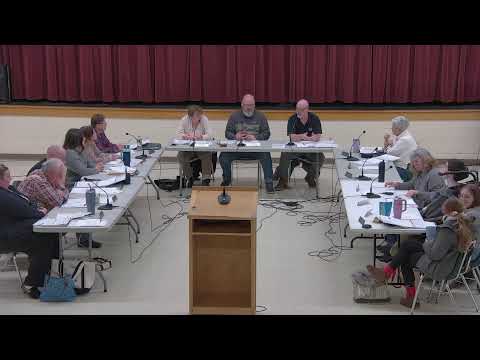
Tina, the district presenter, walked the RSU 73 School Board through the proposed 2025–26 budget and highlighted personnel costs, special‑education tuition increases and a recommended capital reserve to protect the district from volatile health‑insurance rate spikes.
The proposed total budget change is about 5.82% (5.99% if an outside‑of‑budget bleacher purchase is included). Tina said the regular instruction line is up 4.18% to cover salaries, benefits and a new FMLA tax/fee that is being taxed beginning Jan. 1 though payouts do not start until May 2026. "If we don't spend that this year, that money sits there just for insurance purposes," she said when describing a proposal to transfer up to $150,000 from available fund balances into a capital reserve for insurance costs.
The budget increases reflected multiple line items: special education is up 9.42% with one additional proposed teacher; a $50,000 rise in out‑of‑district tuition for IEP placements; a 10.87% rise in "other instruction" covering athletics, academic stipends and field trips; and a 3.5% rise for student and staff support largely driven by salary and benefit inflation. Tina reported the district receives about $2,000,000 annually in federal funds for Title I reading and math and for federally supported ed‑tech positions, but cautioned that federal funding levels carry some uncertainty.
Board members questioned specific lines. Jody, a board member, asked why middle‑school stipends (about $42,000) appeared high compared with high‑school stipends (about $150,000); Tina explained middle‑school stipends are calculated at roughly 75% of varsity rates and that academic stipends (drama, chorus, band) are coded under "other instruction." The board also discussed replacing some secretarial hours with dean‑of‑students positions at the primary and elementary schools; Tina said the new positions are not certified administrative roles but can evaluate teachers and handle student behavior, and she emphasized no current employee would be displaced to create them.
Tina warned of two budget risks: a possible health‑insurance rate spike (Anthem estimates ranged from a 13% baseline to warnings as high as 17.5%) and local economic shifts such as a mill closure in Jay that affect town valuations and thereby taxpayer shares. She showed per‑pupil spending comparisons for 2023–24: RSU 73 spent $12,666 per pupil for grades 9–12 versus a state average of $13,283, and $9,985.81 per pupil for K–8 versus a state average of $12,066.94; Tina noted district size and valuation formulas can skew those comparisons.
On funding mechanics, Tina said the administration will ask the board at the next regular meeting to approve warrant language so items can go to town meetings and referendum. She said the administration proposes returning $1,000,000 from the RSU 73 cash balance to reduce taxpayer costs (the board allocated $900,000 last year), but cautioned that relying on large one‑time transfers can leave the following year's budget vulnerable.
Holly asked specifically about federal Title I funding; Tina said state guidance was uncertain but that appropriated funds were expected to continue in the short term (roughly 18 months) and that any long‑term loss would require difficult choices and possible position reductions. "We're not gonna ask the taxpayers to pay $2,000,000 more," she said when discussing contingency options if federal dollars were reduced.
The board did not take a final vote on the budget. Tina told members they would vote on warrant language and sign required copies at next week's meeting. The chair then called for adjournment; the board approved a motion to adjourn by voice vote.