Get Full Government Meeting Transcripts, Videos, & Alerts Forever!
Get email alerts on the Student Transportation topic
No spam. Unsubscribe anytime.
Public commenter urges Saco schools to pursue state stop‑arm camera grants; superintendent cautions funding not yet available
Summary
Heather Palmer, a Young School med‑tech and bus monitor, urged the Saco School Board to seek state grants to install automated stop‑arm cameras on school buses; Superintendent Ray said $4.3 million appears in the governor's supplemental budget but would not be available unless the legislature approves it and implementation would require coordination with bus manufacturers and assessment of older vehicles.
Heather Palmer, a Young School med‑tech and bus monitor, told the Saco School Board during public comment that the district should immediately pursue state safety grants to equip school buses with automated stop‑arm camera enforcement.
"We cannot wait for the tragedy to put Saco on the news," Palmer said, urging the board to tap available grant funds and to outfit the district's fleet with cameras and sensors. She cited recent deadly incidents elsewhere and said "the technology exists" and "the grant funds are available."
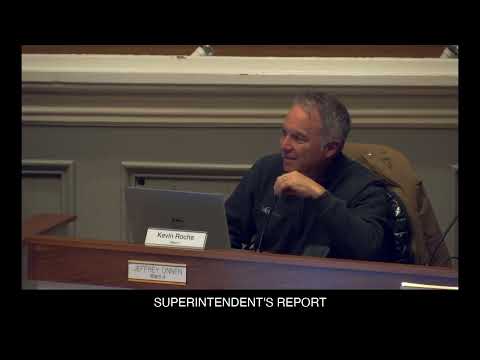
Superintendent Ray responded during the superintendent's report that the $4,300,000 referenced by speakers is currently included in the governor's supplemental budget proposal but is not yet grant money. "My understanding is it's not grant money yet unless it gets into that budget," Ray said, noting that even if the legislature approves a supplemental budget the district would likely face a roughly 90‑day delay before funds are available for spending. "That money, my understanding, is the $4,300,000 is in her supplemental budget and would not be available unless that's passed by legislature this coming June," Ray said.
Ray outlined logistical and technical hurdles to retrofitting buses with cameras: different bus manufacturers (Thomas, Bluebird and others) require different retrofit solutions; the age and mileage of a bus can affect whether a retrofit is feasible; and districts often must balance replacing older buses with available state subsidy qualification rules (for example, eligibility tied to age and mileage). "You probably will also be looking at the age of your bus and whether the age of the bus will even handle that retrofit," Ray said. She added that newer buses are more likely to accept retrofits and older buses may be more difficult to modify.
Board members pressed for further detail on local enforcement and data. Roach asked whether Saco is tracking where stop‑arm violations occur and whether they cluster on Route 1 or in North Saco. Ray said reports come from across the community and that incidents are forwarded to the police department, which acts on them when plate information is available. "We send that stuff to the police department. They act on it," she said, while noting the practical difficulty of capturing license plates when drivers pass quickly and bus staff must watch students boarding.
Palmer proposed that fines collected from enforcement could help offset equipment costs. Ray and board members noted additional implementation questions — from procurement timelines to vendor compatibility — that would need answers before the district could begin outfitting buses even if state dollars become available.
The meeting record shows no formal motion or vote on pursuing stop‑arm camera grants at this session; the superintendent said staff would continue to monitor legislation and funding developments.
What happens next: Superintendent Ray said the district will follow the relevant bills through the spring and continue to evaluate logistics, funding availability, and vendor options if the legislature enacts supplemental funding.